Category: Sides

Vegan side dishes. Sides are the often underestimated, but nevertheless crucial accompaniment to a meal.

Side dishes are not only there to fill the plate. They also contribute significantly to the flavour composition and the overall experience of the meal.

Here you will find a variety of vegan side dishes!

Have fun browsing, cooking and feasting!

  • Wild garlic paste – preserve the taste all year round

    Wild garlic paste – preserve the taste all year round

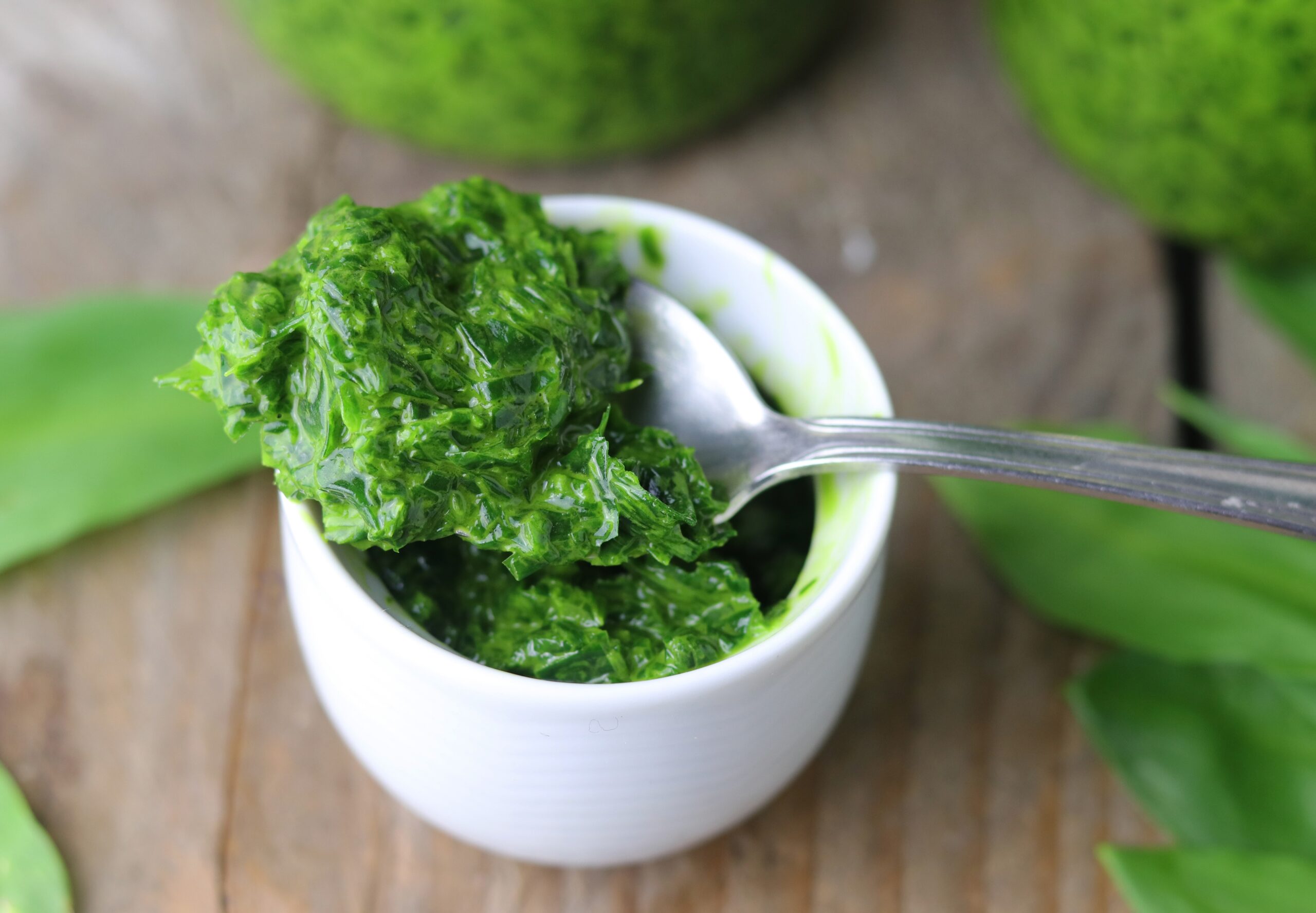
    I use my spicy, extremely strong wild garlic paste as a basis for pasta sauces, mushroom sauces, gravies, but also to puree it into a quick pesto with nuts. It has a long shelf life and can therefore be eaten even out of the wild garlic season.
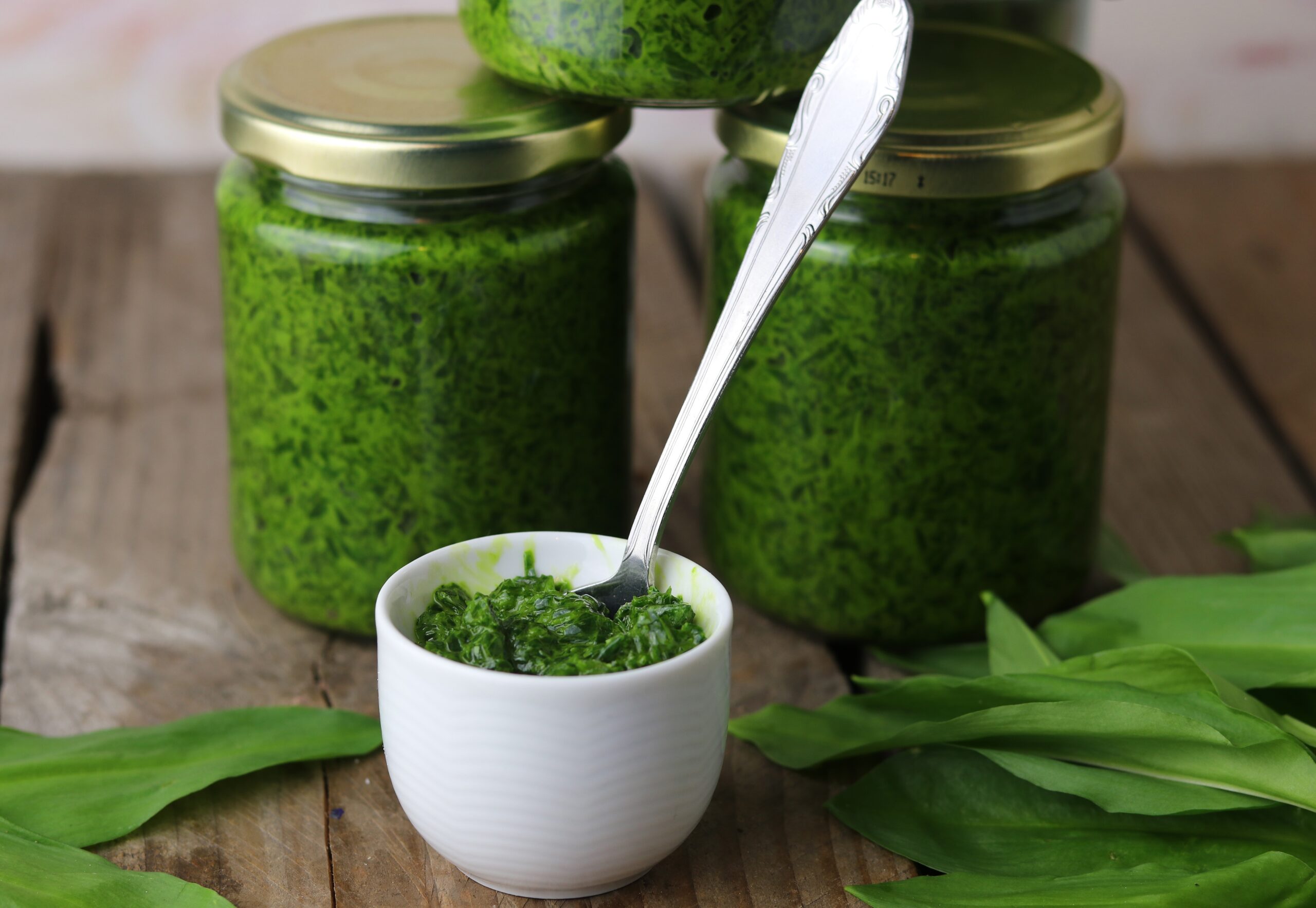
    I use my hot, extremely strong wild garlic paste as a basis for pasta sauces, mushroom sauces, gravies, but also to puree it into a quick pesto with nuts.
    I use my seasoning paste as a basis for pasta sauces, mushroom sauces, gravies, but also to puree it into a quick pesto with nuts.

    This paste is particularly popular with my boyfriend, who often cooks ready-made vegan tortellini. As a sauce he just heats up a pack of vegan cream with 2-3 tablespoons of my wild garlic paste in a second pot. And then he enjoys his easy and delicate pasta dish.
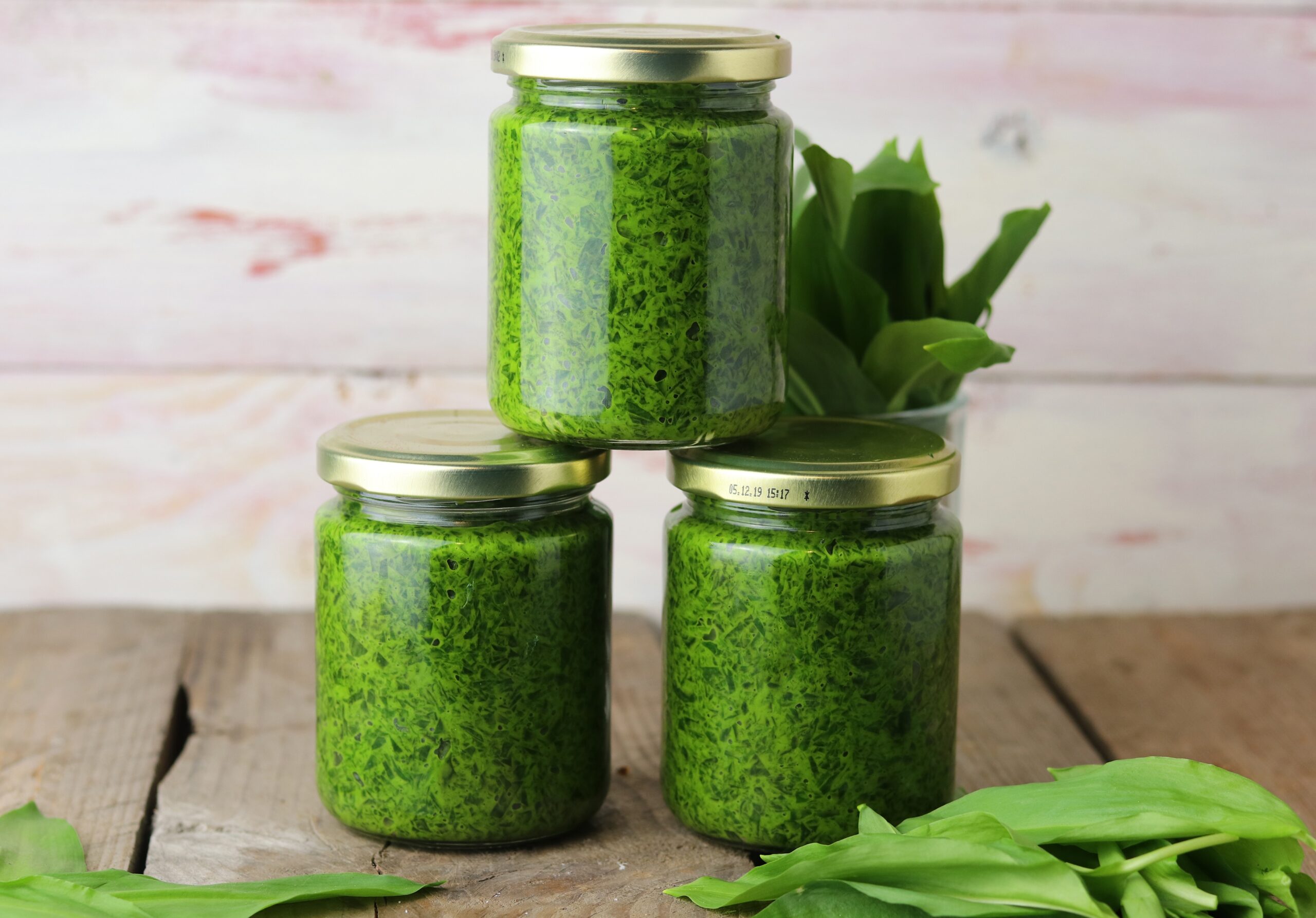
    My wild garlic paste: preserve the taste of wild garlic all year round.
    My wild garlic paste: preserve the taste of wild garlic all year round.

    Capture the taste of wild garlic all year round

    In this recipe I make a delicious seasoning paste from aromatic, fresh wild garlic. This allows you to preserve the taste of wild garlic all year round. The paste contains a lot of salt and is therefore particularly suitable for seasoning.
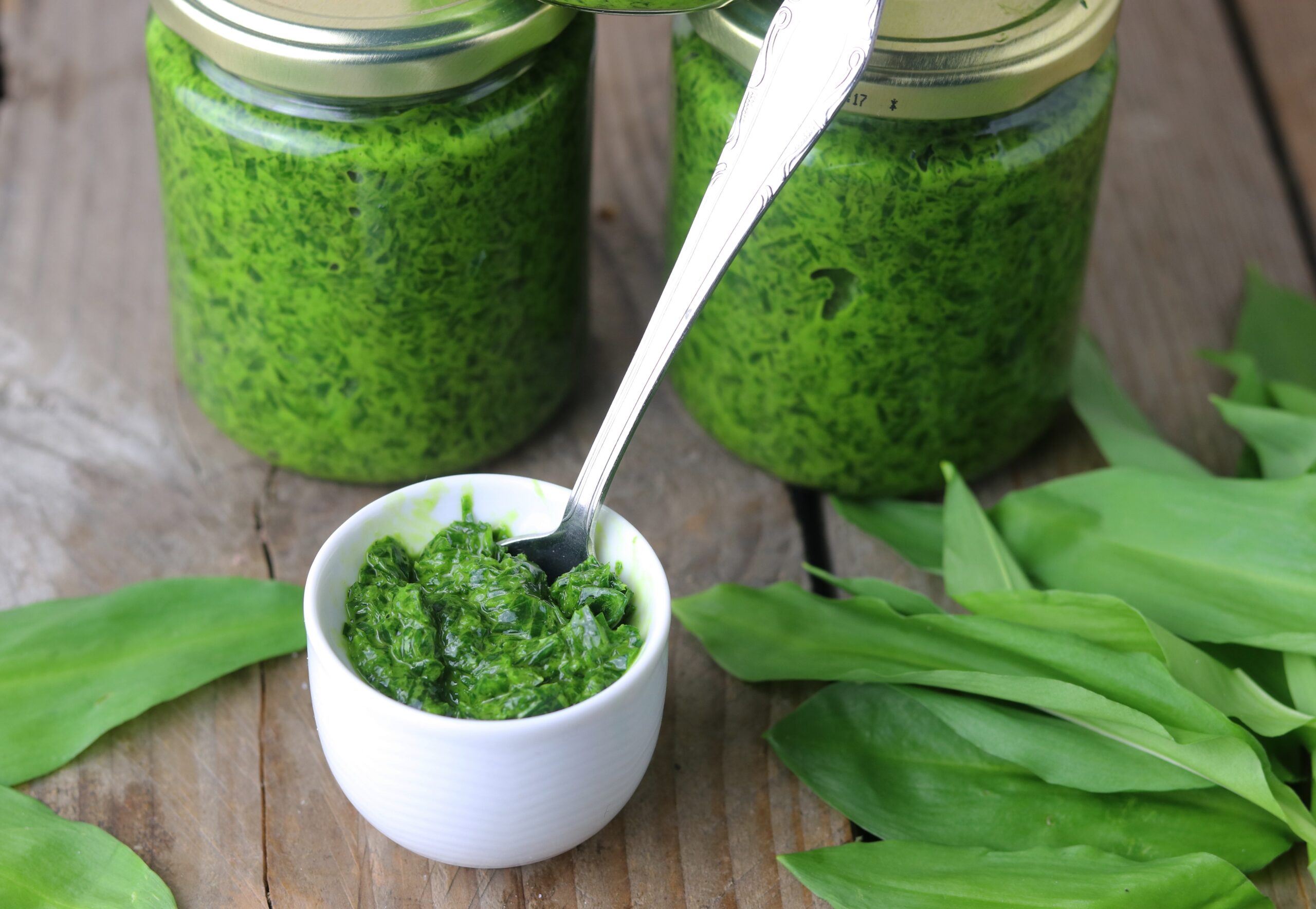
    Wild garlic paste – delicious in cream sauces
    Wild garlic taste preserved – delicious in cream sauces

    Recognize wild garlic (ramson) safely

    When harvesting wild garlic, sometimes also called ramson: if you have found wild garlic and are unsure, rub a leaf between your fingers and smell it. If it smells leeky or garlic-like, you have really found wild garlic. Young wild garlic looks similar to some poisonous plants, so you are on the safe side with the smell test.
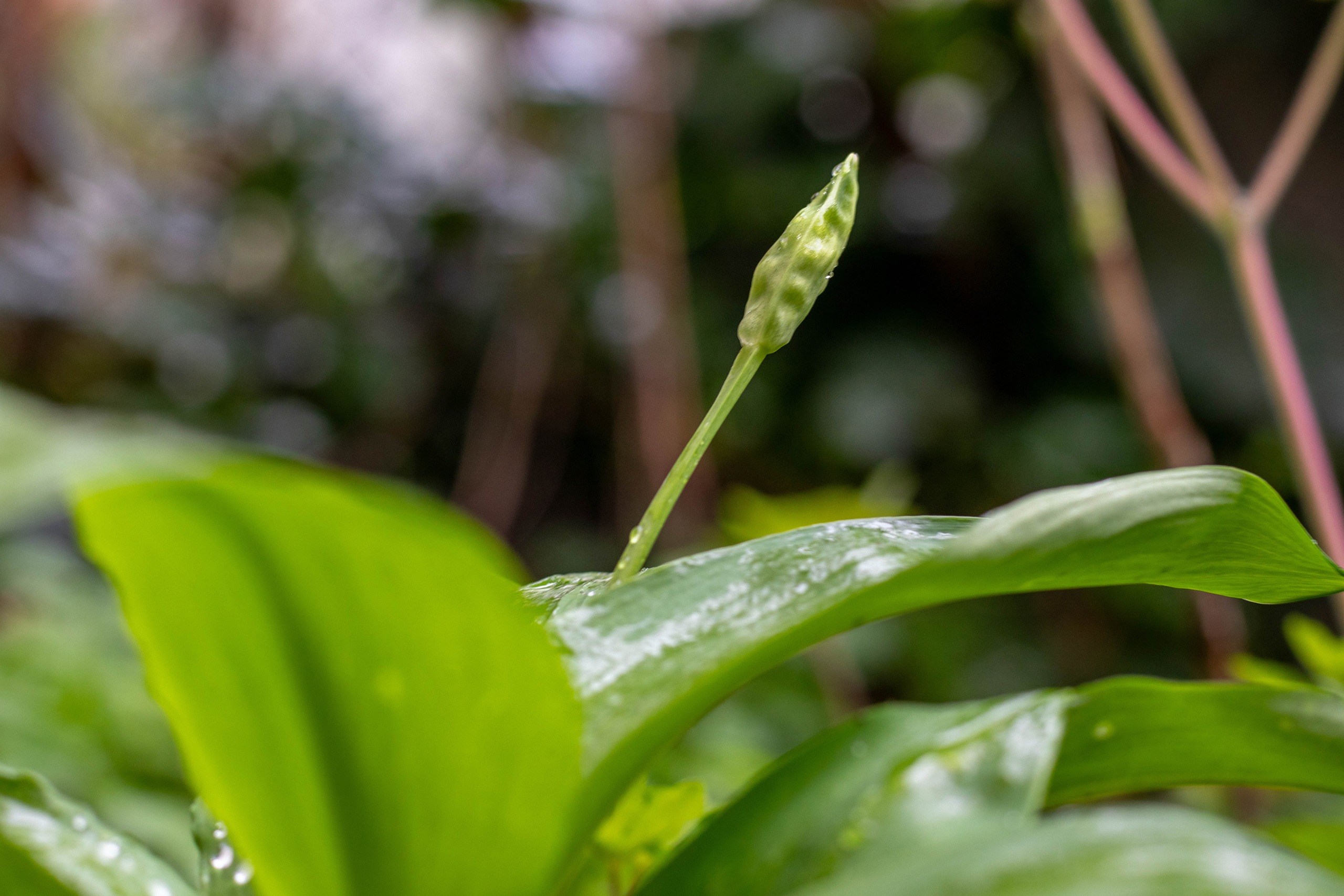
    Bärlauch und Bärlauchknospe
    Wild garlic and wild garlic bud

    Wild garlic paste and identifying characteristics for wild garlic as a video:

    This video is in German, but you’ll see the wild garlic. And the automatic subtitles work just fine. Feel free to subscribe to my YouTube channel for more vegan recipes.

    And now to the recipe:
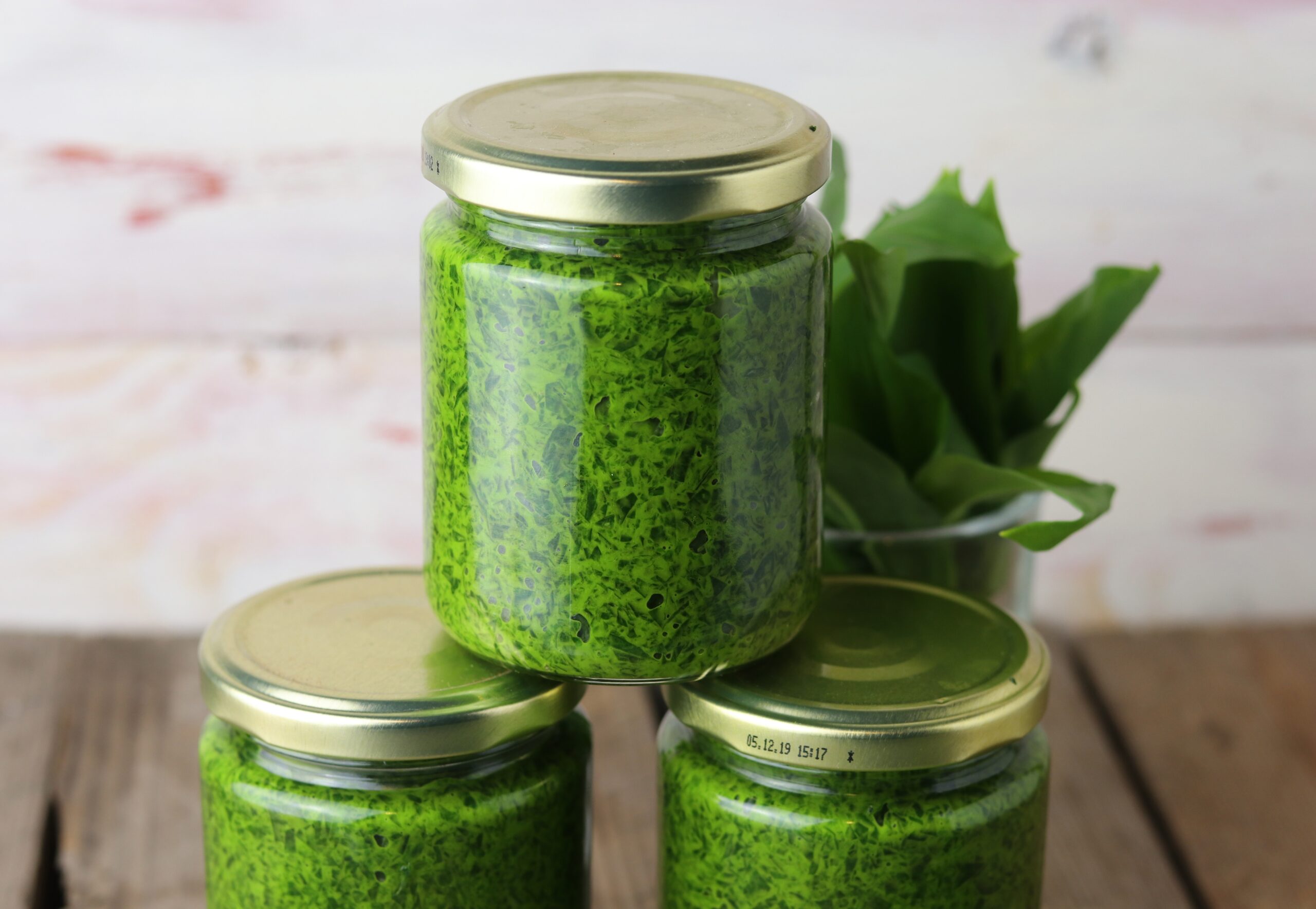
    In this recipe I make a delicious seasoning paste from aromatic, fresh wild garlic. This supply lasts until next year.
    In this recipe I make a delicious seasoning paste from aromatic, fresh wild garlic. This supply lasts until next year.

    Ingredients for approx. 600 ml wild garlic paste:

    500 g wild garlic, fresh
    1 tablespoon salt
    250 ml oil, cold pressed (e.g. sunflower or rapeseed oil)

    Preparation:

    1. Wash the harvested wild garlic thoroughly and remove the stems.
    2. Roughly chop the leaves and puree them with the salt and oil into a paste or chop them up in a food processor.
    3. Pour the wild garlic paste into small screw-top jars.
    4. Press down with a spoon to prevent air spaces. Cover with a thin layer of oil to prevent fermentation and oxidation.
    5. Store the paste in a not too warm, dark place and it will last for about 1 year. Place opened glasses in the refrigerator.
    6. You can also freeze seasoning paste instead of filling it into small screw-top jars.

    Bon appetit!

    Tip:

    Would you like more wild garlic recipes? How about trying my green spinach and wild garlic waffles?

  • Vegan Scotch Eggs – with homemade vegan eggs and meat

    Vegan Scotch Eggs – with homemade vegan eggs and meat

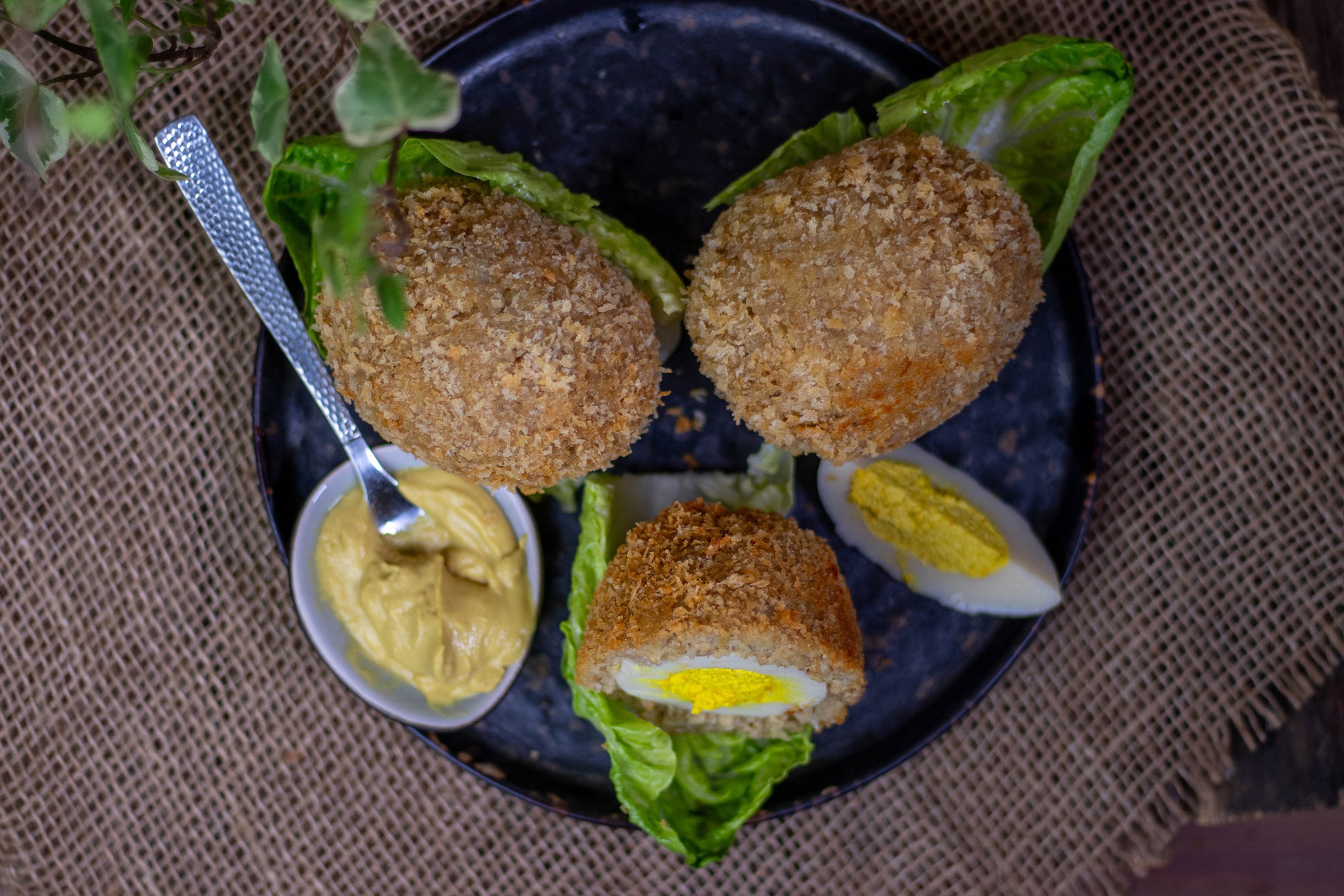
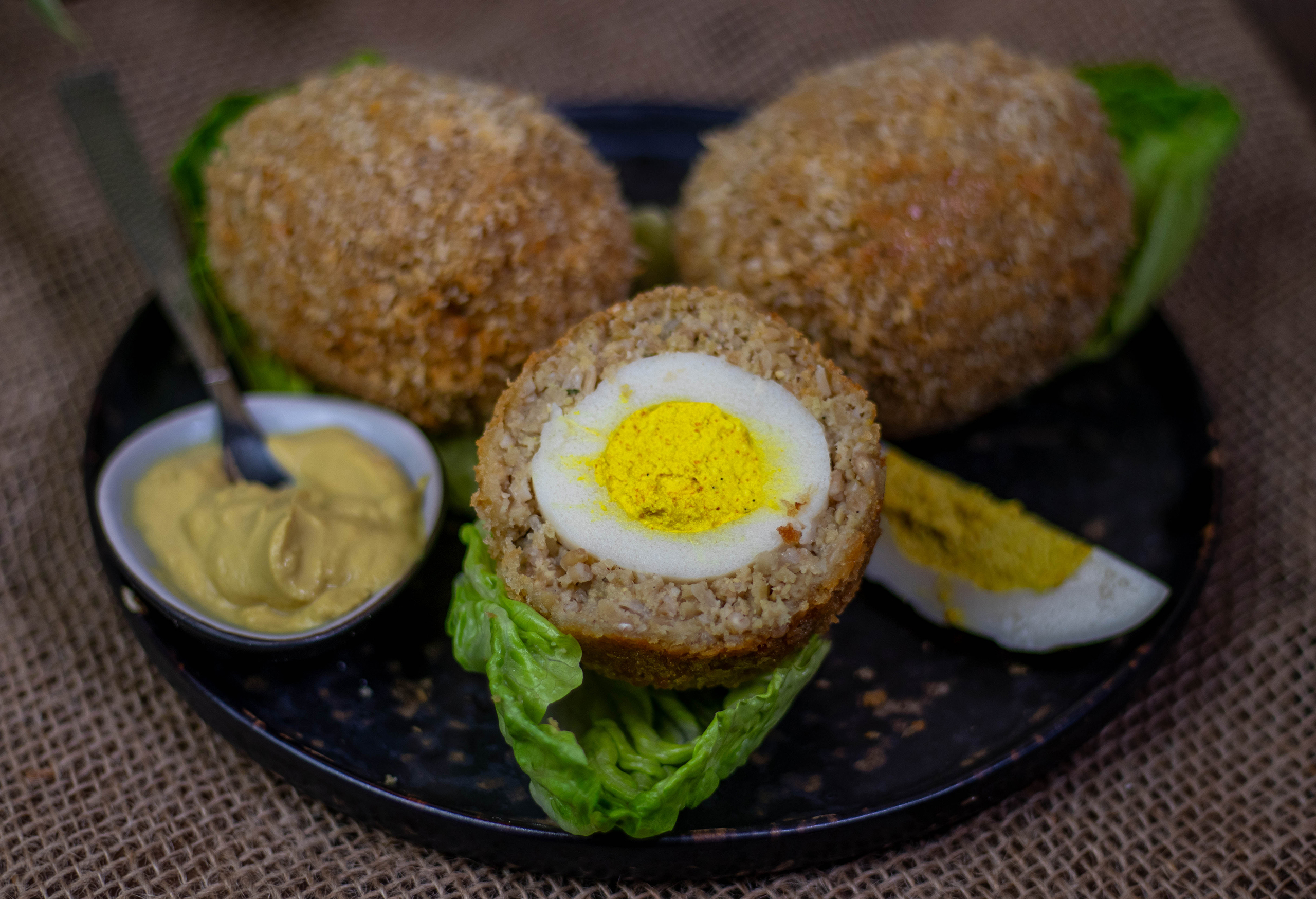
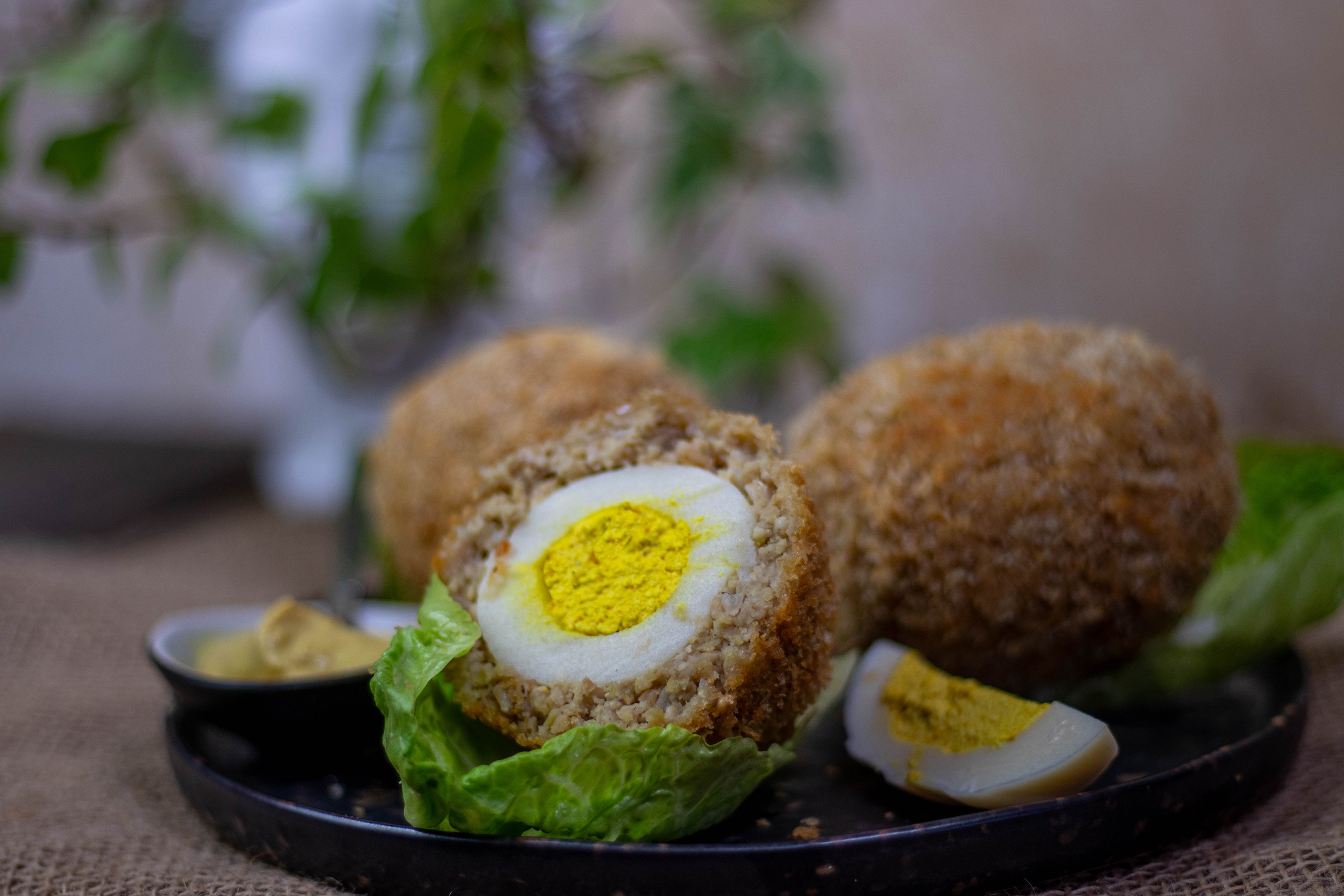
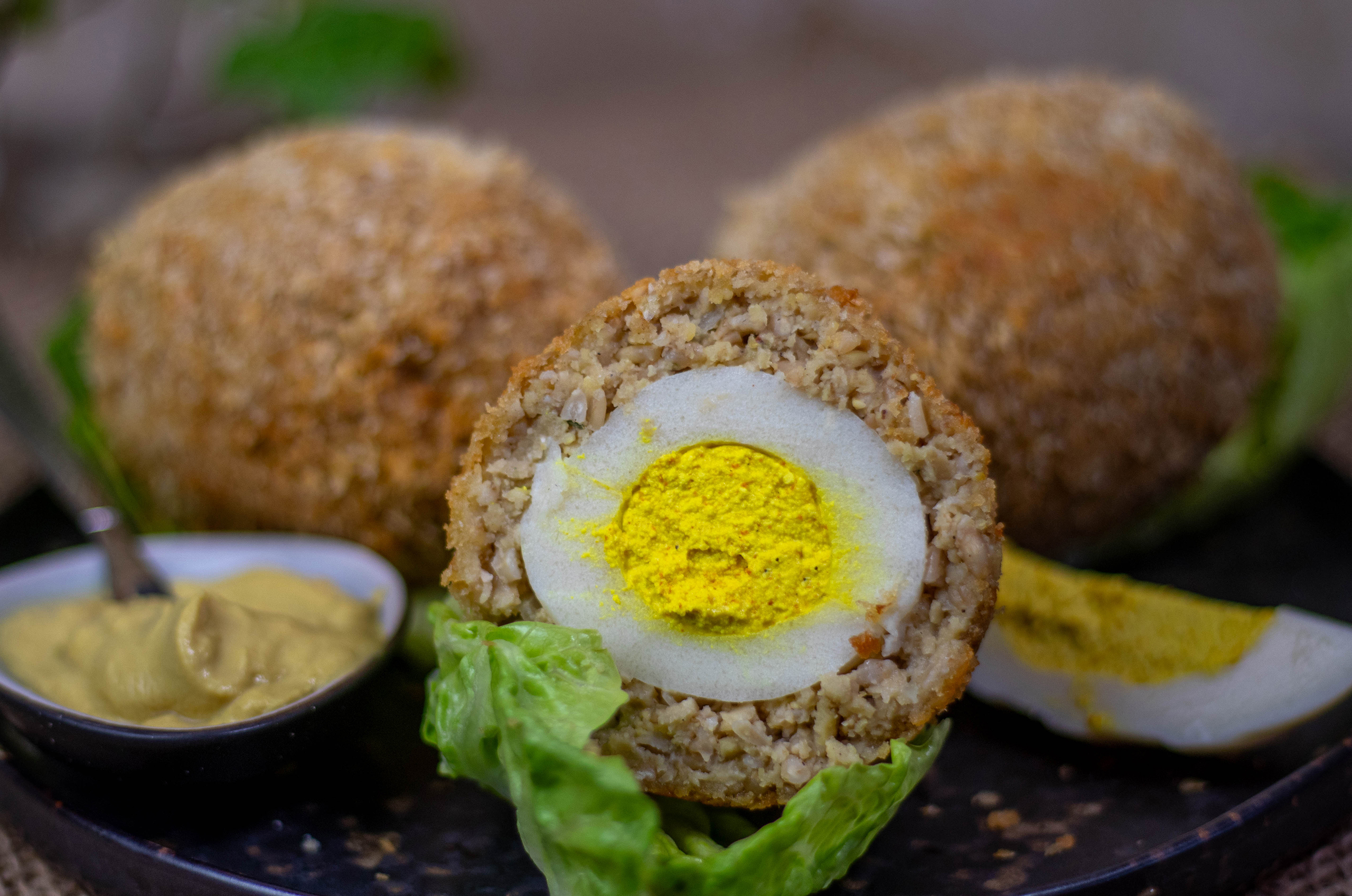
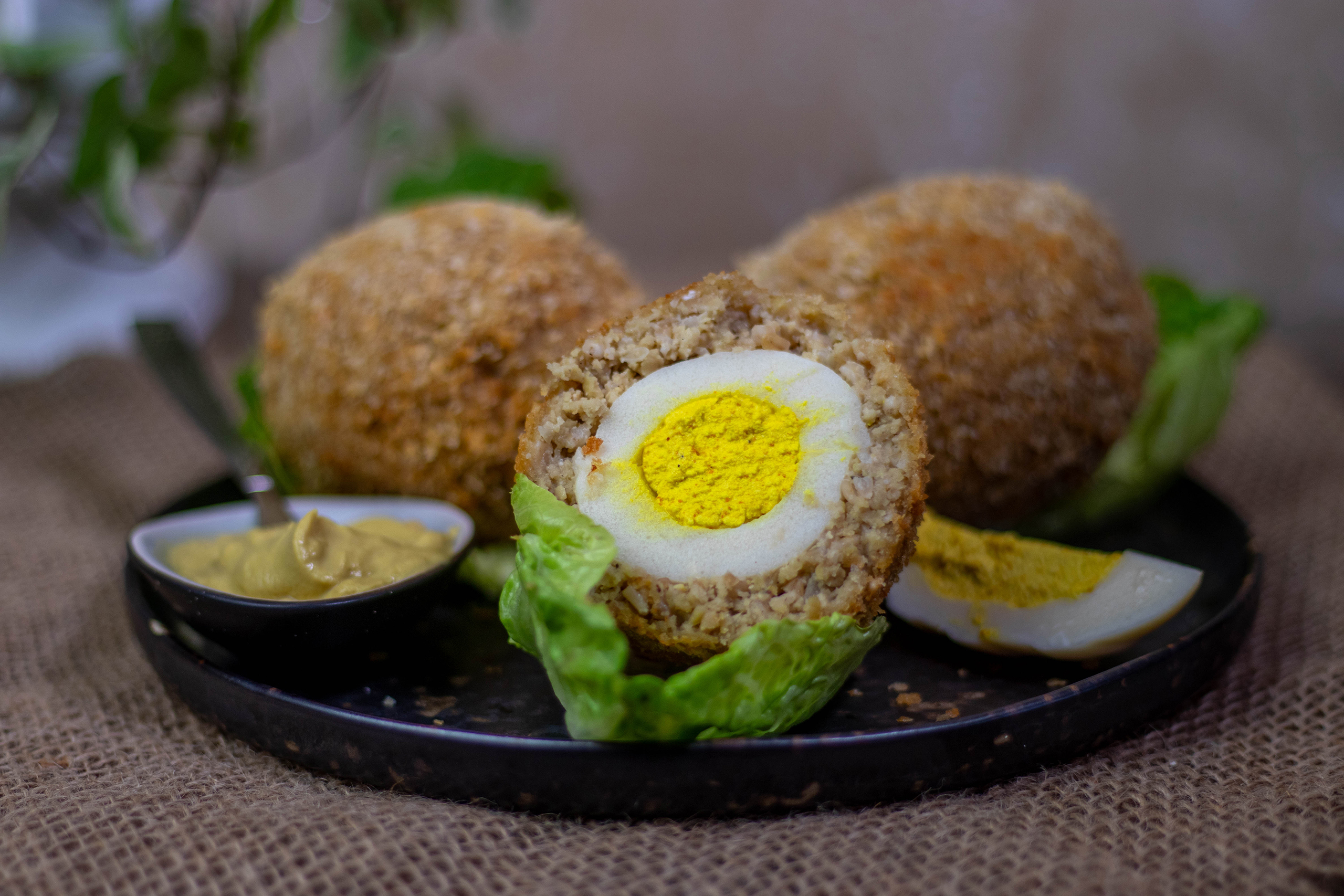
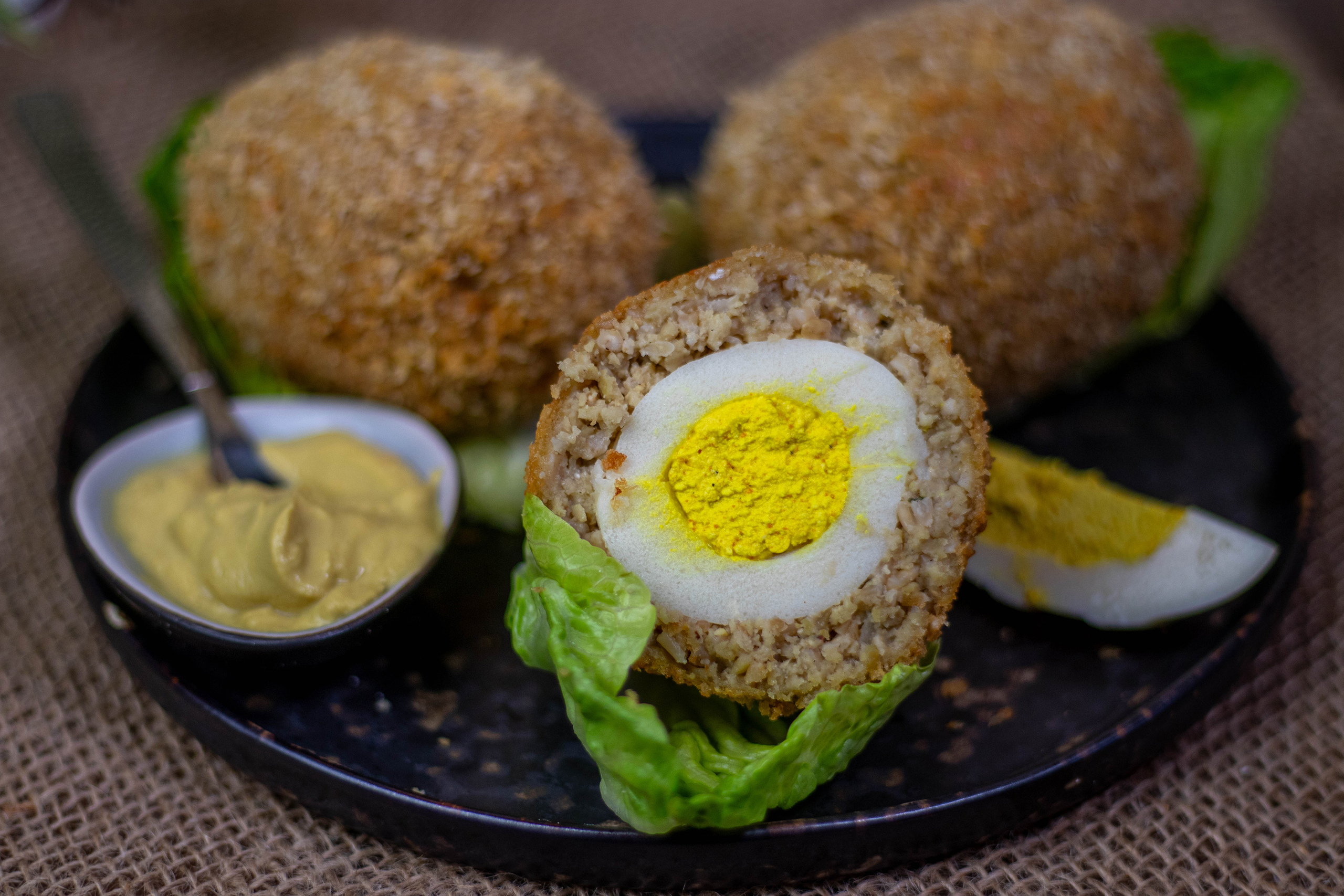
    I wrap eggs in a sausage meat coating, bread them and deep-fry them. What do I get? Yes, Scotch eggs. And mine are all vegan and completely homemade! Crispy, delicious, aromatic, spicy, simply mouthwatering!

    Vegan Scotch Eggs, with homemade vegan eggs
    Vegan Scotch Eggs, with homemade vegan eggs

    What are Scotch eggs exactly?

    Scotch eggs are one of the famous and popular specialties from the British cuisine. You can buy them ready-made in supermarkets and they are a popular snack, for example for picnics, in the evenings in pubs, or simply as a snack in between.

    Sadly this tasty egg dish not vegan! For making Scotch Eggs, boiled eggs are coated in sausage meat, then breaded and then deep-fried.
    Of course, in my recipe I do all of this purely plant-based. Enjoy my deleicious recipe for vegan Scotch eggs!

    Scotch eggs are one of the famous and popular specialties from the British cuisine. Purely plant-based in my recipe.
    These eggs are one of the famous and popular specialties from the British cuisine. Purely plant-based in my recipe.

    Vegan Scotch Eggs

    In this recipe, I use my recipe for vegan hard-boiled eggs, which some of you may already know. Then I make a vegan sausage meat based on seitan, which I use to coat the vegan eggs. These are then breaded with breadcrumbs and fried until crispy.

    My vegan Scotch eggs that are very difficult to distinguish from the original.

    For this recipe for vegan Scotch eggs, I use my recipe for vegan hard-boiled eggs, which some of you may already know.
    For this recipe for vegan Scotch eggs, I use my recipe for vegan hard-boiled eggs, which some of you may already know.

    Scotch Eggs – a hearty, delicious snack and something very special for vegans

    This delicious and hearty dish is perfect for a variety of occasions. Pre-fried Scotch Eggs are great to take with you, for example to a buffet, a picnic or as a side dish to a barbecue. Enjoy them as a snack, as a snack to a pub night or as a hearty meal at home.
    In Germany, where I live, Scotch eggs would always be something special because hardly anyone here knows about them. But with this vegan version of this English kitchen classic, you’ll present the absolute eye-catcher of the evening on the table!

    Scotch Eggs – a hearty, delicious snack and something very special for vegans
    Scotch Eggs – a hearty, delicious snack and something very special for vegans

    There are lots of good proteins in vegan Scotch eggs

    My vegan version of Scottish eggs is very high in protein and therefore also very interesting for athletes.
    Because I make the vegan eggs based on tofu and the meat coating of the eggs contains a lot of good seitan, i.e. pure wheat protein.

    There are lots of good proteins in vegan Scotch eggs
    There are lots of good proteins in this vegan egg dish

    More veganized egg dishes from Daily Vegan

    Are you missing eggs in your vegan diet? Or do you eat eggs but want to reduce your egg consumption? No problem with my recipes for vegan egg dishes. Feel free to browse through my “Eggs” category, right here on Daily Vegan. Or try these delicious, vegan egg recipes straight away:

    In the UK, Scotch eggs can be bought ready-made in supermarkets and they are a popular snack. But they are not vegan.
    In the UK, Scotch eggs can be bought ready-made in supermarkets and they are a popular snack. But they are not vegan.

    Vegan Scotch Eggs – the preparation in pictures

    Here I will show you step by step on photos how I prepare this vegan egg snack. Afterwards the recipe starts directly.

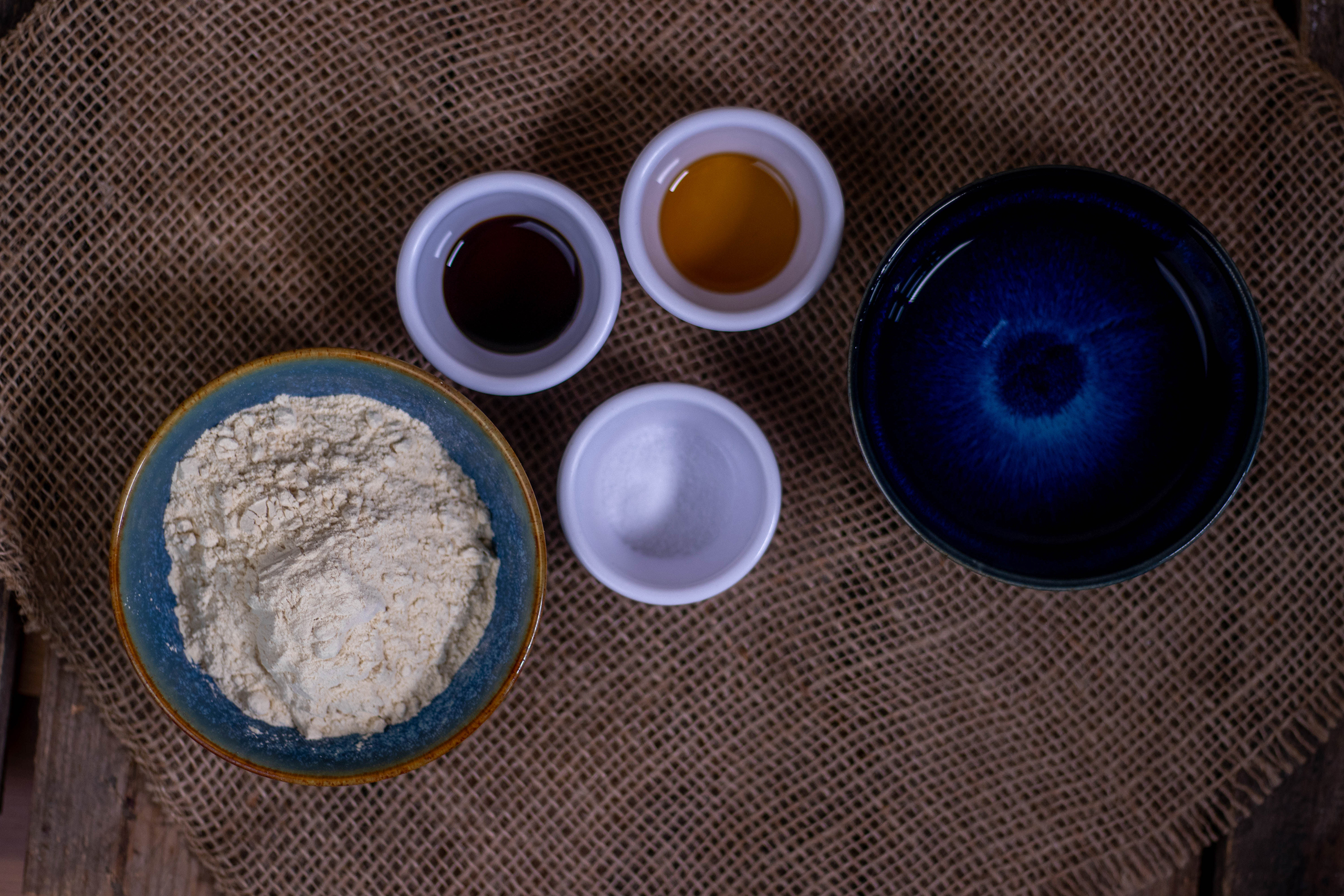
    1. All the ingredients for the seitan for the sausage meat casing.
    1. All the ingredients for the seitan for the sausage meat casing.
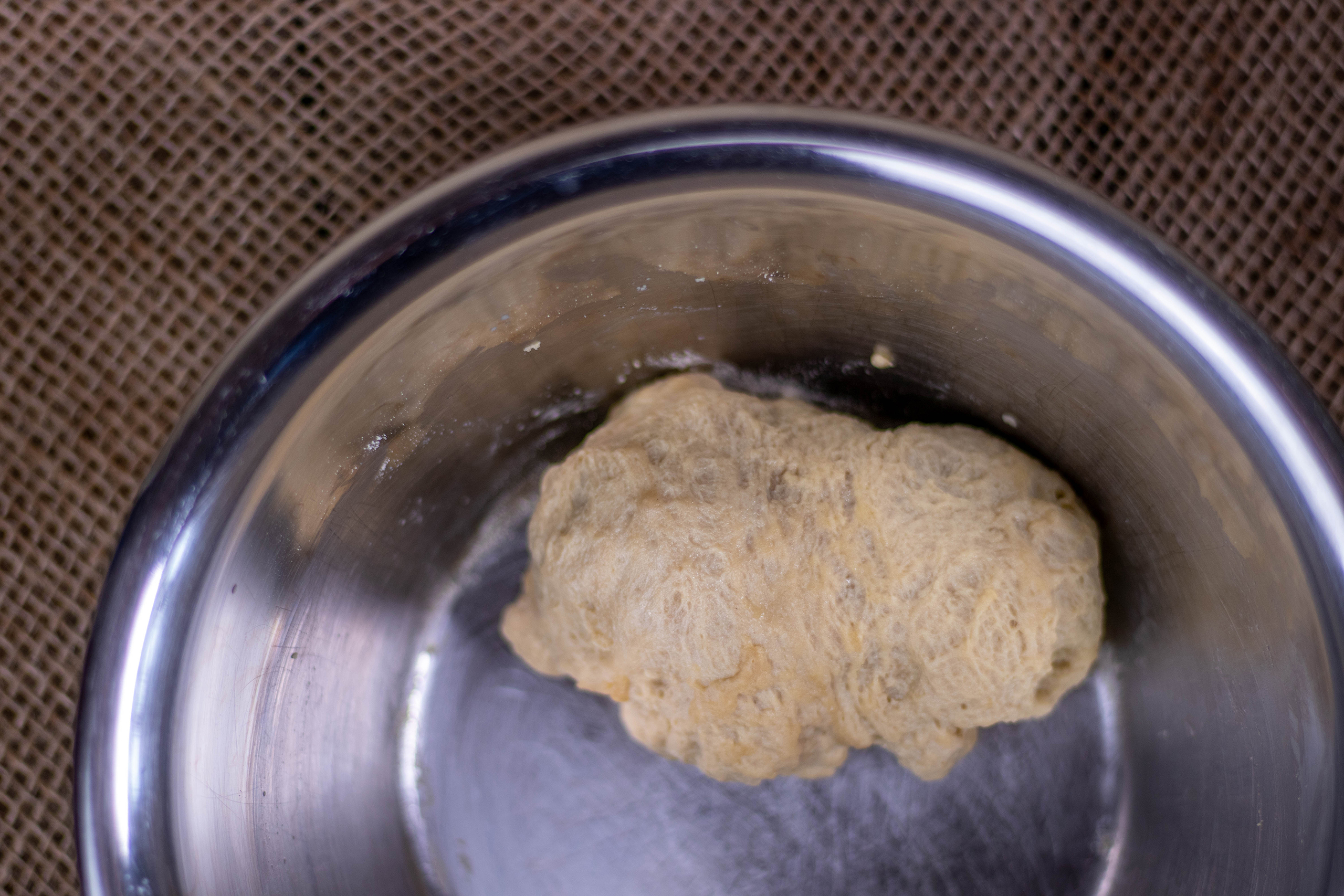
    2. The raw Seitan is finished kneading and can next be cooked and then chopped.
    2. The raw Seitan is finished kneading and can next be cooked and then chopped.
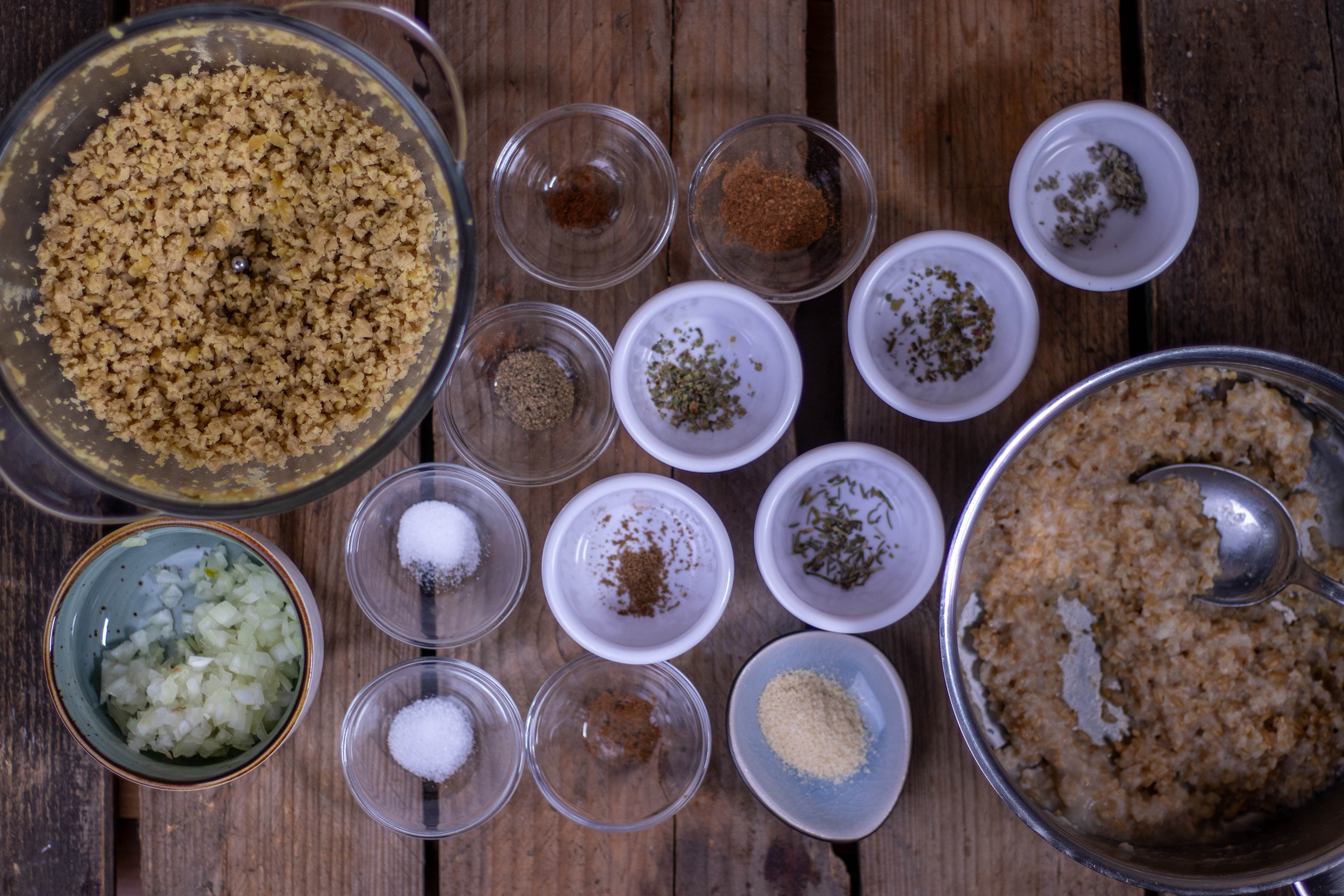
    3. All ingredients for the vegan sausage meat.
    3. All ingredients for the vegan sausage meat.
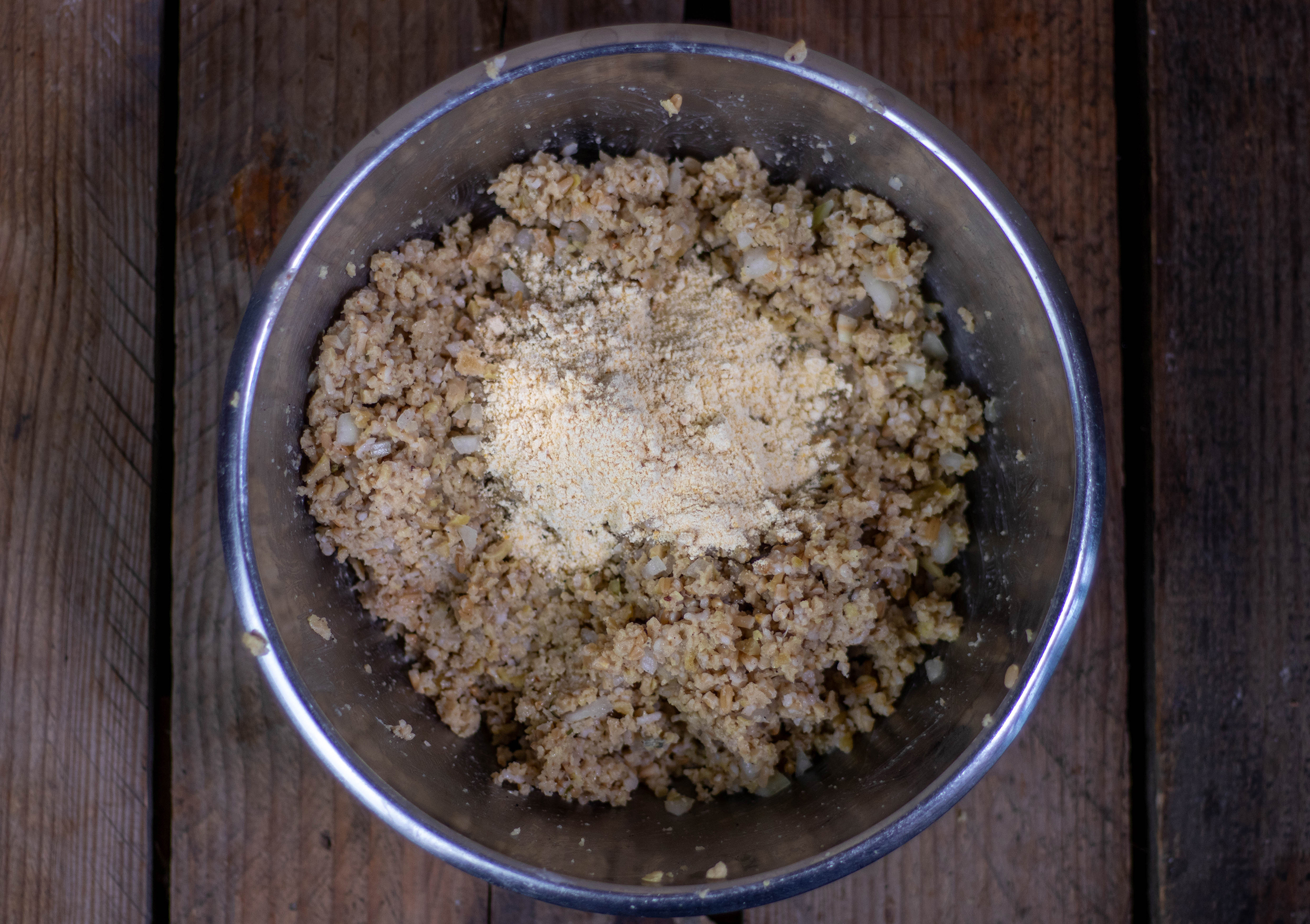
    4. The sausage meat for the meat casing of the vegan Scotch eggs is mixed. Now I thicken it with some chickpea flour.
    4. The sausage meat for the meat casing of the eggs is mixed. Now I thicken it with some chickpea flour.
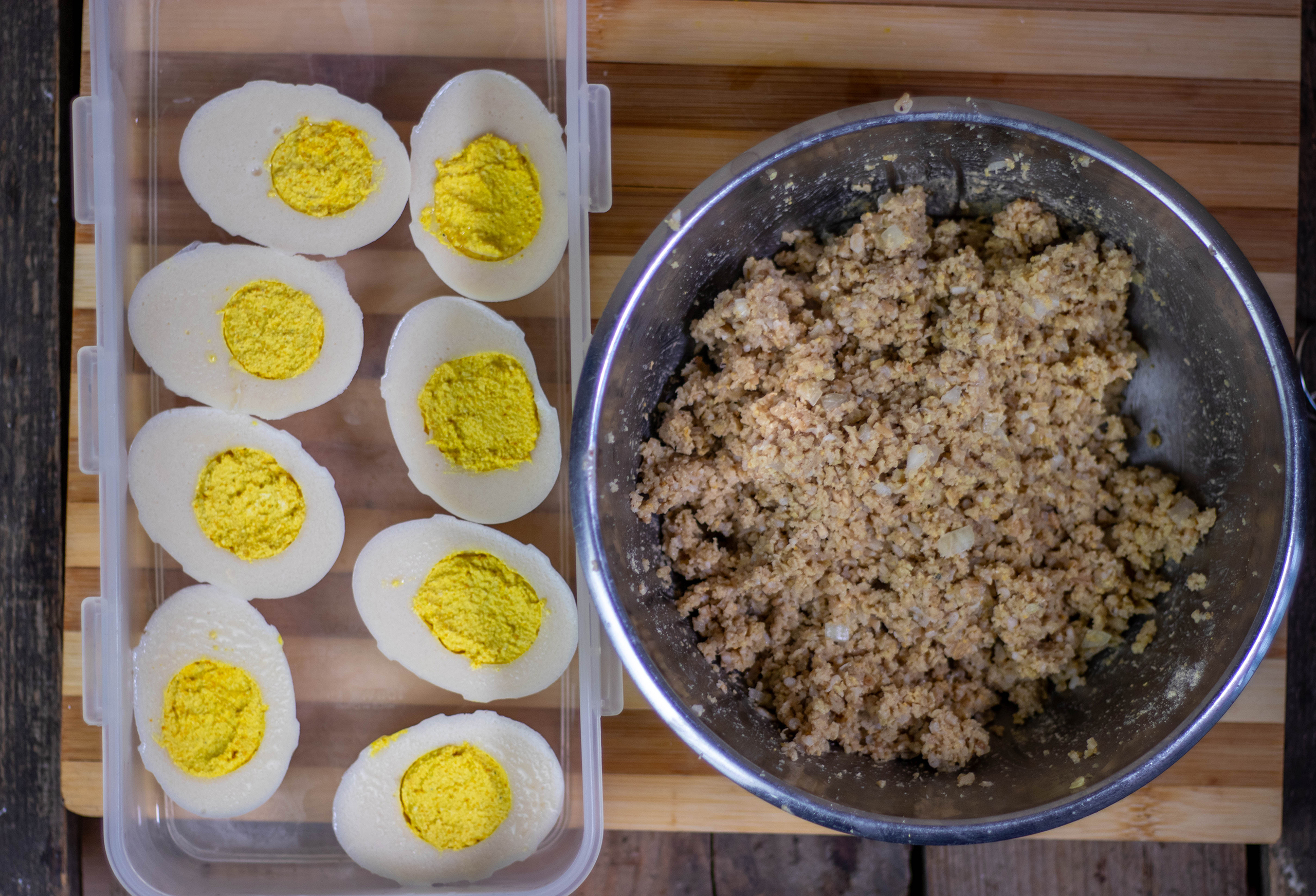
    5. The prepared vegan eggs.
    5. The prepared vegan eggs.
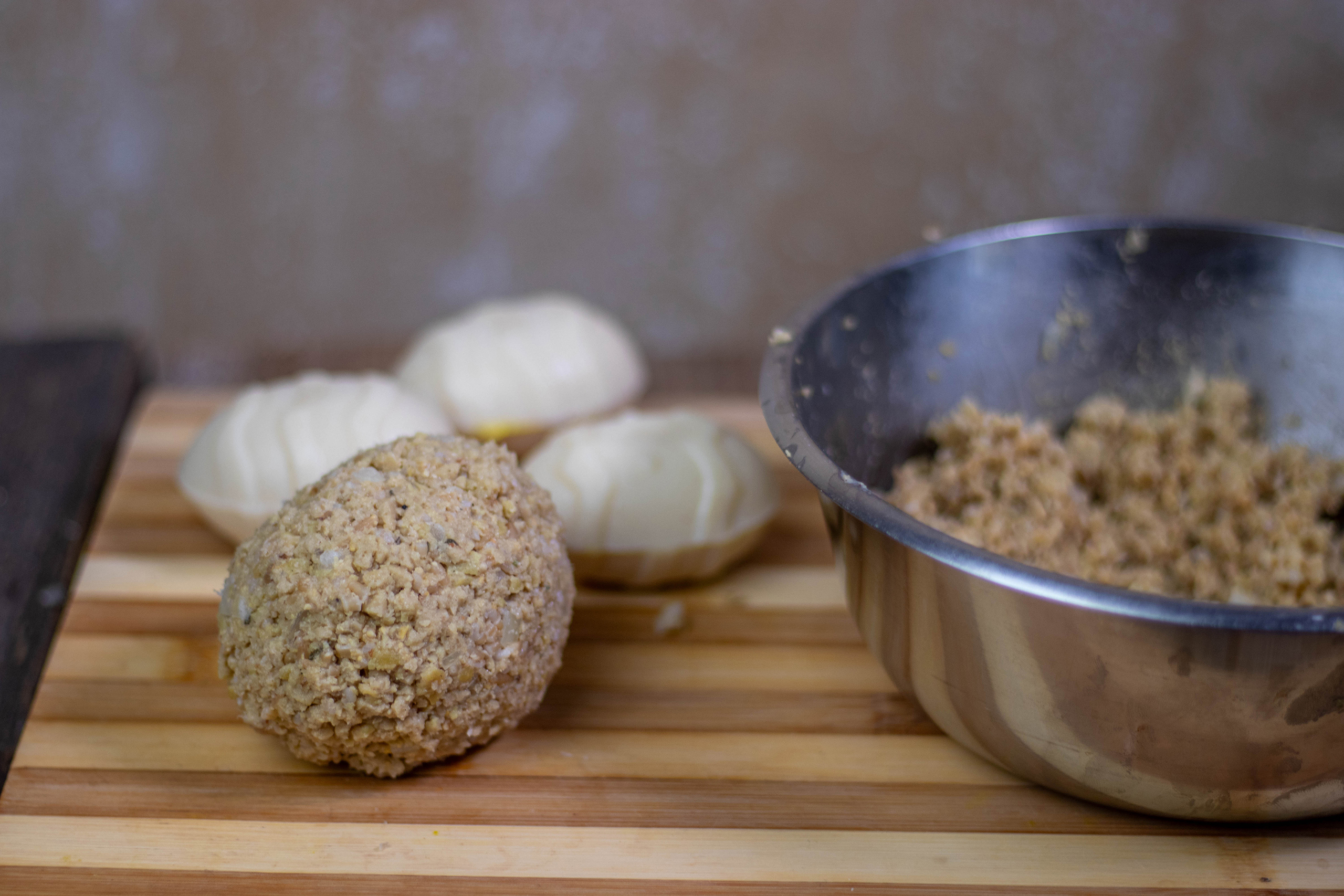
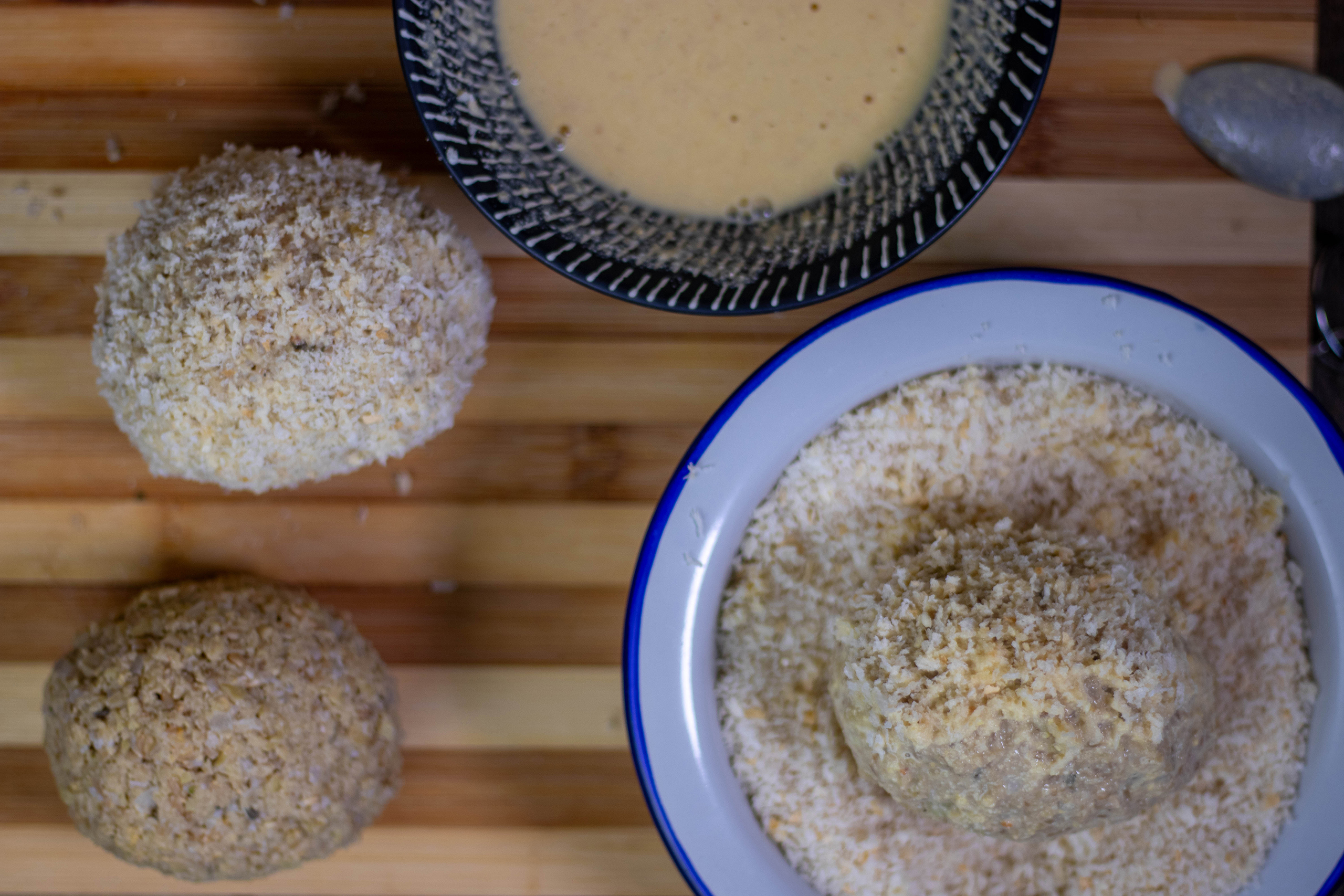
    6. The egg halves are pressed together and I form a casing out of sausage meat.
    6. The egg halves are pressed together and I form a casing out of sausage meat.
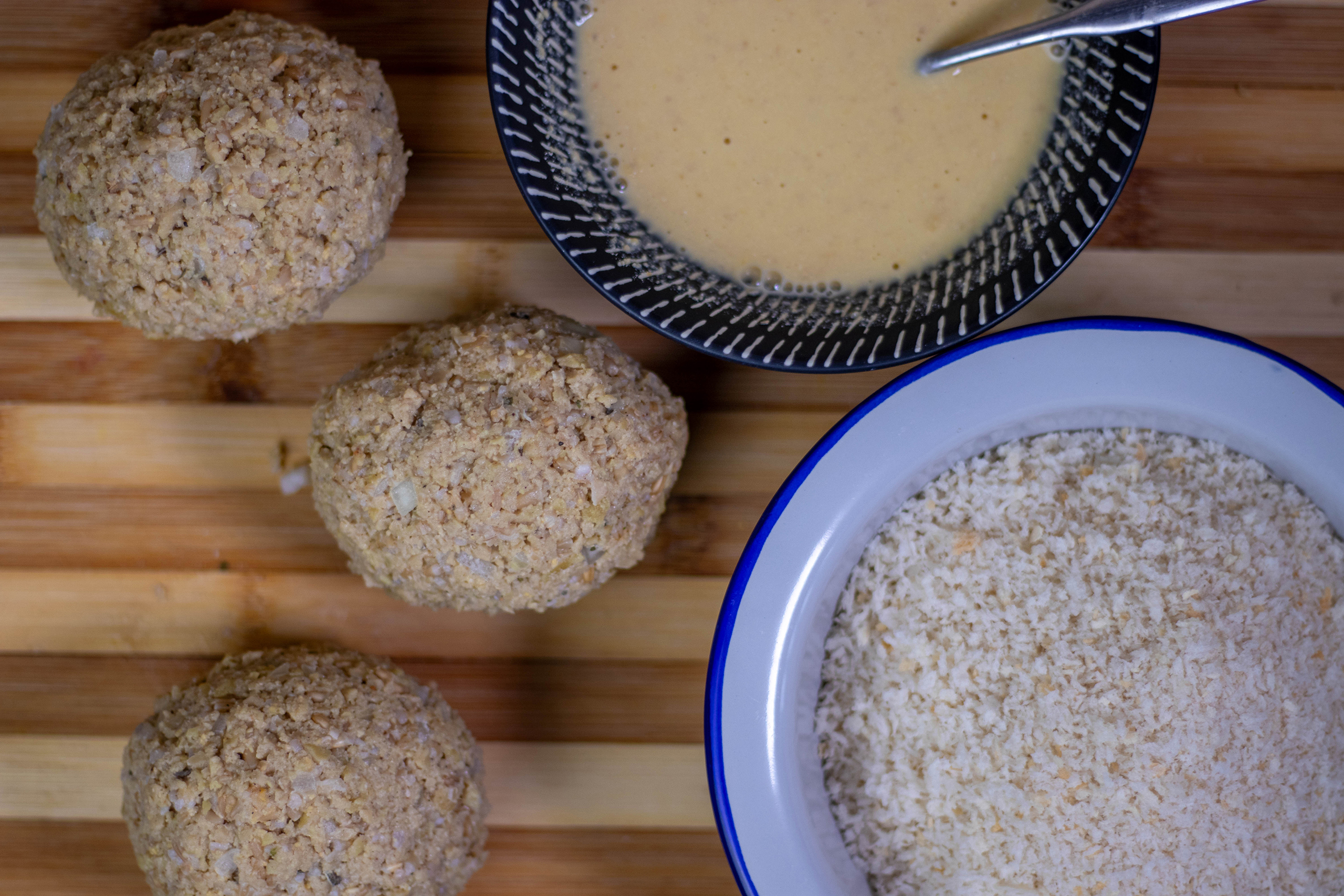
    7. Now the vegan Scotch eggs can be breaded.
    7. Now the vegan eggs can be breaded.
    8. The Scotch eggs are first breaded in mixed chickpea flour and then in panko. Then they just need to be fried in hot oil.
    8. The vegan eggs are first breaded in mixed chickpea flour and then in panko. Then they just need to be fried in hot oil.
    Vegan Scotch Eggs
    Vegan Scotch Eggs

    Ingredients for 4 vegan Scotch eggs:

    8 halfs of vegan, hard-boiled eggs

    Meaty coating:

    Seitan:

    120 g vital wheat gluten
    1 tsp of salt
    2 tsp soy sauce
    2 tsp sesame oil
    Approx. 100 ml water

    1.5 l broth

    Other ingredients for the meat:

    70 g oat groats
    1/2 onion, finely diced

    1 tsp pickling salt
    1 tsp salt
    1/2 tsp pepper
    1/4 tsp allspice
    1/4 tsp clove, ground
    1/2 tsp caraway seeds, ground
    1 tsp marjoram, dried
    1 tsp nutmeg
    1.5 tsp yeast flakes
    1.5 tsp sage, finely chopped
    1 tsp chopped thyme, dried
    1 tsp chopped parsley, dried

    3 tablespoons chickpea flour

    Breading:

    2 tablespoons of chickpea flour, mixed with 100 ml of water
    Approx. 100g panko

    Approx. 1 liter of oil for deep frying

    Preparation:

    Seitan preparation:

    1. Bring the broth to a boil in a large pot.
    2. Mix the Seitan Fix with the salt.
    3. Mix the water with the soy sauce and sesame oil.
    4. Add about 2/3 of the water to the seitan powder and knead. Gradually add more water so that there are no dry spots on the seitan. But it shouldn’t get too wet either. The result should be a firm, tough dough.
    5. Cut the raw lump of seitan into slices, about 1 centimeter thick.
    6. Cook the seitan slices in the broth for about 20 minutes, strain and let cool.

    Preparation of the sausage mixture for the vegan Scotch eggs:

    Scotch eggs are actually coated with seasoned sausage meat (the inside of a sausage). So I make a vegan sausage meat for them in this recipe.

    1. Simmer the oat groats with 250 ml of water at a low temperature for 15 minutes. Then let it cool down.
    2. Cut the seitan meat into coarse pieces. Put these in a food processor and chop finely.
    3. Then mix the seitan with the onions.
    4. Add the oat groats and all the spices to the meat. Mix and knead until a nice bond is formed.
    5. Then knead in the chickpea flour.

    Forming the vegan Scotch eggs:

    1. Take two vegan egg halves and press them together.
    2. Quarter the vegan sausage mixture.
    3. Form one part as a coating around the first egg. Press the meat mixture firmly aroung the egg.
    4. Repeat this step for the 3 additional Scotch eggs.

    Breading the vegan Scottish eggs:

    1. Roll the coated eggs in the mixed chickpea flour.
    2. Then turn in panko.

    Frying the vegan Scotch eggs:

    1. Heat the oil in a deep fryer or small saucepan to 170-175°C. If you use a saucepan, you should use a kitchen thermometer. The fat should not get hotter than 180°. If necessary, remove the pot from the flame for a short time.
    2. Fry the Scottish eggs one at a time in the hot oil for 4-5 minutes. Turn occasionally while frying so that the Scotch eggs are evenly cooked.

    Bon appetit!

  • Vegan hard-boiled eggs – purely plant-based

    Vegan hard-boiled eggs – purely plant-based

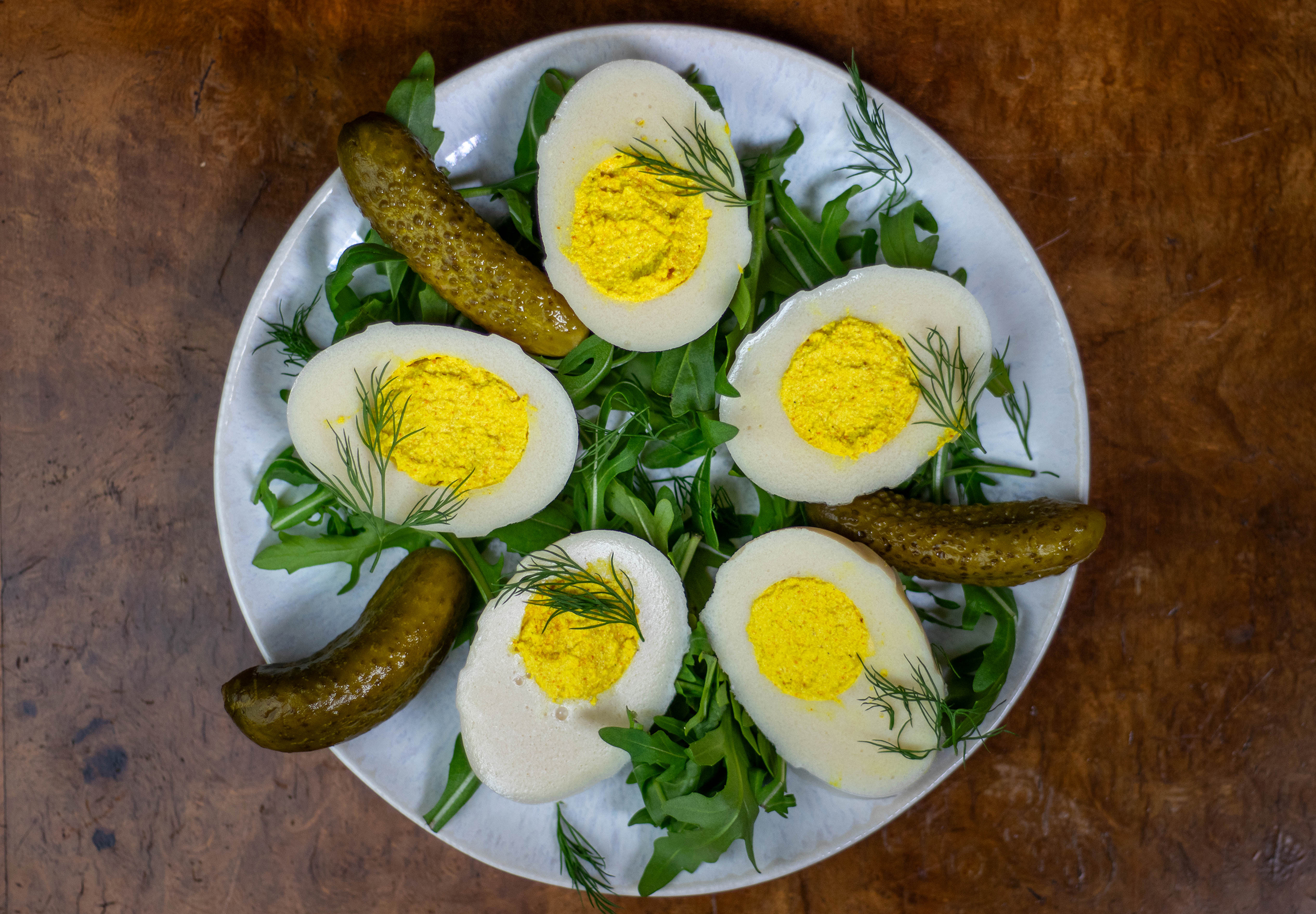
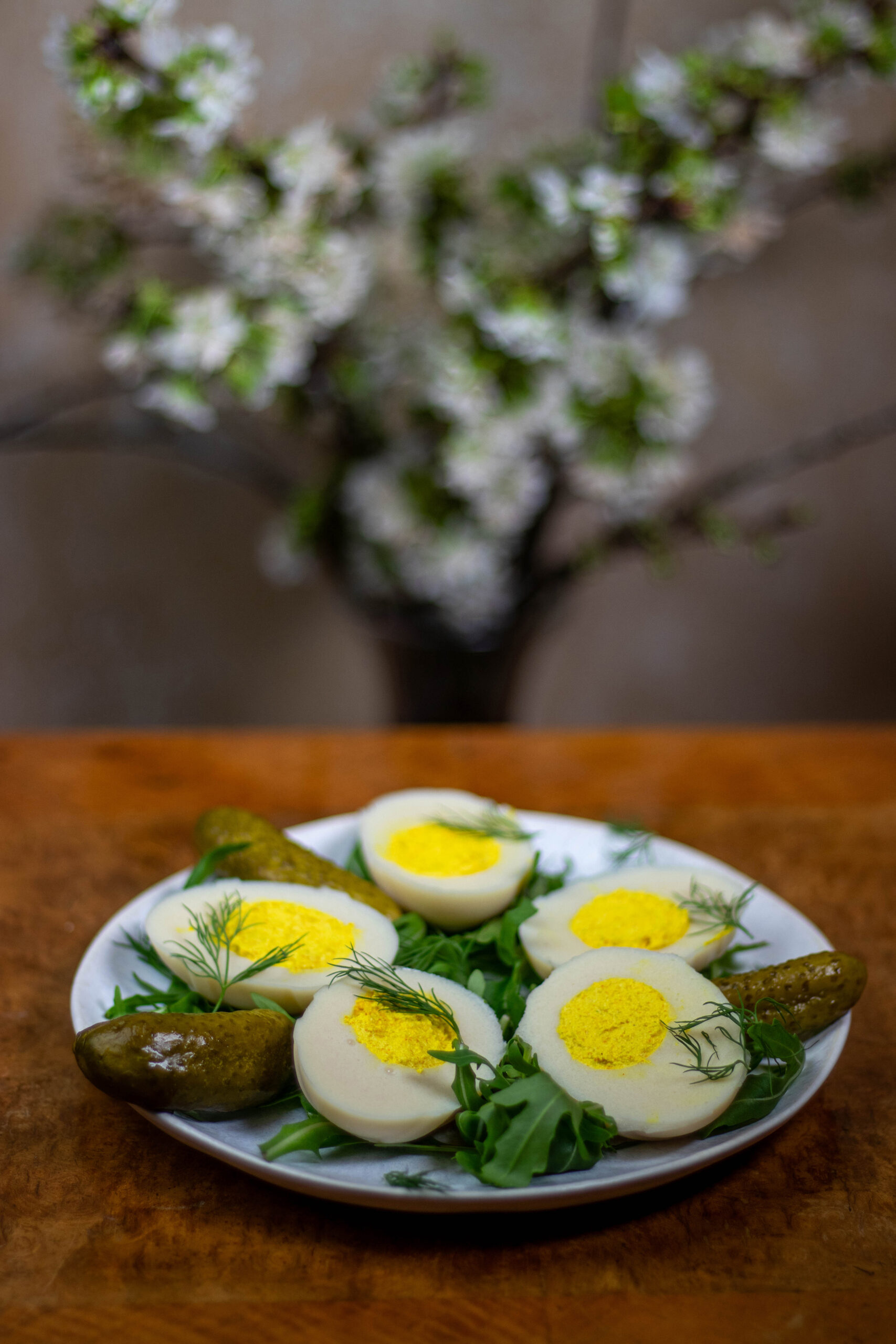
    Hard-boiled eggs, absolutely vegan! Homemade vegan hard-boiled eggs: with my recipe you can enjoy this easy snack again. And use it it in many different recipes, that requiere boiled eggs.

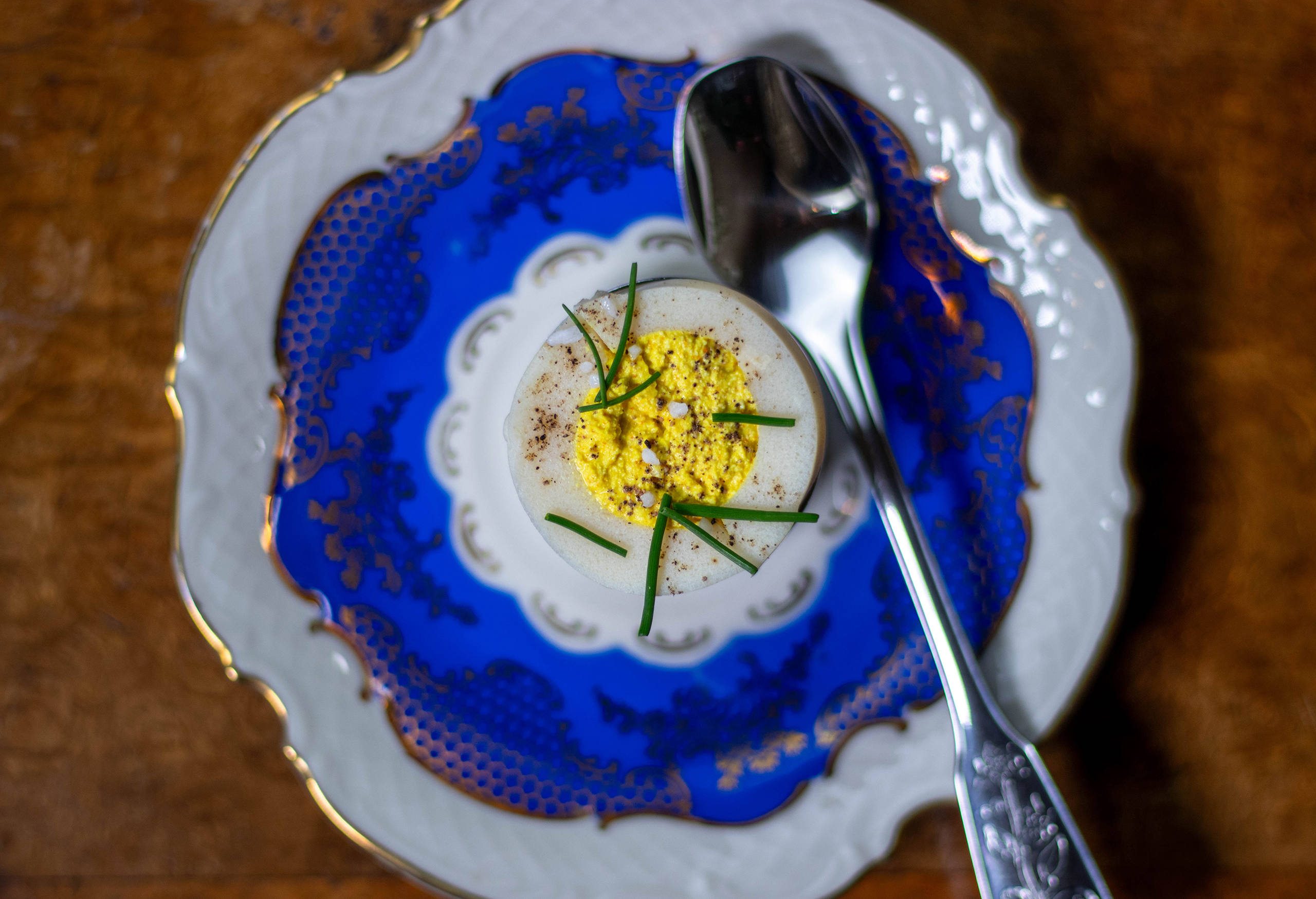
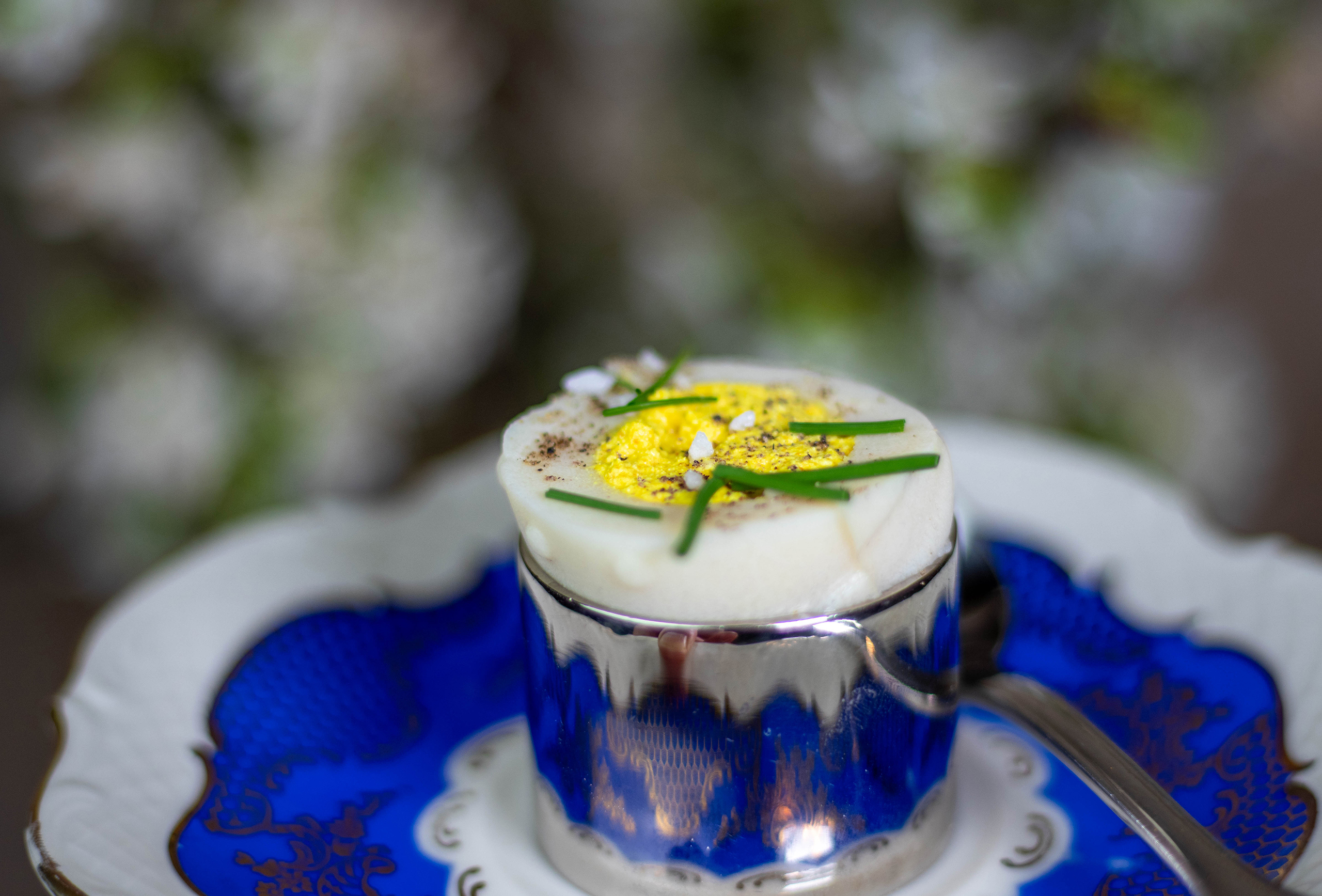
    Here I put 2 halves of the vegan, hard eggs together in an egg cup. This is an easy way to serve a vegan, hard-boiled breakfast egg.
    Here I put 2 halves of the vegan, hard eggs together in an egg cup. This is an easy way to serve a vegan, hard-boiled breakfast egg.

    Vegan hard-boiled eggs – a simple recipe with just a few ingredients

    Hard-boiled chicken eggs are made by cooking fresh eggs in boiling water until the whites and yolks are completely solid. Of course, it’s hard to beat this in terms of simplicity.

    Not quite as simple, but still very easy and with just a few ingredients you can cook my vegan, hard eggs. Aside from the hour wait for the egg whites to set, it’s also very quick to make.

    Vegan hard-boiled eggs – purely plant-based
    Vegan hard-boiled eggs – purely plant-based

    Vegan breakfast egg? No problem!

    With my recipe for vegan, hard eggs you can easily add a vegan breakfast egg to the table! To do this, simply take two halves of my vegan, hard-boiled egg halves and put them together in an egg cup. Et voila! Vegan breakfast egg!

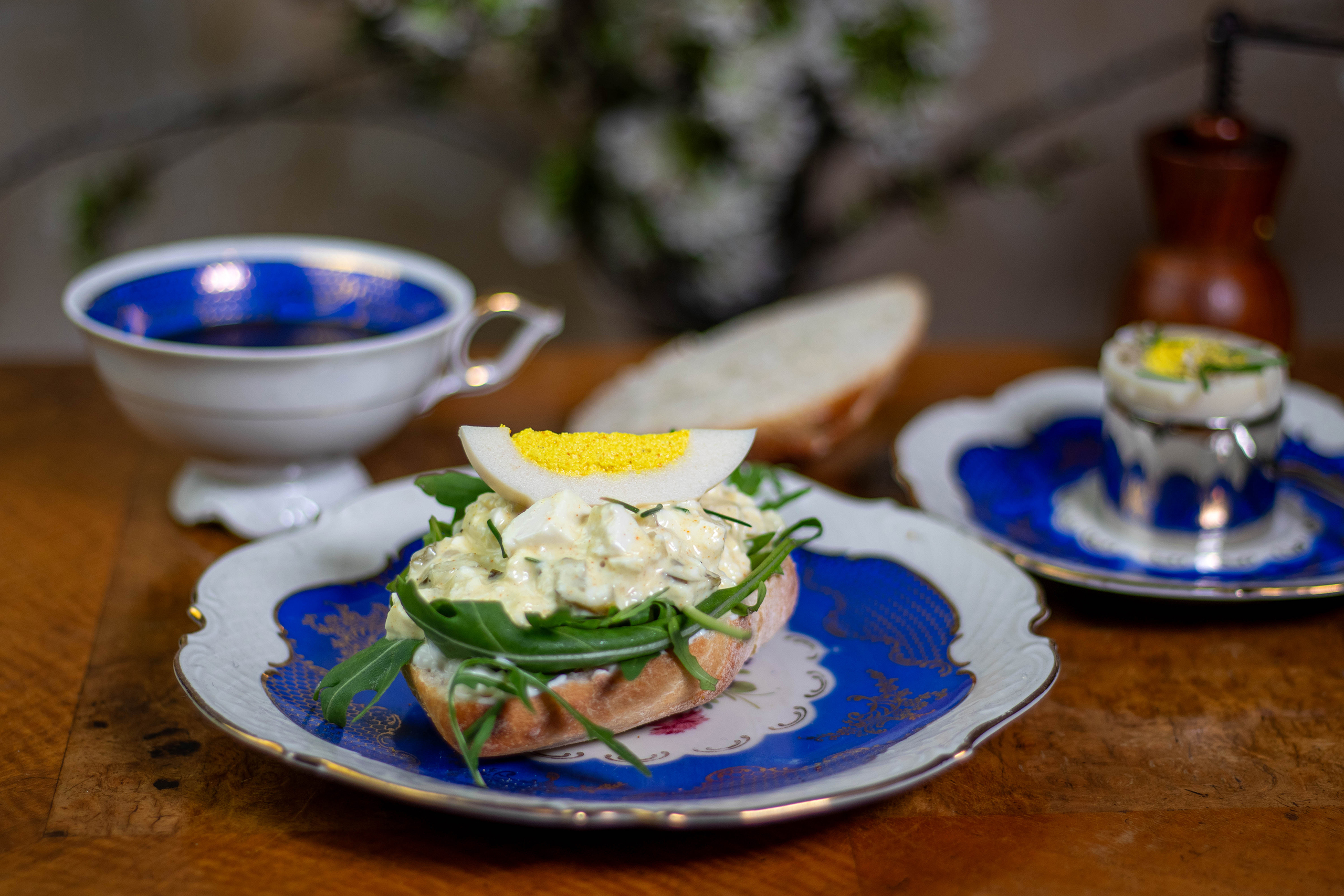
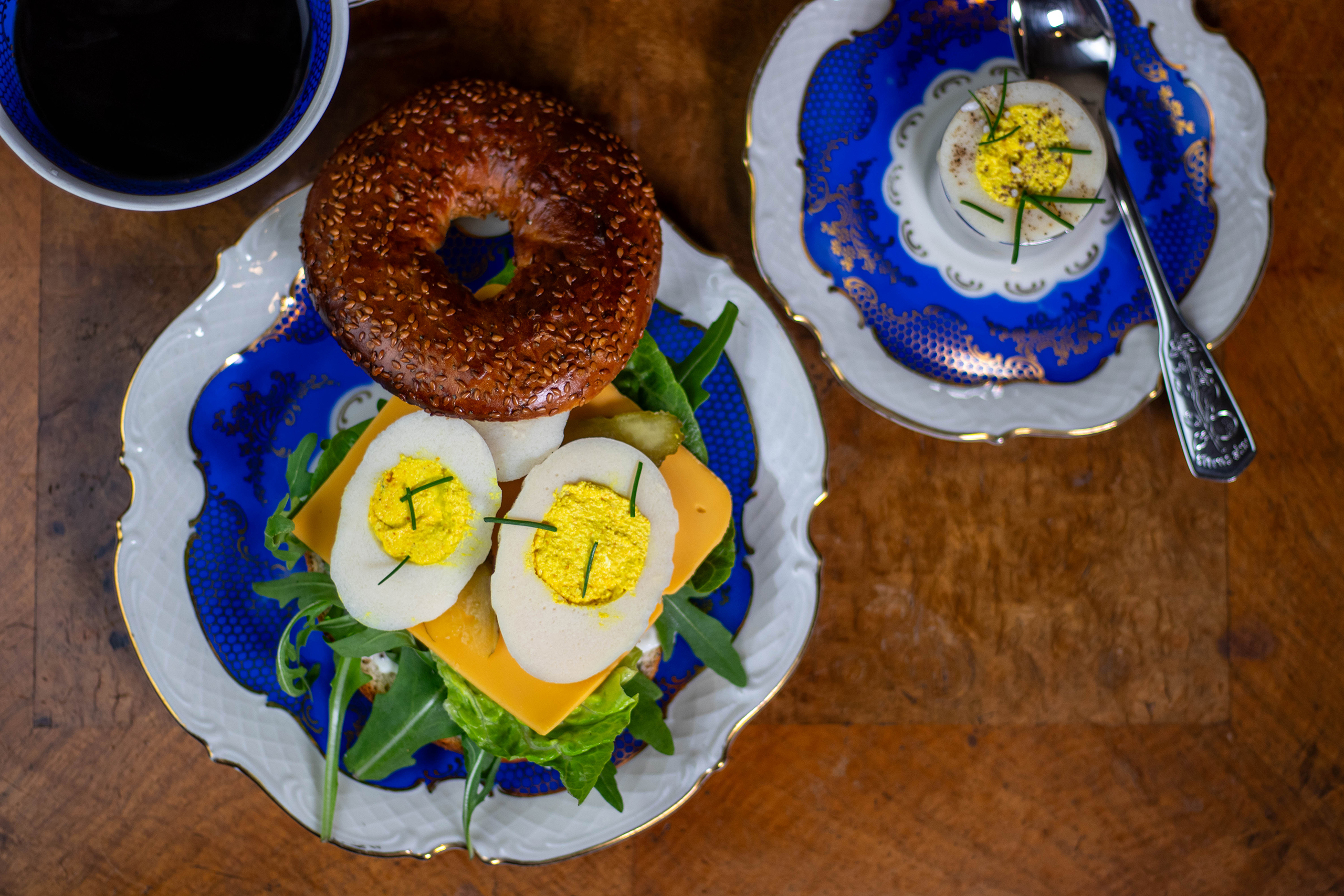
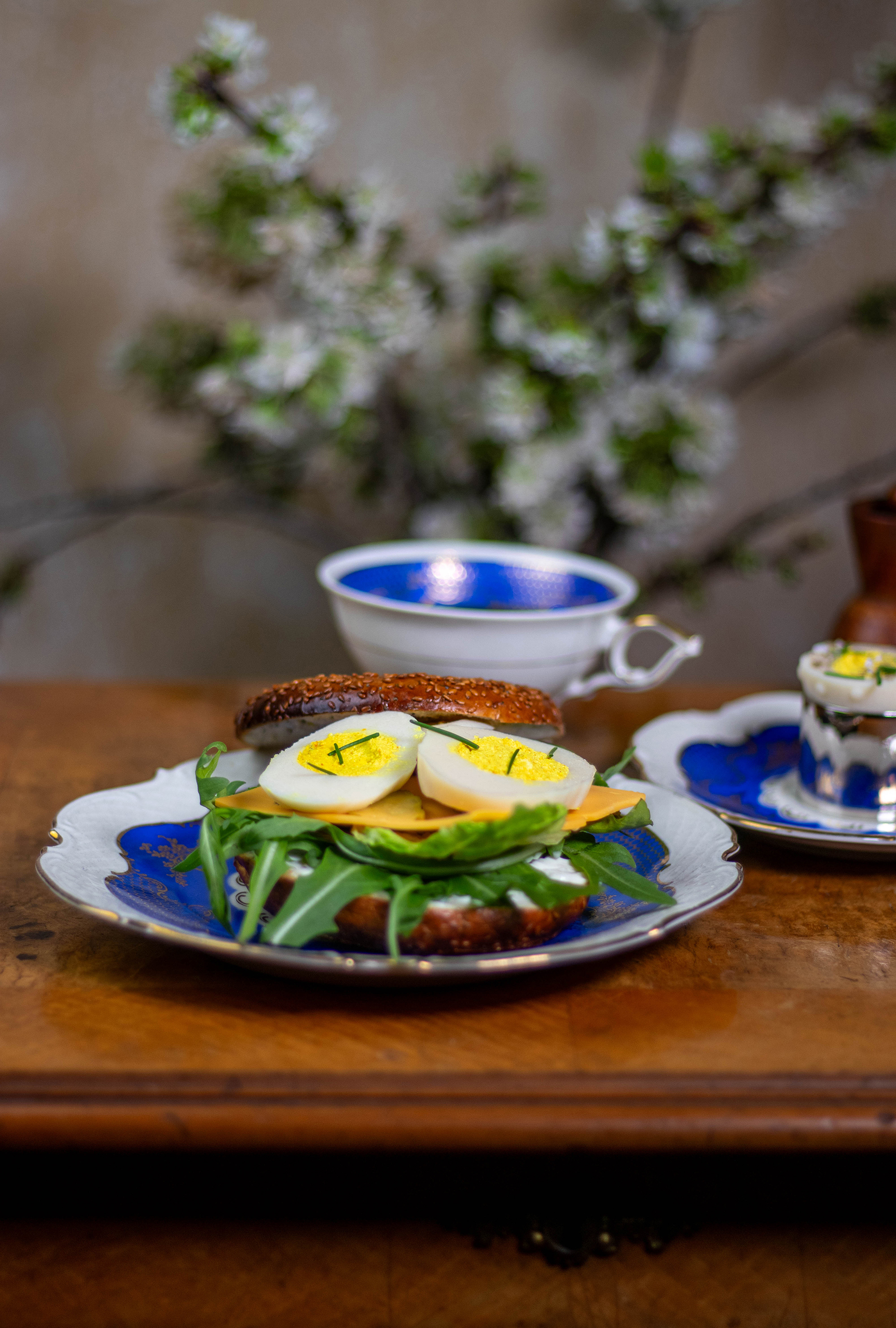
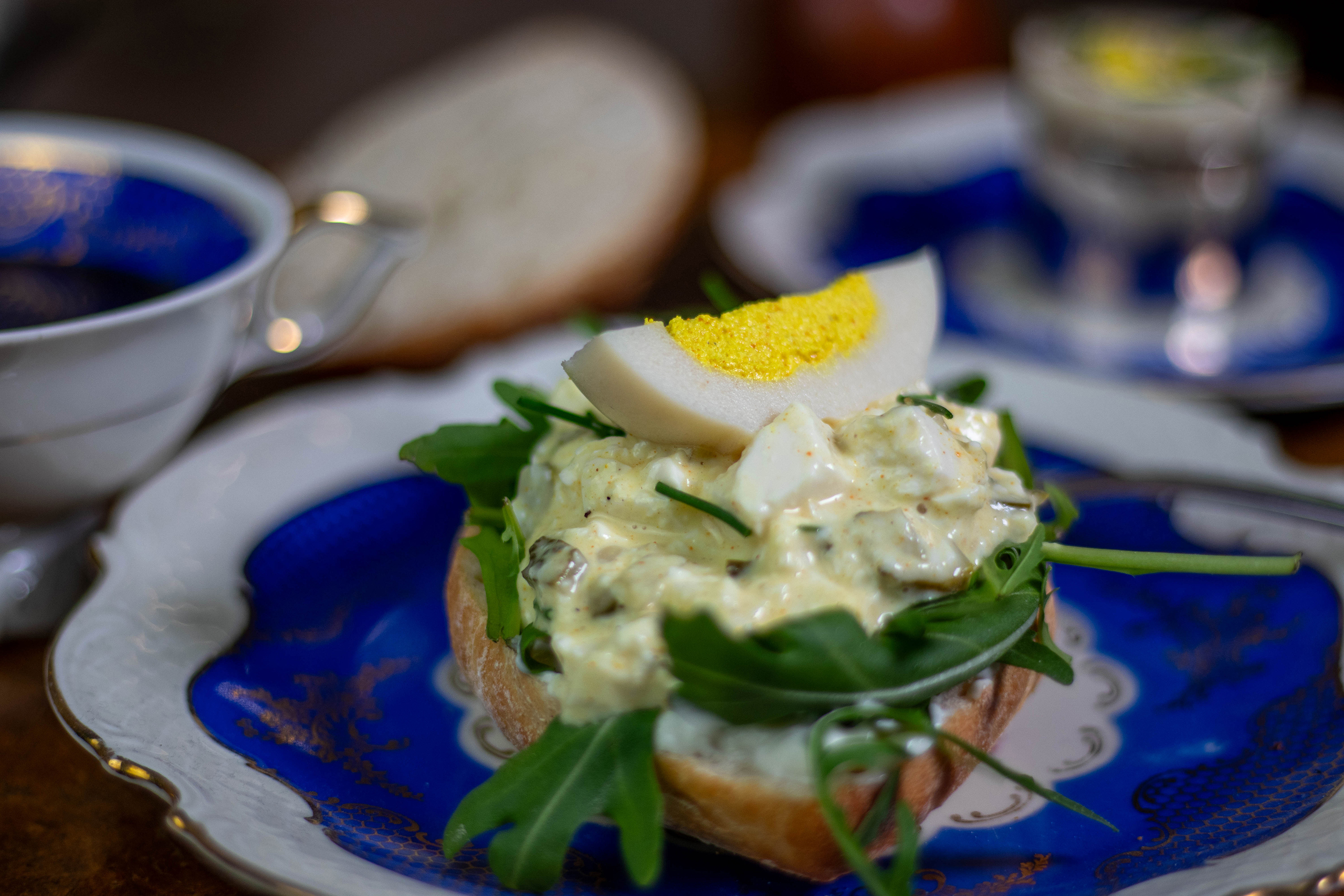
    Vegan Sunday breakfast: vegan hard-boiled egg on vegan egg salad on a roll. Plus a hard-boiled egg with salt, pepper and chives and of course a cup of coffee.
    Vegan Sunday breakfast: vegan hard-boiled egg on vegan egg salad on a roll. Plus a hard-boiled egg with salt, pepper and chives and of course a cup of coffee.

    Vegan without sacrifice

    It’s so easy to be vegan these days. Just look around here on Daily Vegan for example.
    Here you can find recipe categories such as ‘V meat‘, ‘V fish‘, ‘Cheese‘ or ‘Eggs‘. This means that no one has to miss out on their favorite tastes and dishes. Like with my vegan hard-boiled eggs in this recipe.

    And there are all the vegan products that have found their way into supermarkets in recent years and all the vegan options in restaurants.

    I always say, that every vegan meal means a little more climate protection and a little less animal suffering. Try it out or surprise a non-vegan person with these vegan eggs.

    Vegan without sacrifice: not even eggs are missing.
    Vegan without sacrifice: not even eggs are missing.

    Vegan hard-boiled eggs as a protein source in your diet

    Non-vegan eggs are very popular as a source of protein. Especially for people who do sports and want to build their muscles.

    I have good news! My vegan hard eggs are also a great source of protein as well. Because they are made with tofu and soy milk. With this vegan egg substitute you don’t have to miss out on anything!

    Vegan hard-boiled eggs are an excellent source of protein
    Vegan hard-boiled eggs are an excellent source of protein

    Vegan hard-boiled eggs can be used in many ways

    My vegan hard-boiled eggs are perfect as a snack, as part of salads or as a side dish and ingredient in various dishes.

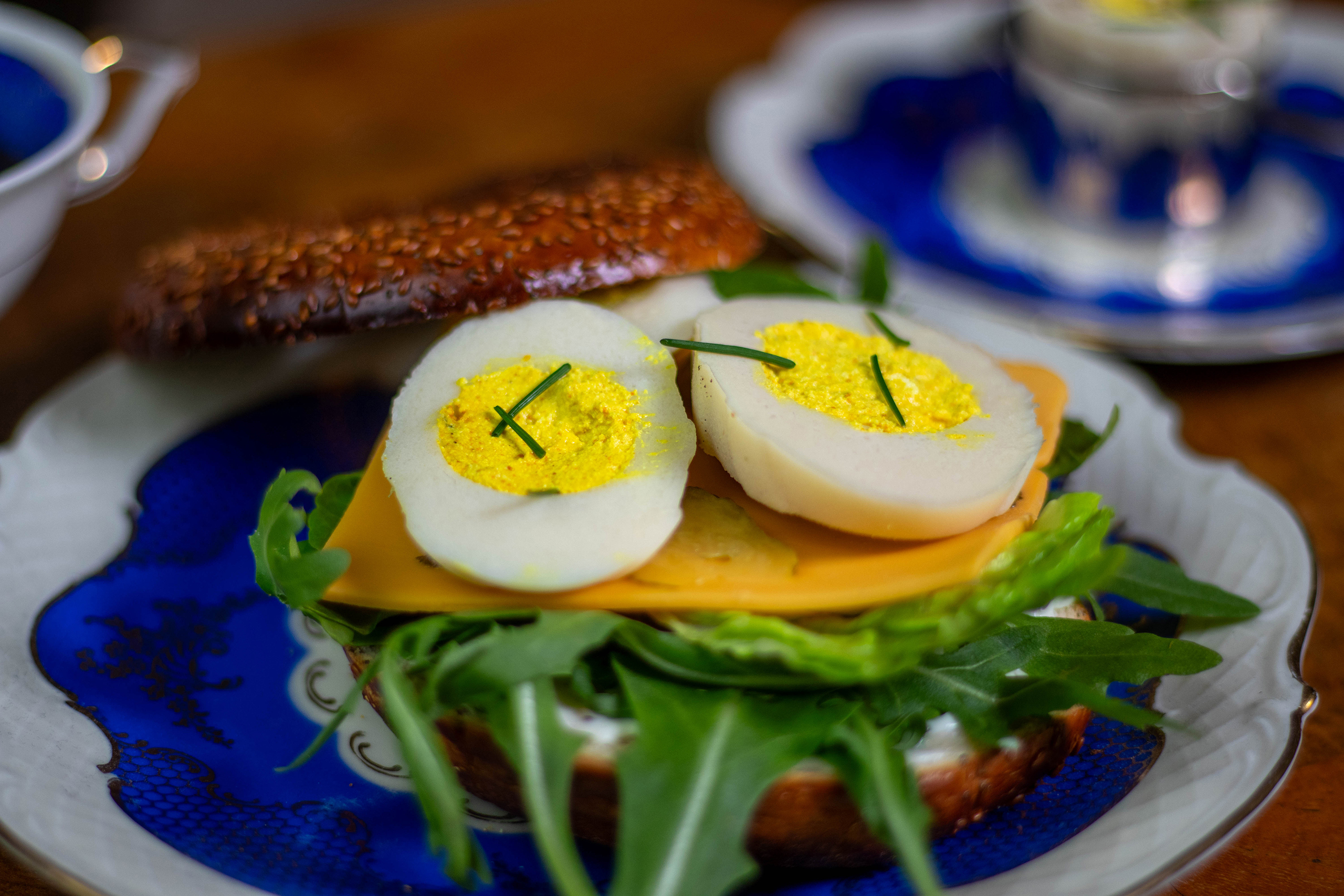
    You can also use this recipe for stuffed eggs, so-called devilled eggs or Russian eggs. You can add them to a charcuterie cold plate, put them in slices on a sandwich, add thm to a vegan egg salad and put two halves together as a complete hard-boiled egg. A perfect Sunday breakfast and a must have for vegan Easter.
    Also delicious in potato or pasta salad or as a side dish to many meals.

    Vegan hard-boiled eggs can be used in many ways
    Vegan hard-boiled eggs can be used in many ways

    My vegan hard-boiled eggs in the restaurant

    I have often used my vegan, hard eggs as a professional chef in restaurants. For example in my own former restaurant, Plantenköök. I had a vegan egg sandwich on the menu there. And the seasonal menu, which I chenged monthly, occasionally featured vegan Labskaus (a German fish meal) with eggs.

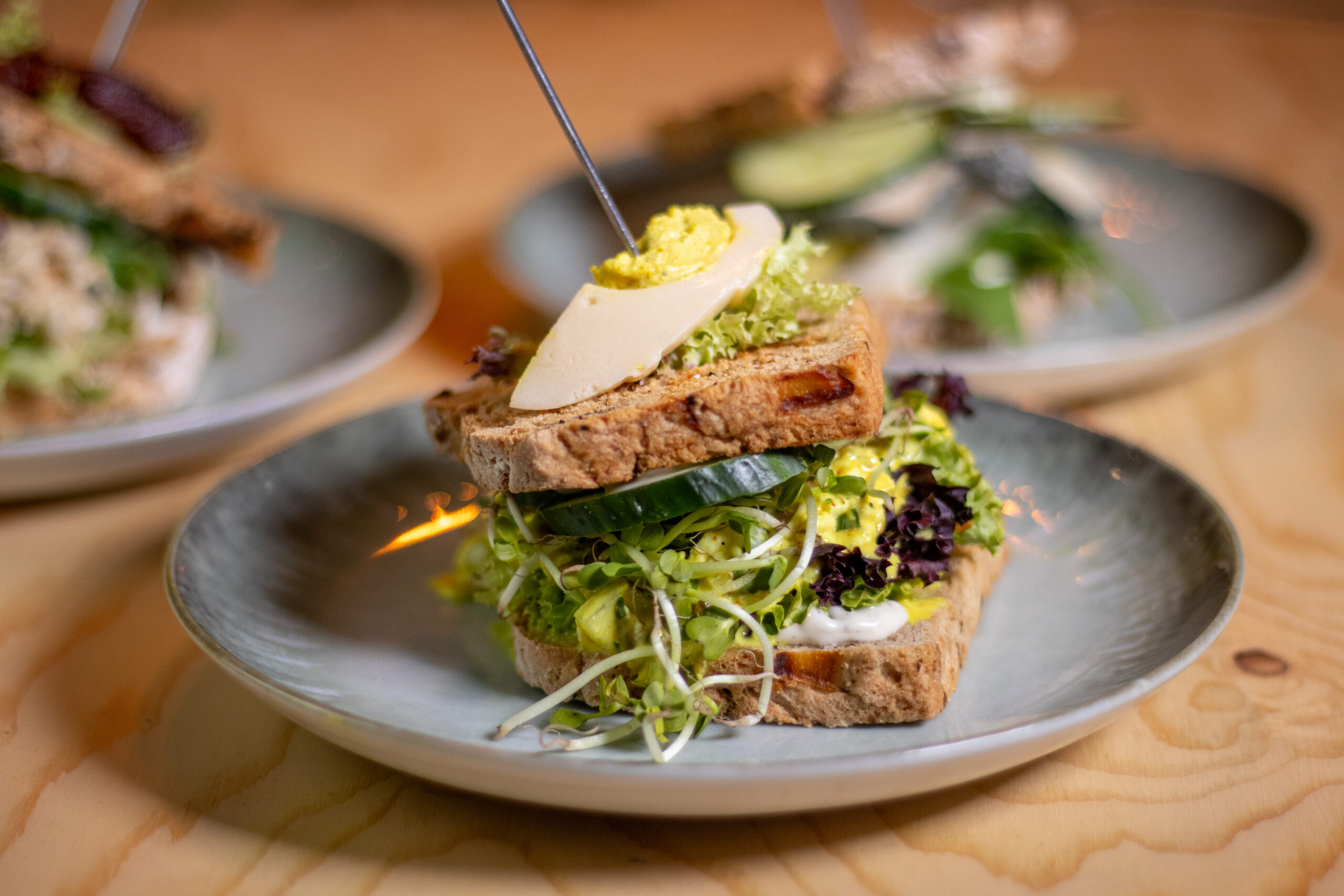
    Unser Feiersalat-Sandwich in meinem ehemaligen Restaurant. Mit veganem halben Ei, veganem Eiersalat, Sprossen und Gurke.
    Our celebratory salad sandwich at my former restaurant. With vegan half an egg, vegan egg salad, sprouts and cucumber on home-baked bread.
    Veganes Labskaus mit veganem halben Ei und Auberginen-Rollmops. Der Vischgang des abendlichen Fünf-Gang-Menüs im April 23.
    Vegan Labskaus (a German traditional fish dish) with vegan half egg. The vish course of the evening five-course menu in April 2023.

    More vegan egg recipes

    Do you like eating eggs or do you miss the taste or different egg dishes? Then browse through my category ‘Eggs’ here on Daily Vegan, where you will find many vegan egg alternatives.
    Here’s a little taste:

    Vegan hard-boiled eggs are perfect as a snack, as part of salads or as a side dish and ingredient in various dishes.
    Vegan hard-boiled eggs are perfect as a snack, as part of salads or as a side dish and ingredient in various dishes.

    Things you need to make vegan eggs

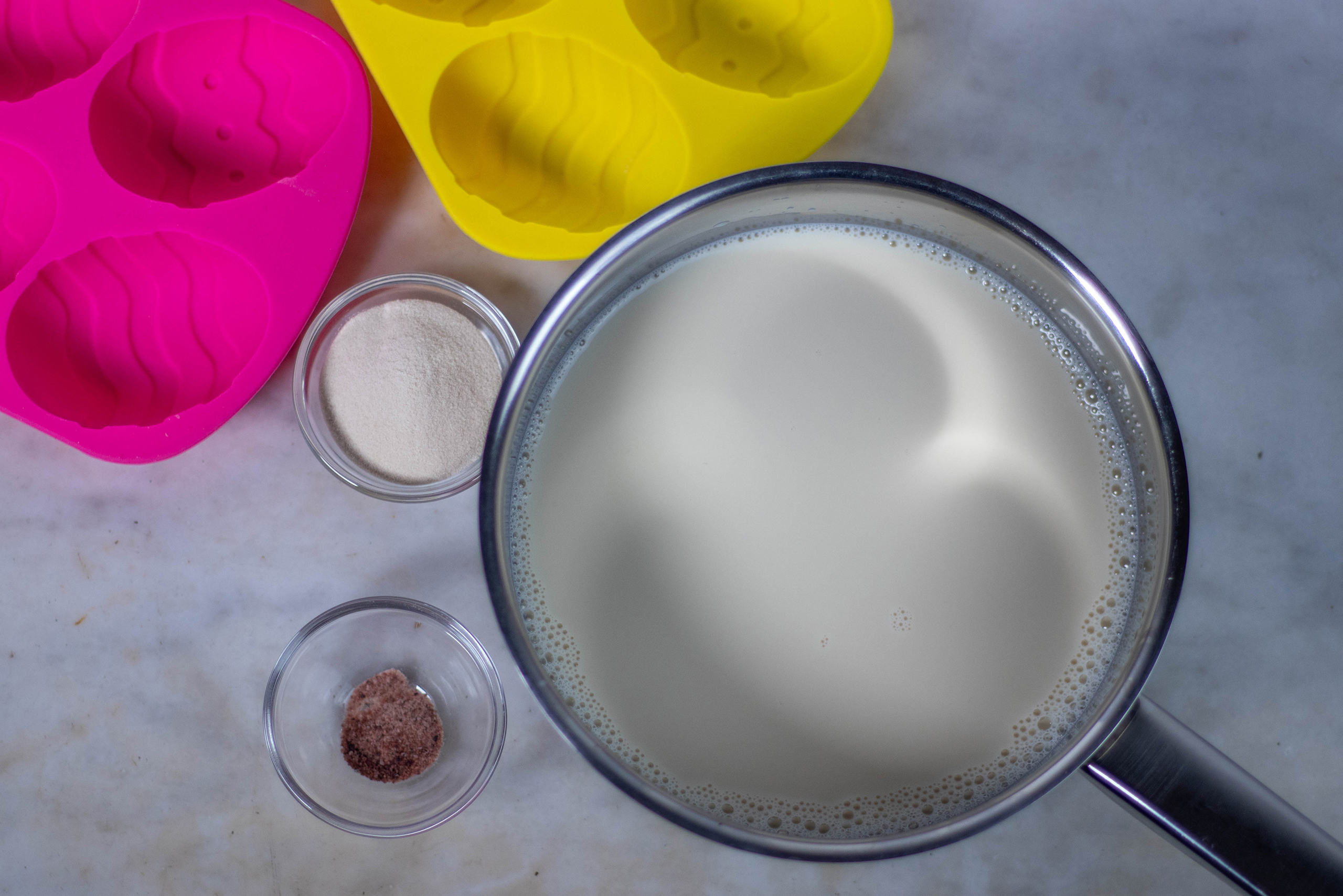
    To give the eggs their typical shape, you need a silicone egg mold. These are actually used for making candy eggs at Easter. If you’re lucky, you’ll find them in the baking department of a store, otherwise you can order them online.
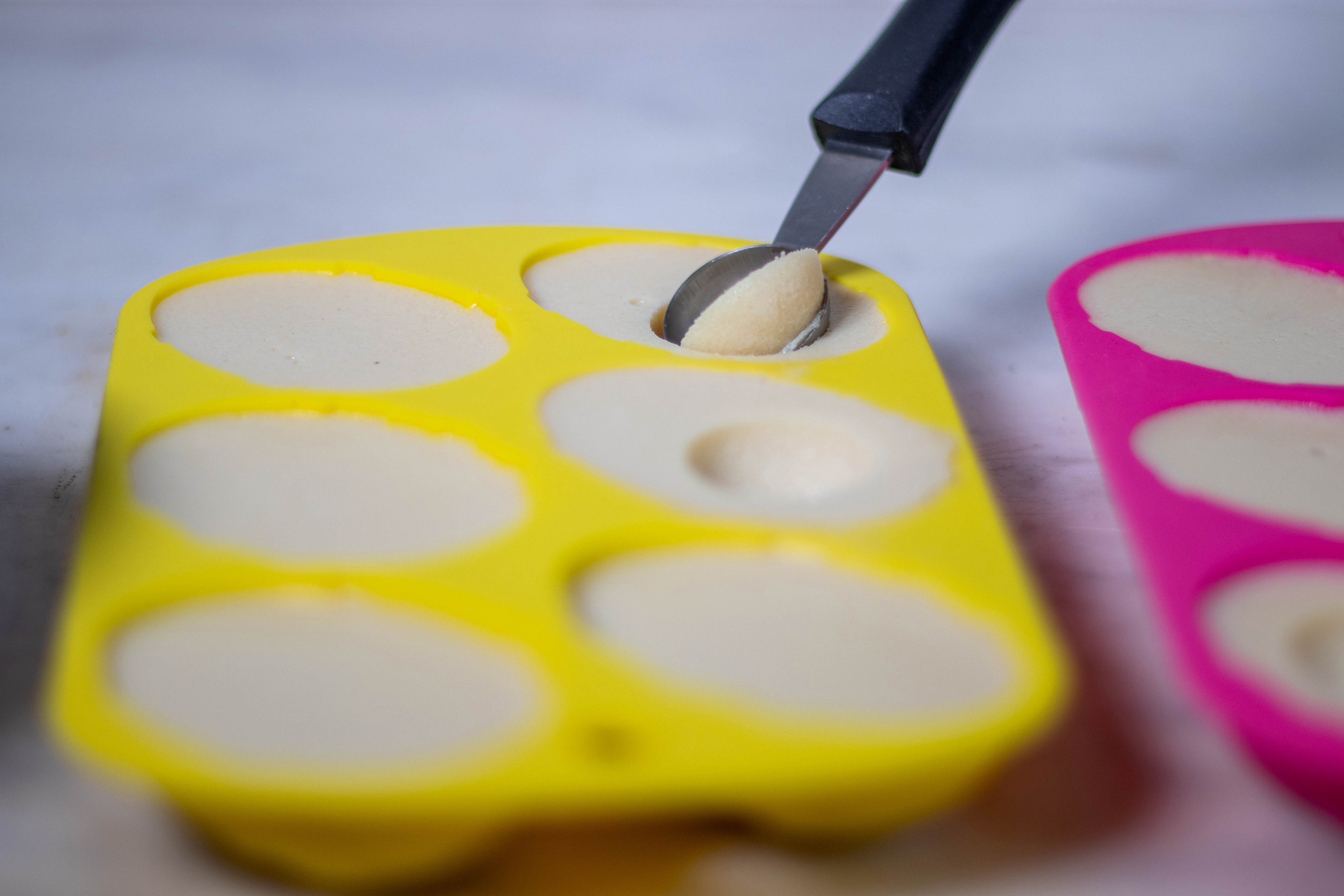
    A ball cutter is also very helpful for forming the yolk well in the vegan egg white. But you can also use a teaspoon for this.

    To give the vegan eggs their typical shape, you need a silicone egg mold.
    To give the vegan eggs their typical shape, you need a silicone egg mold.

    Vegan hard-boiled eggs made from simple ingredients

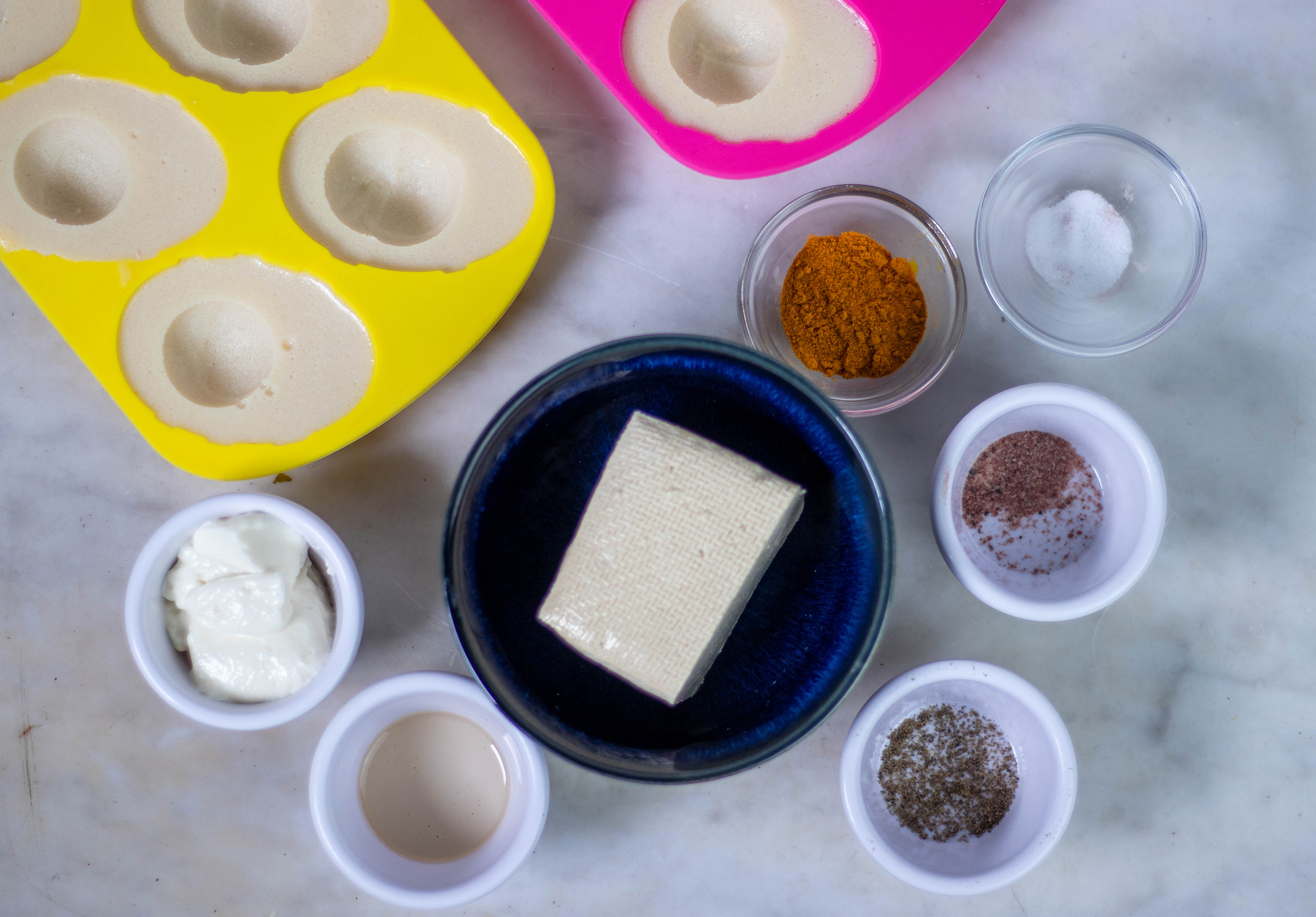
    My vegan hard eggs are made from normal, standard, very simple ingredients. Protein-rich tofu and soy milk, the latter combined with agar agar, a vegetable gelling agent made from algae. Add some vegan mayonnaise and spices for flavor. The only spice you couldn’t have in the house is kalak namak, also called kala namak or black salt. This sulfurized salt is important for the original egg taste, so it should not be missed. You can get it very cheaply in Indian supermarkets and a little more expensively in large supermarkets or online from the vegan online shop of your choice.

    My vegan eggs are made from normal, standard ingredients.
    My vegan eggs are made from normal, standard ingredients.

    Vegan hard-boiled eggs: the preparation in pictures

    1. Vegan hard-boiled eggs: the ingredients for the egg whites. These are mixed and cooked.
    1. Vegan hard-boiled eggs: the ingredients for the egg whites. These are mixed and cooked.
    2. The hot vegan egg whites are poured into the silicone molds.
    2. The hot vegan egg whites are poured into the silicone molds.
    3. After the vegan egg whites are cooled down, I cut out the shape for the egg yolks.
    3. After the vegan egg whites are cooled down, I cut out the shape for the egg yolks.
    4. All ingredients for the vegan egg yolk. These simply have to be pureed together.
    4. All ingredients for the vegan egg yolk. These simply have to be pureed together.
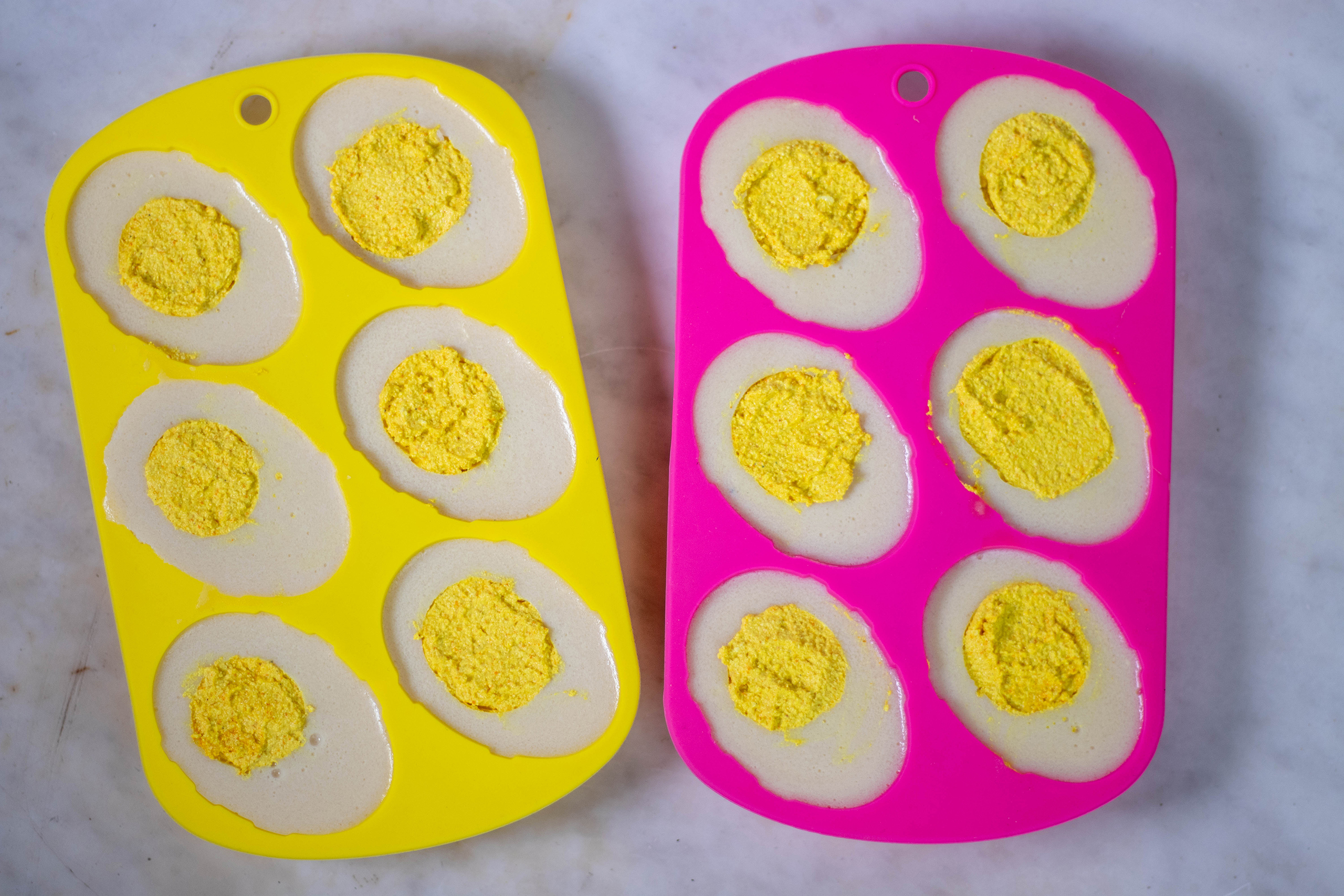
    5. The egg yolk is filled into the whites and smoothed out.
    5. The egg yolk is filled into the whites and smoothed out.
    Vegan eggs – hard-boiled – purely plant-based
    Vegan eggs – hard-boiled – purely plant-based

    Ingredients for 12 half, vegan, hard eggs:

    Egg whites:

    500 ml soy milk
    2 teaspoons agar agar (pure agar agar. Some agar products are mixed with starch)
    1/2 tsp kalak namak

    Egg yolks:

    100 g firm tofu
    1 tbsp vegan mayonnaise
    1 tsp white balsamic vinegar
    1/2 tsp salt
    1/2 tsp kalak namak
    1 tsp turmeric
    1 pinch of pepper

    Preparation:

    1. Mix the soy milk with the agar agar and bring to the boil in a pot.
    2. Remove from heat and stir in the kalak namak.
    3. Pour immediately into the egg molds and place in the refrigerator for an hour.
    4. Puree all the ingredients for the egg yolks together.
    5. Make a small sphere in each egg white using a teaspoon or, better yet, a ball cutter, where the yolk should be placed.
    6. Fill in the egg yolk with a teaspoon and model until smooth.

    Bon appetit!

  • Gravy – German ‘Bratensauce’ – the best vegan gravy

    Gravy – German ‘Bratensauce’ – the best vegan gravy

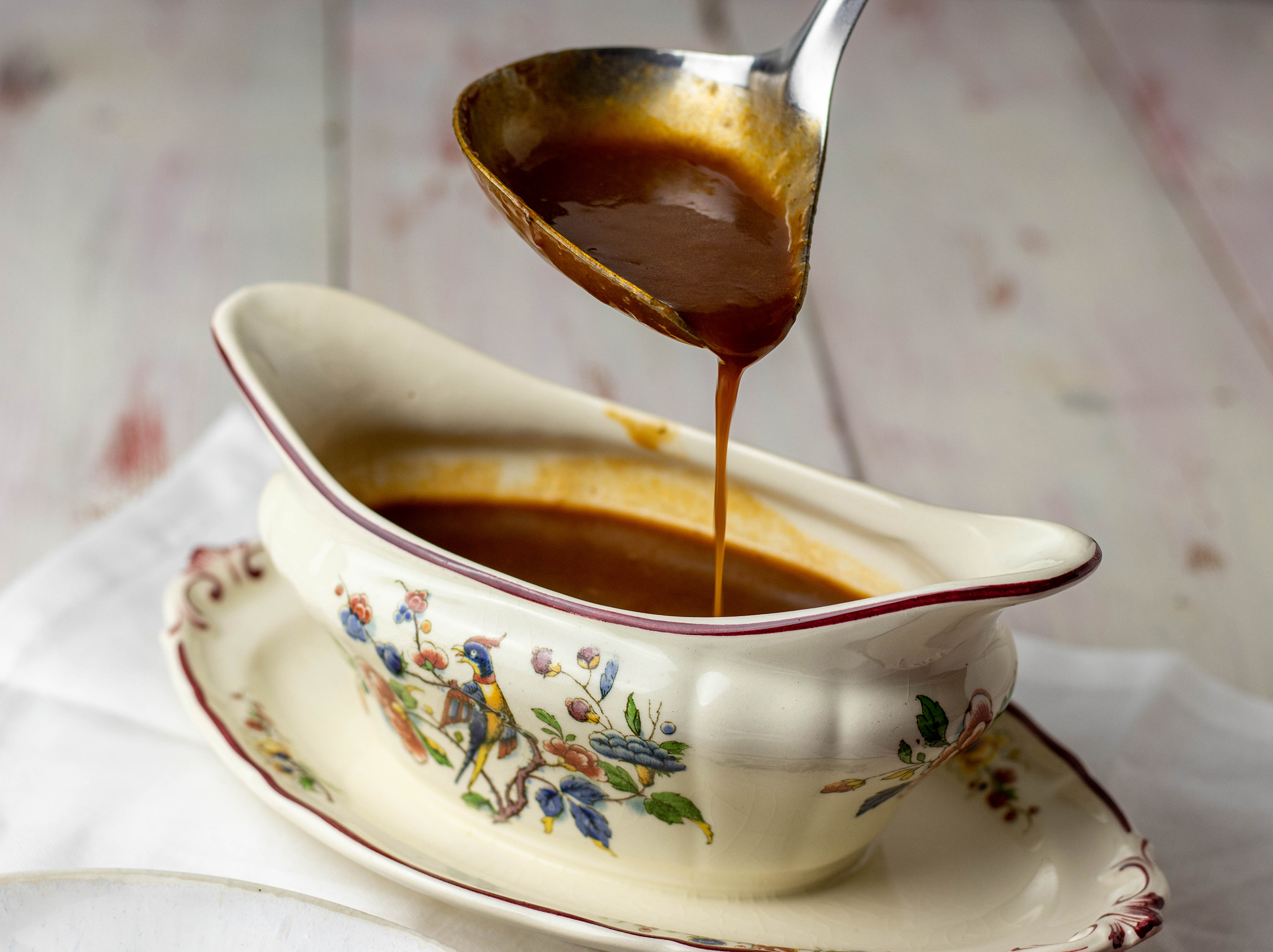
    Gravy. Rich, vegan and incredibly tasty! This gravy recipe is my vegan version of traditional German recipes for ‘Bratensauce’. That means ‘sauce for roasts’. It is the most delicious and hearty, aromatic and flavourful gravy. This plant based jus goes well with all sorts of festive dishes. In our house it is a must have each Christmas. But it is also great for Thanksgiving and other special events with a complimentary dinner.

    This delicious gravy takes some time on the stove. But is very easy to cook. And at the end you will be rewarded with the very best gravy you’ve ever teased your taste buds with. Full of flavours and simply delicious!

    You can serve this gravy with all kinds of dishes. For example with vegetables, vegan roasts, vegan goose, a plant based Wellington, steaks or dumplings. And of course the sauce is perfect for the main course of a vegan Christmas menu!

    My vegan gravy recipe can be pre-cooked and reheated very well. When sealed, it can be kept in the refrigerator for a few days. You can also store it in the freezer. So it is easily prepared in advance.

    [modula id=”44823″]

    Ingredients for 4 servings of gravy:

    1 red onion, peeled and finely diced
    1 carrot, finely diced
    100 g celeriac, peeled and finely diced
    5-7 mushrooms, finely chopped
    2 tbsp flour
    3 tbsp tomato puree
    2 tbsp soy sauce
    2 tsp Marmite (or Vegemite or other yeast extract)
    200 ml red wine
    750 ml of vegetable stock
    1 sprig of thyme
    2 bay leaves
    1 juniper berry
    2 allspice grains
    Alba oil (butter flavoured oil), alternatively use rapeseed oil
    2 tbsp vegan butter
    salt
    pepper

    Preparation:

    Heat some Alba oil in a saucepan, then add the vegan butter. As soon as the butter has melted, add the onion, carrot, celeriac and mushrooms. Sear the vegetables. Fry for about 10 minutes. Stir frequently, so that everything is roasted well and full of roasting aromas.

    Now stir in the flour, add the tomato puree and fry for a few minutes. While frying, a soft film should start to form on the bottom of the pot. Keep stirring it off, so it does not burn. Do not turn the stove up too hot, we do want he roasted aroma, but nothing should burn.
    Deglaze with the red wine.

    Add the stock, marmite, soy sauce, as well as thyme, bay leaves, juniper and allspice.
    Slowly simmer the sauce with the lid on. Let it simmer for about 1.5 hours. Stir occasionally.
    Pass through a sieve and season the vegan gravy with salt and pepper.

    Bon Appetit!

    Meal prep tip:

    If you like to keep a stock of gravy, it is worth cooking a large amount right away. Just double or triple this recipe. You can freeze the sauce directly or make a space saving Demi-Glace.
    Demi-Glace is a concentrated, dark sauce base that can be used for several sauces or gravies. To create a Demi-Glace, simmer the gravy for another 1.5 to 2 hours over a low heat without a lid. Demi-Glace is much thicker than normal gravy. Frozen in portions in ice cube trays or small Tupperware jars, you always have a supply for a quick gravy. Just bring it to the boil and add water until it has the right consistency for a nice gravy.
    By the way a Demi-Glace from my gravy is also great as a base for a nice and creamy mushroom sauce and other dishes.

  • Sour Cream – plant based – made from Cashews

    Sour Cream – plant based – made from Cashews

    And the category is: “Ready in under 5 minutes”!
    Creamy and delicious: vegan sour cream!

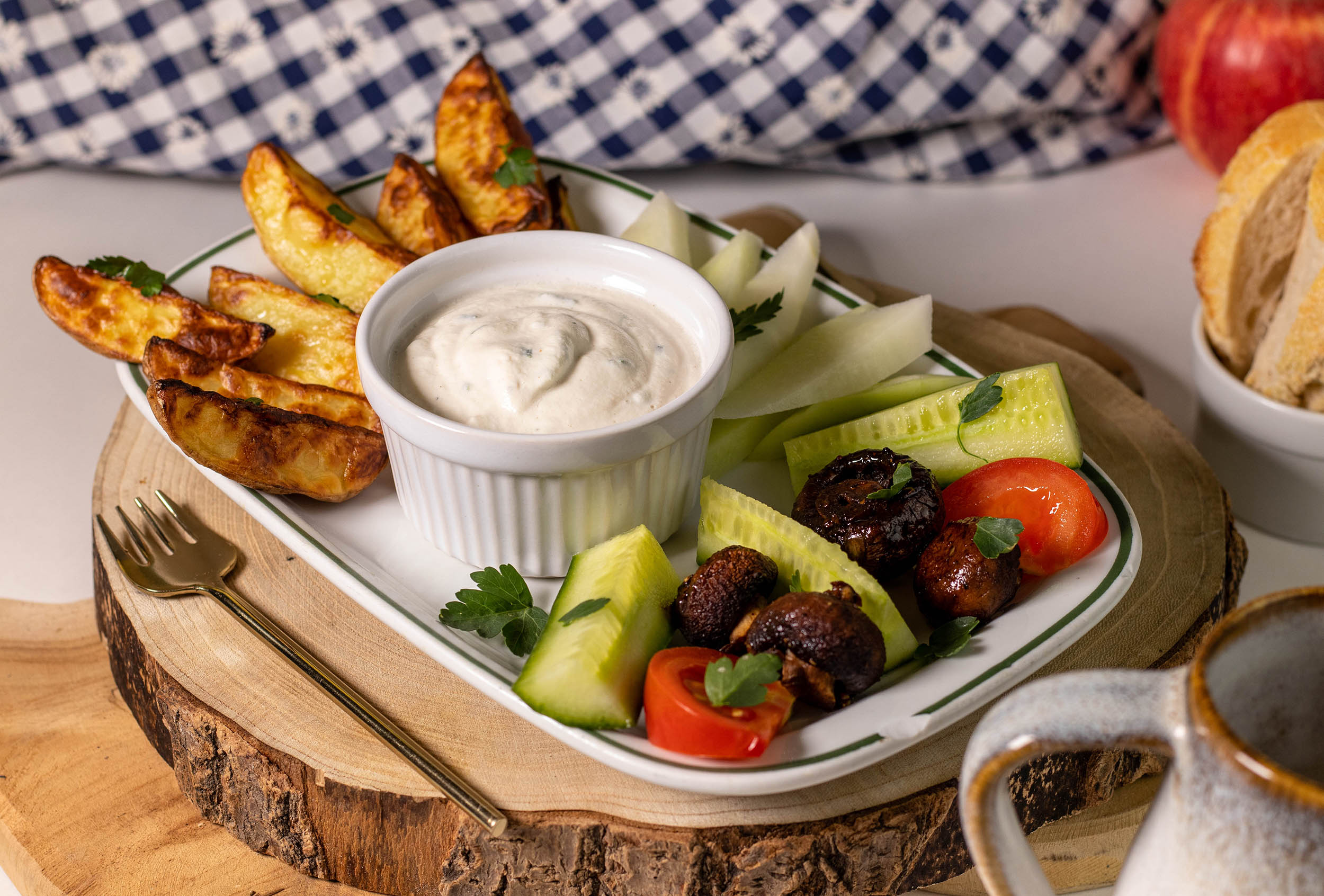
    Having a little jar of my homemade dairy free sour cream in the refrigerator has almost become a routine in our house. Easily made from cashews in less than 5 minutes. Even without cooking!

    Aromatic, vegan, simple, delicious. And ideal as a scrumptious dip for many dishes. Such as baked potatoes, vegan calamari, garlic mushrooms from the oven, white bean quesadillas, potato skins, vegan drum sticks with oven vegetables and lots more. But also for simple snacks like vegetable sticks or tortilla chips. And of course my plant based sour cream is very tasty as a side for a vegan BBQ with grill flares.

    You see there are just plenty of possibilities to use this delicious plant based dip.

    Have you ever tried vegan sour cream? If the answer is no, I really recommend to try out this recipe as quickly as possible.

    [modula id=”44289″]

    Ingredients for about 200 ml of vegan sour cream:

    100 g cashews
    100 ml of water + more for soaking the cashews
    2 tbsp. lemon juice
    1 tbsp. cider vinegar
    1 pinch black pepper, ground
    1/2 tsp. sugar

    Optional: 1/4 tsp. lactic acid, liquid
    (The sour cream already tastes very well without the lactic acid. But using it adds a dairy like depth to the taste.)

    1-2 tbsp. chives (freshly cut or frozen)

    Preparation:

    Soak the cashews in water for at least 3 hours up to overnight.
    If you are in a hurry, you could also cook them for 15 minutes instead. You should rather simmer than boil them for that. But, the soaking method tastes a bit better and makes a slightly nicer texture.

    Drain the cashews thoroughly after soaking. Then puree them with the water, lemon juice, cider vinegar, lactic acid, pepper and sugar. After a few minutes it should turn into a smooth cream without any nut bits in it. Depending on your blender that might go a bit quicker or slower. In general this works better with blenders with a rather high number of watts. Of course you can also use a a food processor for this step.

    Mix the vegan sour cream with the chives and let it rest in the fridge until usage.

    I always fill my homemade Sour Cream into small mason jars. This way my plant based sour cream can be kept in the fridge easily for several days. It can therefore be prepared very well.

    Bon Appetite!

  • Piyaz – a Turkish white bean salad

    Piyaz – a Turkish white bean salad

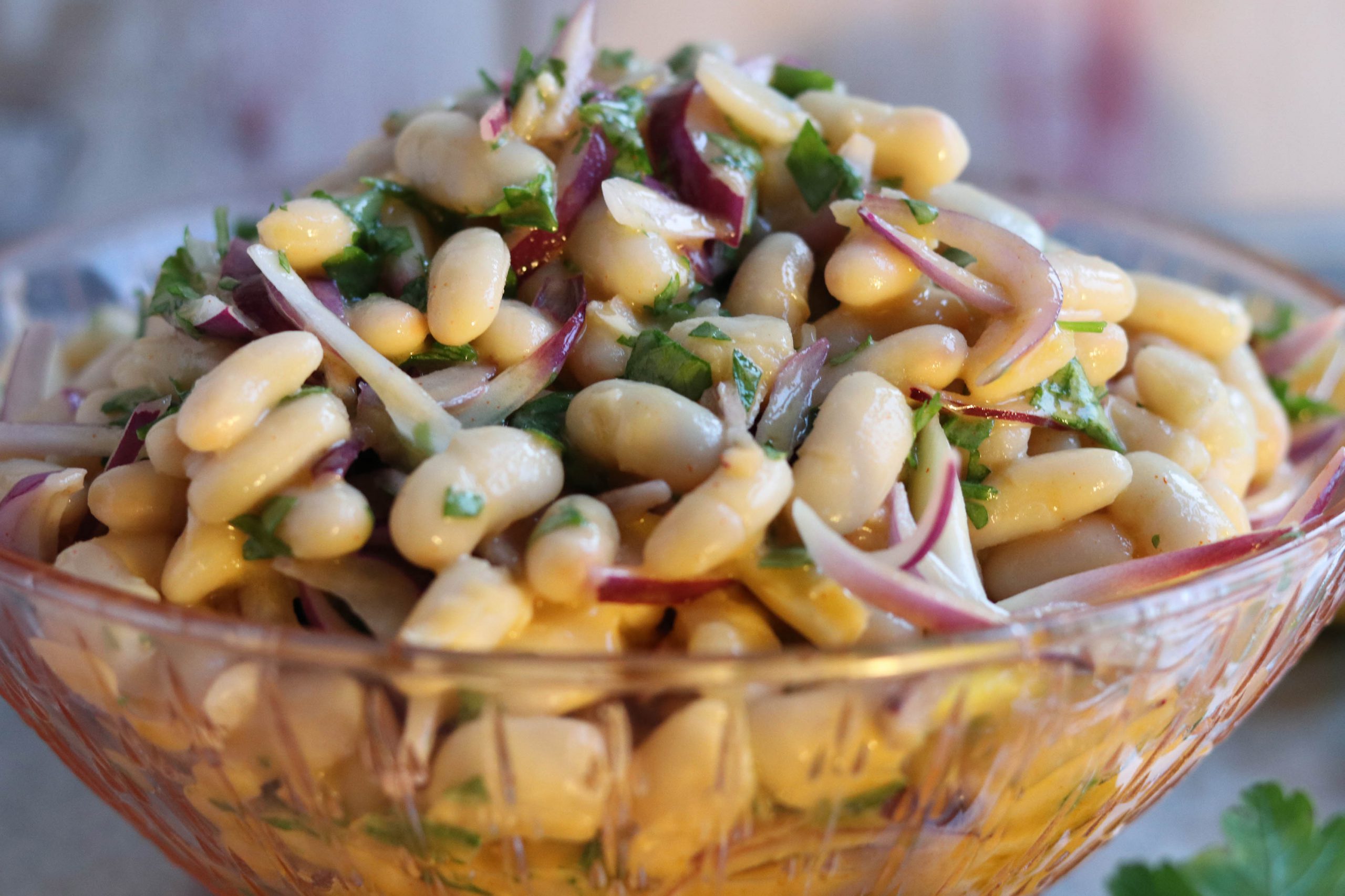
    Piyaz is a Turkish white bean salad. It is often served as a side dish, but it works just as well as a little snack.

    Even if you don’t really fancy white beans, you might want to give this salad a try. It’s elaborate tahini dressing adds a really nice flavour to the beans.

    Piyaz is rich in proteins. And piyaz is very easy to prepare in just under 10 minutes!

    By the way white beans are not only delicious, but also very healthy! In addition to their high protein content, they also contain many vitamins and minerals such as magnesium and calcium. That means, this salad is really good for your body! And your taste buds will love it as well!

    The most climate-friendly way to prepare piyaz would be by using dried white beans. Then soak them in water overnight and cook them yourself. This saves the most on packaging, but it is also quite time-consuming. Since I personally collect screw-top jars anyway to reuse them over and over again, I always choose pre cooked white beans from the jar. I often store snacks or soups in the jars to take them with me. They also come in handy for leftovers. I also use them in my pantry to store legumes or other dry products.

    [modula id=”39584″]

    Ingredients for 6-8 servings of piyaz:

    1 large or 2 small glasses or cans of white beans
    3 red onions, cut into strips
    1 bunch of parsley, chopped

    Dressing:

    1 lemon, the juice
    4 tablespoons of spirit vinegar (It is sometimes also called destilled vinegar. It is quite common in some European countries. If you can’t buy it, you can use white wine vinegar too.)
    6 tbsp olive oil
    1 tbsp tahini
    1 pinch of sugar
    1/2 tsp salt
    1/4 tsp paprika powder, sweet

    Preparation:

    Mix the lemon juice with tahini, vinegar, olive oil, sugar, salt and paprika powder to make a dressing.

    Then mix the dressing with the other ingredients for the salad. Let the Turkish piyaz steep for at least 15 minutes before serving.

    The salad is going to stay fresh in the refrigerator for 1-2 days. So you can easily prepare it in advance. It is also great for picnics or BBQs.

    Enjoy your meal!

  • Aioli – a Spanish garlic dip

    Aioli – a Spanish garlic dip

    Vampire problems? Not after enjoying this wonderful Spanish garlic dip!
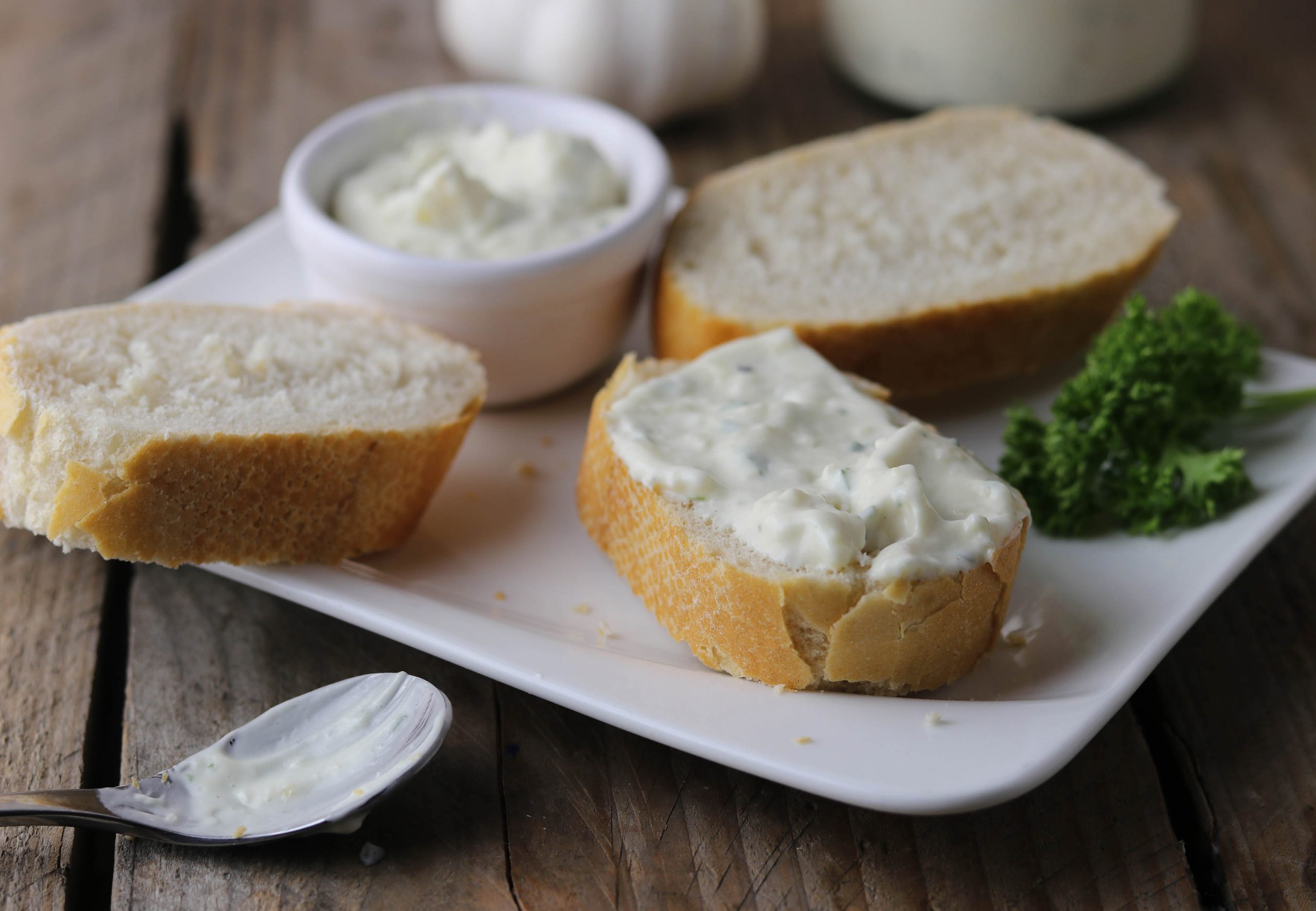
    Traditional Spanish aioli is available in a multitude of different variations. In my recipe I am making a very tasty, spicy version, with vegan mayonnaise and parsley.
    It is absolutely delicious with grilled vegetables or vegan meat dishes, as well as spread on bread and sandwiches or as a dip with vegetable sticks.

    The term aioli comes from the Occitan or Catalan ‘all i oli’, that means ‘garlic and oil’, which is also the simplest basic recipe for this wonderful Spanish classic.

    Professional tip: invite your date, your favorite people, but also your co workers to a portion of your aioli! Stinking together keeps up the friendship!

    [modula id=”36923″]

    Ingredients for approx. 450 ml aioli:

    400 ml homemade, vegan mayonnaise (or store bought version)
    1 garlic bulb, peeled and finely chopped
    1 tbsp lemon juice
    1 tsp Worcestershire sauce (read the ingredients when buying, some Worcestershire sauces are not vegan)
    1 tsp mustard
    1 tbsp parsley, chopped
    ½ tsp salt
    ½ tsp pepper, white

    Optional:
    Baguette, ciabatta or other bread in slices
    Vegetable sticks
    Grilled vegetables
    Vegan meat dishes

    Preparation:

    Mix all aioli ingredients together thoroughly. Except for the parsley. Puree until you’ve got a soft and smooth dip. Then also stir in the parsley.

    Pour into a sealable vessel, such as a tight jar or a mason jar. Then let the Spanish dip rest in the refrigerator for at least an hour, or even better overnight. So the garlic aroma can fully develope.

    Finished! That was easy, wasn’t it?
    Serve with bread, baguette, bread sticks or rolls. My aioli also tastes very good as a dip, for example for grilled vegan meat, such as grill flares. It goes very well with Spanish tapas or vegetable sticks. As well as a delicious spread on sandwiches, vegan kebabs or in wraps.

    Enjoy your meal!

  • Ceviche – vegan – with two kinds of ‘fish’

    Ceviche – vegan – with two kinds of ‘fish’

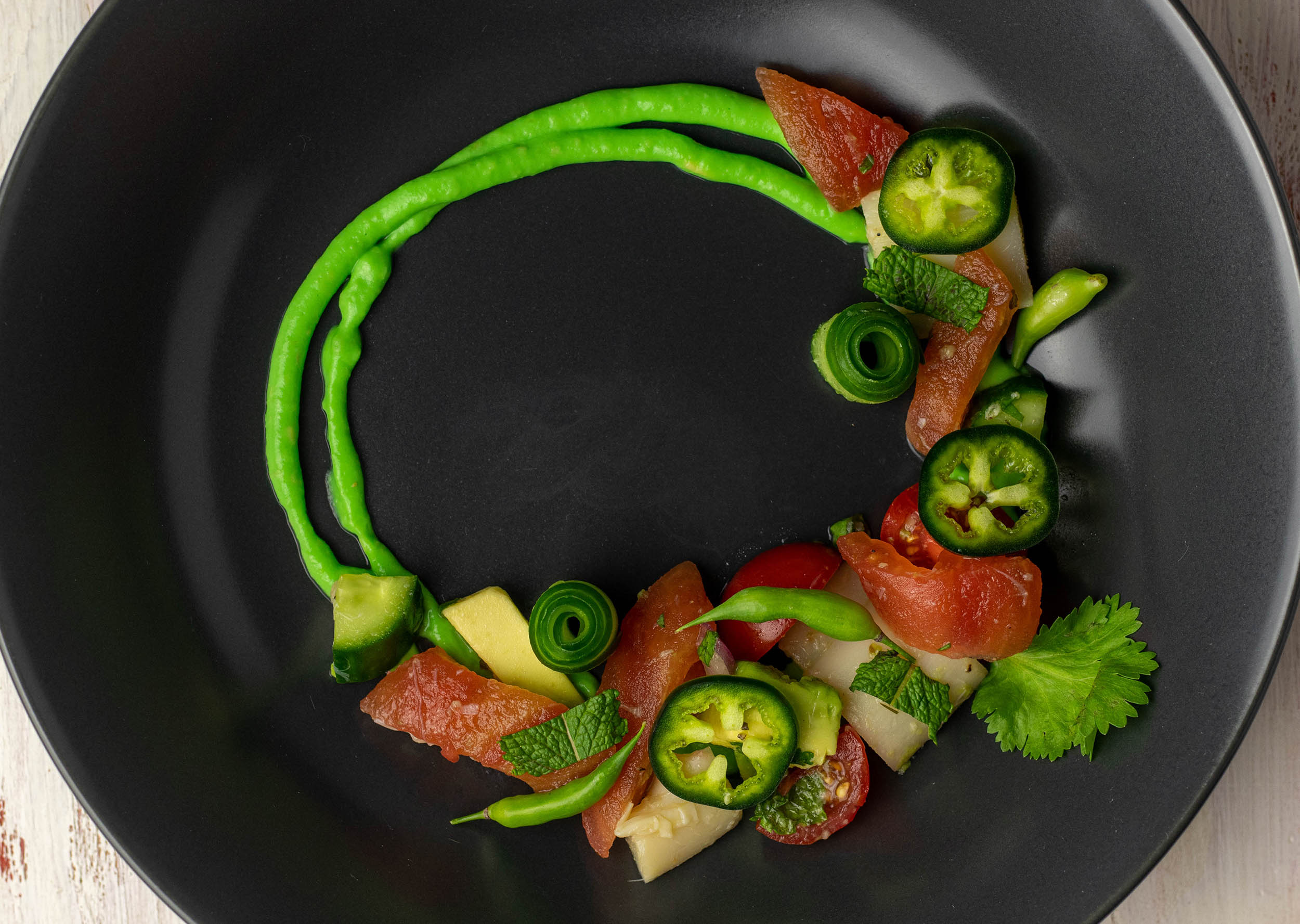
    Ceviche, with two kinds of vegan fish. One tuna version made from tomatoes and one white fish made from palm hearts. Delicious!

    Ceviche is a fresh delicacy from Central and South America. Popular from Mexico to Peru. It consists of different types of raw fish and lime juice. The remaining ingredients vary, depending on the region and recipe.

    Ceviche is a wonderful snack. It can be served rather simply with crunchy tortilla chips or in a soft taco.
    Due to its fine acidity, the various herbs and flavors, my ceviche is also ideal as a starter or as a fish course in a vegan fine dining menu.

    Lately, ceviche has been on everyone’s lips outside of South America. Therefore it was time to create a cruelty-free, vegan version. Without harming animals, but with full flavor!

    Have fun with my vegan ceviche recipe!

    [modula id=”36001″]

    Ingredients for approx. 8 servings of ceviche:

    Vegan tuna:

    3 large tomatoes
    150 ml soy sauce ( gluten-free, if prefered)
    2 cloves of garlic, very finely chopped
    3 teaspoons of nori flakes
    1 tsp wakame seaweed
    2 tbsp rice vinegar

    White fish:

    4-5 palm hearts (approx. 250 g), from the jar or can

    Marinade:
    200 ml of oil
    2 teaspoons nori flakes
    1/2 teaspoon salt
    1/4 teaspoon pepper
    1/4 teaspoon parsley, dried
    1/2 teaspoon dill, dried
    1/4 teaspoon mustard seeds, ground
    1/4 teaspoon fennel seeds, ground

    1 small red onion, finely diced
    1 clove of garlic, very finely chopped
    3 tbsp coriander, chopped
    1 tbsp mint, chopped
    1 jalapeno, fresh, finely chopped
    4 limes, the juice
    1 orange, the juice
    1/2 cucumber, diced
    1 avocado, finely diced
    15 cherry tomatoes, quartered
    2 tbsp olive oil
    1 teaspoon salt
    1/2 teaspoon pepper, black, ground

    Preparation:

    Vegan tuna:

    Preheat the oven to 150°C (300°F) top and bottom heat.
    Bring a small pot of water to a boil. Score the tomato skin in a cross shape at the bottom of the tomato, dip the tomatoes in the water, preferably with a slotted spoon, until the skin loosens.
    Peel, cut in half and core with a knife or spoon. Cut the halves into 4 strips each.

    In a small baking dish, stir together the soy sauce, rice vinegar, nori flakes, wakame seaweed and garlic. Turn the tomato strips in it and put them in the oven for 3-4 minutes.
    Let the tomato tuna cool in the stock and remove the pieces of garlic and algae when putting together the dish.
    The tuna can be prepared 1-2 days in advance and stored in the refrigerator.

    Cut the tuna fillets into pieces about 1-2 cm in size.

    White fish:

    Mix all ingredients for the marinade. Cut the palm hearts into 1 cm pieces and place them in the marinade. Let it rest for 24-48 hours. Then remove the vegan white fish from the marinade.

    Put both kinds of fish pieces in a small bowl and add the lime and orange juice. The vegan fish should be covered in the juice.
    Let it sit for one hour.

    Salt the finely diced red onion generously and let it sit for one hour. Rinse the onions and dry them a bit with a kitchen towel.

    Transfer the vegan fish to a larger bowl and mix it with the remaining ingredients for the ceviche and the rinsed red onion.

    Serve the vegan ceviche in tacos, with tortilla chips, with an avocado dip or with bread.

    Enjoy your meal!

  • Fermented garlic – spicy, perfect for refining many dishes

    Fermented garlic – spicy, perfect for refining many dishes

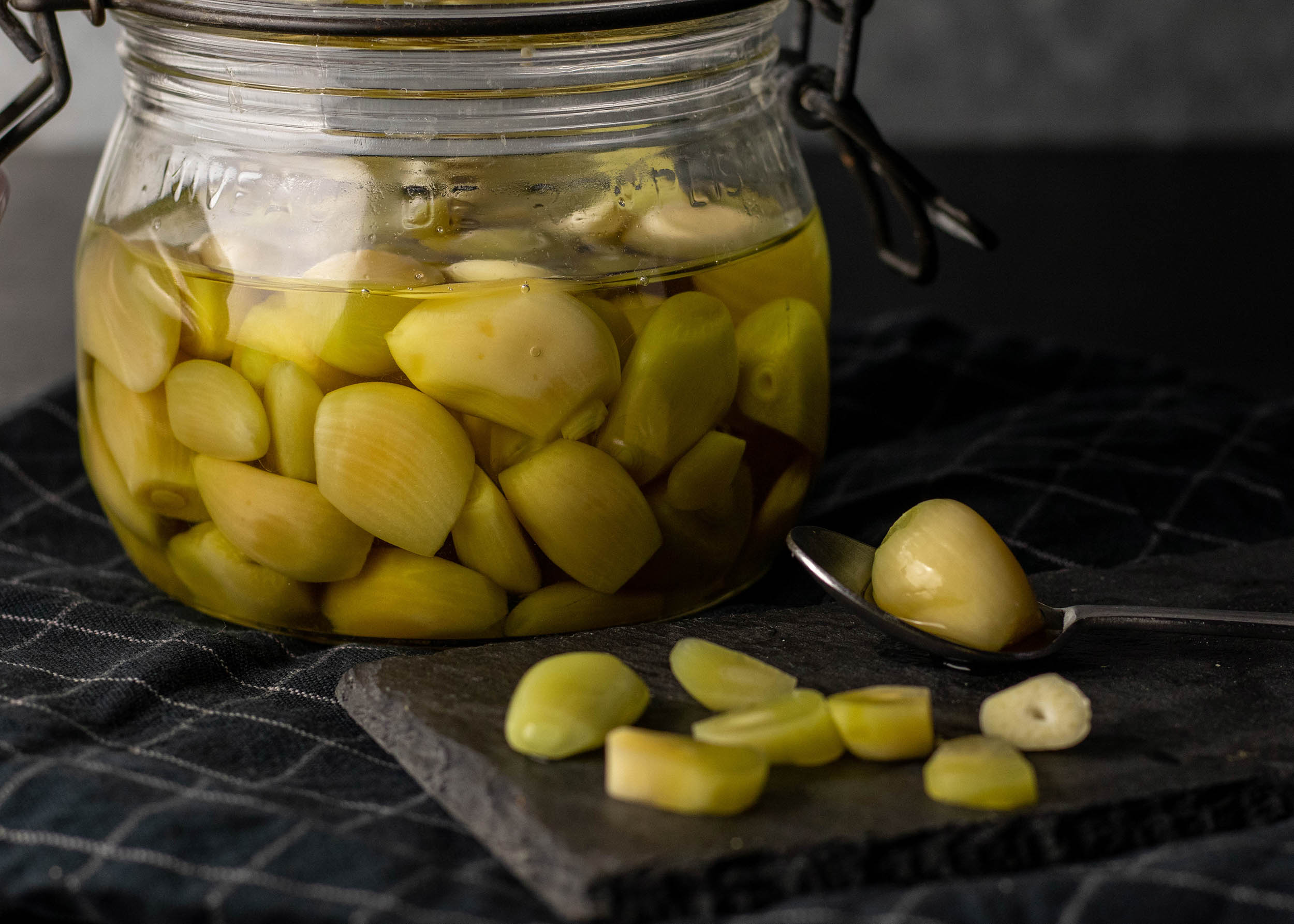
    Insanely intense with an incredibly exciting taste! My fermented garlic refines every risotto for me, but also stir-fries, dips and dressings, as well as homemade vegan cheeses.

    Hearty garlic, combined with the lactic acid created by fermentation. Intense, aromatic, slightly spicy.

    Lactic acid fermented garlic refines many dishes in a new, delicious way. And it is very easy to make!

    [modula id=”35954″]

    Ingredients for 1 jar of fermented garlic:

    5 garlic bulbs, organic
    Kosher salt

    Preparation:

    Open the garlic bulbs and peel the cloves.

    Place a small jar or a screw-top jar with a capacity of approx. 0.7 l on a kitchen scale. Set the kitchen scale to 0.

    Add the garlic cloves. Try to place the garlic as close as possible and with little free space in between.
    Pour water into the glass so that the garlic is well covered. Ideally, there is now a few centimeters of space left in the glass.

    Most times I ferment vegetables with 4% salt. I thin that tastes just right, not too salty, but not bland either. And there is enough salt in the jar to protectthe vegetables against unwanted bacteria.

    So if you have 400 g of garlic and add 500 g of water to it, you get 900 g. 4% of that are 36. So you need 36 g of salt.

    For example, I had the following amounts:
    307 g garlic + 210 g water = 517 g, of which 4% makes 21 g salt

    Now pour the water out of the jar into a clean bowl. Mix it with the calculated amount of salt until it is fully dissolved.
    Then pour the salt water back into the jar.

    Now you have to make sure that the garlic is always covered by the salt water so that no mold can form. If, contrary to expectations, mold does develop, the entire ferment must be disposed of!
    To prevent this from happening, I put a little weight on the garlic so it cannot come up to the surface. In this case, I simply filled a little zip lock or other bag with a little water. I closed the bag and placed it on the garlic.

    The jar should not be fully open, but gas must be able to escape. This works fine with the plastic bag method. But you can also take a thoroughly cleaned stone, place it on the vegetables and then only loosely seal the jar.

    In order for the lactofermentation to be successful, the garlic must ferment in its liquid for about 7 days. When the environment has a room temperature from 21-23°C (70-74°F). The duration of the fermentation depends on your taste and the romm temerature. The longer the garlic ferments, the more intense it becomes. I think mine is optimal after 7 days at around 21°C.

    After filling, place the fermentation vessel in a bowl or a deep plate. The jar may overflow a bit, when the fermentation process becomes very active.

    After 3-4 days, start tasting the garlic once or twice per day. As soon as it has achieved the optimal taste, close the jar tightly and store in the refrigerator.
    The fermented garlic lasts there for a few weeks to months.

    Enjoy your fermented garlic!

  • Gourmet garlic mushrooms from the oven

    Gourmet garlic mushrooms from the oven

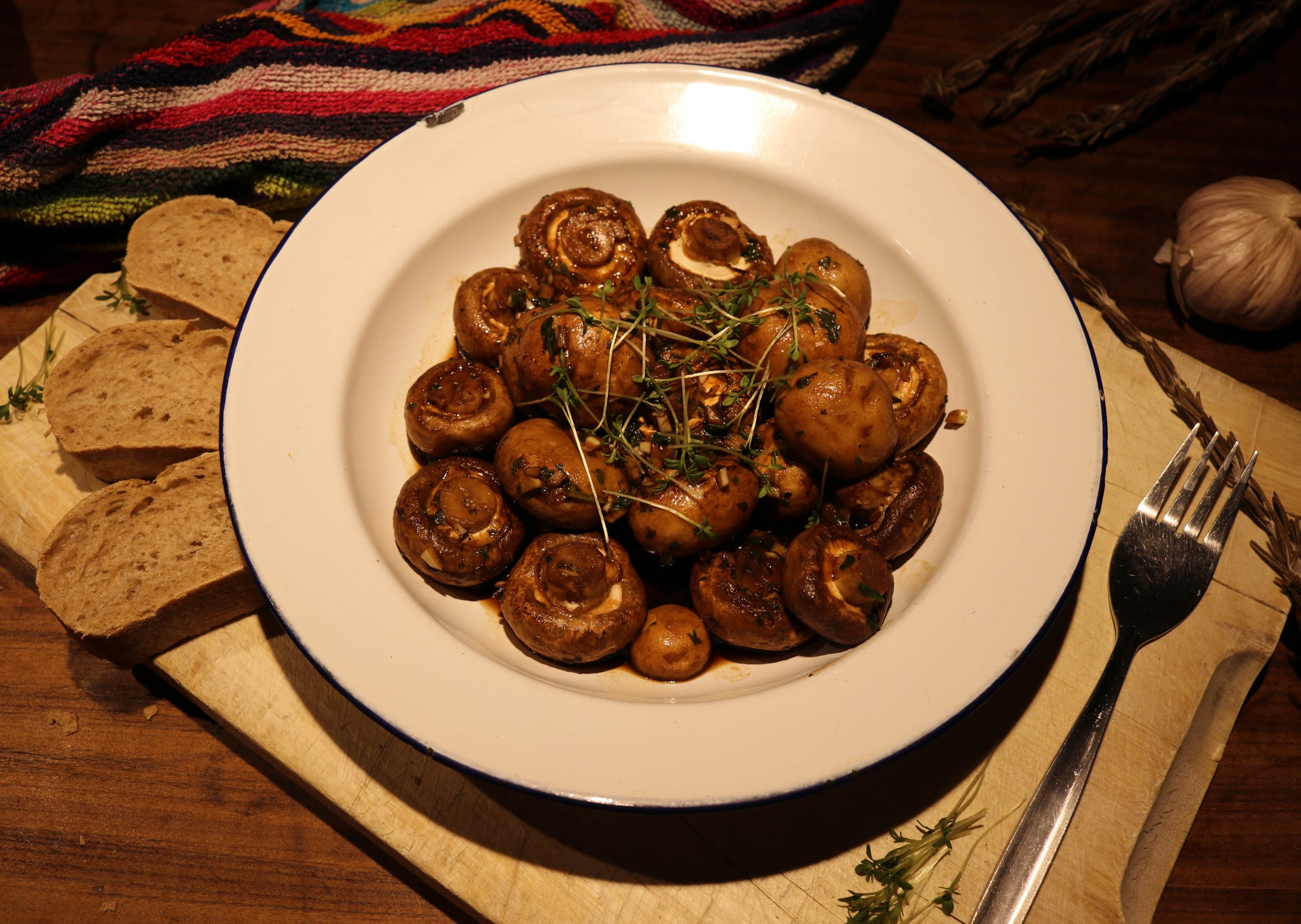
    Here is my recipe for gourmet garlic mushrooms from the oven. It’s so easy to make from the simplest ingredients, that everybody has on their kitchen shelf. All you need to get from the store are fresh mushrooms. And basically all you need for the preparation is an oven an a simple casserole dish. Absolutely tasty and fun to make!

    I roast the mushrooms in a sour and spicy garlic marinade with herbs until they are soft and baked. That is how the become a a very special, spicy taste experience. Prepared quickly and easily!
    A great side dish for seitan dishes! But also an awesome snack when the mushroom hunger gets to you!

    [modula id=”34173″]

    Ingredients for 4 servings of garlic mushrooms:

    1 kg (6 cups) rather small mushrooms, cleaned
    1 tbsp oil (vegetable oil, rapeseed oil or sunflower oil)
    3 tbsp dark balsamic vinegar (Aceto Balsamico)
    2 tbsp soy sauce
    3 cloves of garlic, very finely cut
    1/2 tsp thyme, chopped, dried
    1/2 tsp paprika powder
    1/4 tsp salt
    1/4 tsp pepper

    Optional: fresh herbs such as parsley, chives, dill or basil for sprinkling

    Preparation:

    Preheat the oven to 200 °C (390°F) top and bottom heat.

    Mix the tablespoon of oil thoroughly with the balsamic vinegar, garlic, thyme, paprika powder, salt and pepper.
    Put the mushrooms into the marinade and turn them over, until they are fully covered. Place them in a large casserole dish or lasagna dish. The marinated mushrooms should be sitting close to each other, but not on top of each other.
    Roast in the oven, for about 25 minutes. Turn the mushrooms once after 10 minutes.

    Enjoy your meal!

    Do you fancy more hearty recipes?

    Also try my Crispy vegan chicken drumsticks on veggies, Cauliflower or broccoli baked in herbal dough on red wine shallots, Meatball sandwich, with homemade subway bread or Thüringer Brat – the best German sausage!