Category: Main course

Here you will find the entire variety of vegan meals, or main dishes in countless recipes.

Main courses form the culinary heart of the day and they offer a variety of possibilities.

These dishes can comprise and range from simple everyday dishes to sophisticated gourmet creations.

Vegan recipes? Check out Daily Vegan!

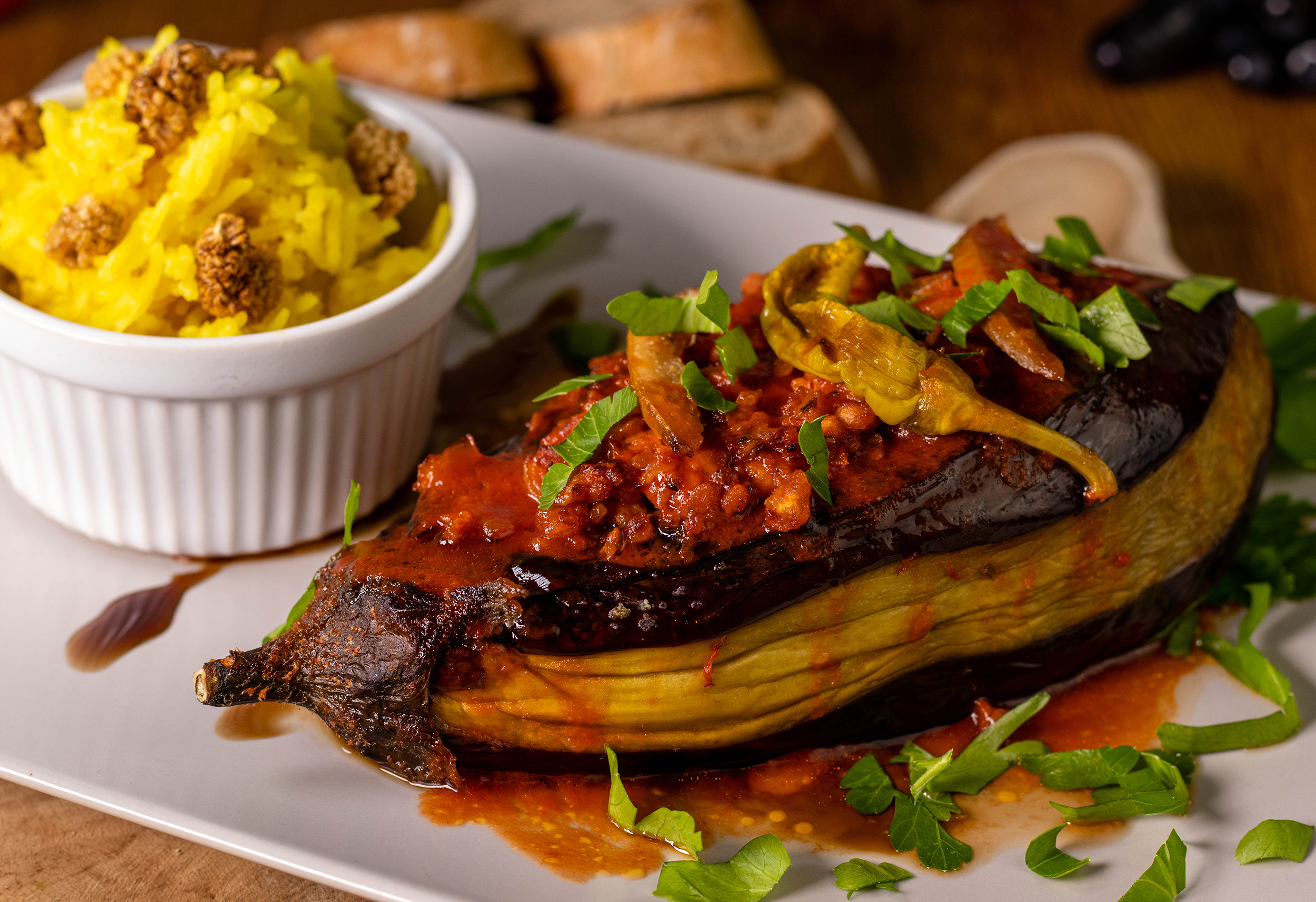
  • Karniyarik – stuffed eggplants Turkish style

    Karniyarik – stuffed eggplants Turkish style

    Karniyarik – delicious, spicy stuffed eggplants. A Turkish original recipe. The eggplants are stuffed with delicious, spicy minced meat and vegetables. And of course my recipe is vegan.

    Karniyarik – Turkish cuisine, here purely plant-based
    Karniyarik – Turkish cuisine, here purely plant-based

    Karniyarik recipe – like the original, but vegan

    My Turkish stuffed eggplants, Karniyarik, are indistinguishable from the original with minced meat. Just as full-bodied, spicy, filling and delicious. A mouthwatering bliss!

    Stuffed vegetables: an absolute feast on the plate. My Karniyarik recipe – like the original, but vegan
    Stuffed vegetables: an absolute feast on the plate. My Karniyarik recipe – like the original, but vegan

    What exactly is Karniyarik?

    Karnıyarık is a marvellous dish from Turkish cuisine that consists of stuffed eggplants that are peeled in a special way into strips and cooked in the oven. The filling is a spicy, aromatic minced meat filling with sautéed, chopped onions, peppers, garlic and tomatoes.

    Karnıyarık is a dish of the Turkish cuisine.
    Karnıyarık is a dish of the Turkish cuisine.

    Which side dishes go well with Karniyarik?

    Suitable side dishes for Turkish stuffed eggplants:

    • Rice
    • Bulgur
    • Couscous salad
    • Tabbouleh
    • Fries
    • Flatbread.

    But various mezze are also a good thing to go with.

    Vegan, good for the climate and healthy. Here with rice as a side dish.
    Vegan, good for the climate and healthy. Here with rice as a side dish.

    I refine the stuffing of the Karniyarik with preserved salt lemons.

    Homemade preserved lemons give my Karniyarik filling a fresh, depth of flavor. I didn’t skimp on spices either, and so the stuffed vegetables become an absolute feast!

    If you don’t have any preserved lemons, I recommend you pickle some. They last forever in the fridge and the older they get, the better they get. If you’re in a hurry, you can also make this recipe with fresh lemons.

    Warm, hearty Turkish cuisine. I refine the fstufing with preserved lemons.
    Warm, hearty Turkish cuisine. I refine the fstufing with preserved lemons.

    By the way, I always make my minced meat fillings completely myself

    The food industry has a great interest in discouraging people from cooking for themselves. Profits multiply through pre-processed food. Unfortunately at the expense of the ingredients and therefore also the nutrients. And vegan minced meat in particular is very easy to make yourself. No palm oil, generally much less fatty, no sugar, made from nutritious soy. Also good for the climate, as there is minimal waste.

    And in my opinion, much, much tastier and better seasoned. The latter is particularly important with this recipe.

    By the way, my minced meat is always homemade.
    By the way, my minced meat is always homemade.

    Karniyarik are gluten-free

    By the way, the stuffing for the eggplants is gluten-free. And so is the whole recipe.
    This way you can prepare this meal for people who are gluten intolerant or have celiac disease.

    Karniyarik are gluten-free
    Karniyarik are gluten-free

    More recipes from Levante cuisine

    Are you looking for more vegan, Levante recipes? Then I have got some for you here:

    Fresh from the oven: stuffed aubergine. With a minced meat stuffing, but my recipe is of course vegan.
    Fresh from the oven: stuffed aubergine. With a minced meat stuffing, but my recipe is of course vegan.

    I look forward to seeing your Karniyarik with minced meat when you try this recipe!

    Feel free to follow me on Instagram or Facebook. And I would be delighted if you make this hearty aubergine recipe, if you’d post the result on social media and tag my account there. This also applies to my other recipes, of course. I always find it really great and exciting to see how my recipes are prepared in other kitchens

    Karniyarik – the preparation in pictures

    Here you can see in picture how I prepare the stuffed eggplants. Then I’ll go straight on with the recipe.

    1. Peel the eggplants into strips.
    1. Peel the eggplants into strips.
    2. Fill the oven-cooked eggplants with the vegetable mince filling.
    2. Fill the oven-cooked eggplants with the vegetable mince filling.
    3. Karniyarik – hot and fresh from the oven
    3. Karniyarik – hot and fresh from the oven
    Karniyarik – stuffed eggplants Turkish style. With home-pickled salt lemons.
    Karniyarik – stuffed eggplants Turkish style. With home-pickled salt lemons.

    Ingredients for 4 servings of Karniyarik:

    Stuffed eggplants:

    4 eggplants

    Filling:

    150 g fine soy granules, dry (the small TVP granules)
    3 tomatoes, diced
    2 onions, finely diced
    2 garlic cloves, finely chopped
    4 peppers (pickled), finely chopped
    1/2 tsp smoked paprika powder
    1/2 tsp sweet paprika powder
    1/4 tsp chili powder
    1/2 tsp ground cumin
    1/2 tsp ground coriander
    1 tbsp tomato paste
    1 tbsp paprika paste
    2 tsp preserved salted lemon, finely diced (alternatively fresh lemon)
    1 tbsp lemon juice
    2 tbsp parsley, roughly chopped
    250 ml water
    Olive oil
    Salt
    Pepper

    Tomato sauce:

    2 tbsp tomato paste
    300 ml boiling water
    3 tbsp olive oil
    1/2 tsp Salt

    Also:

    7-10 peppers (pickled)
    1/2 preserved salt lemon, in thin strips (alternatively fresh lemon)
    Some chopped parsley

    Preparation:

    Prepare the eggplants:

    1. Preheat the oven to 220°C (430°F) top and bottom heat.
    2. Peel four strips lengthways from the eggplants using a vegetable peeler. The vegetables should then be striped, consisting of strips with peel and strips without.
    3. Now rub the eggplants with a little olive oil and sprinkle with a little salt.
    4. Then place them on a baking tray lined with baking paper. Bake on the middle shelf for 30 minutes.

    Eggplant stuffing:

    1. While the eggplants are in the oven, I prepare the stuffing.
    2. Heat a pan with a little olive oil. Then sauté the onions and garlic in it.
    3. Now add the dry soy granules and fry until hot. Stir often. The soy granules may turn slightly brown in places.
    4. Then stir in the spices.
    5. Then add the diced tomatoes, 250 ml water, peppers, tomato paste, paprika paste, chopped salt lemon, lemon juice and parsley.
    6. Fry for 5-10 minutes, stirring frequently. At the end, most of the liquid should have evaporated and the filling should look more mushy or chunky.
    7. Season with salt and pepper.
    8. Take the eggplants out of the oven. Then reduce the oven heat to 175° top and bottom heat.
    9. Let the eggplants cool down a little. Then line them up next to each other in a casserole dish.
    10. Split the eggplants open lengthways on one side, in one of the peeled strips, with a knife. Pull the slit apart with two forks. Add the filling there.

    Tomato sauce:

    1. Mix all the ingredients for the tomato sauce together.
    2. Add the sauce to the eggplants in the casserole dish so that the stuffed oven-baked vegetables are on top.

    Finish cooking the karniyarik:

    1. Top the purely plant-based karniyarik with the peppers and the preserved lemon strips.
    2. Bake in the oven on the middle shelf at 175°C (350°F) for 30 minutes.
    3. Sprinkle the oven-baked eggplants with some freshly chopped parsley.

    Enjoy your meal!
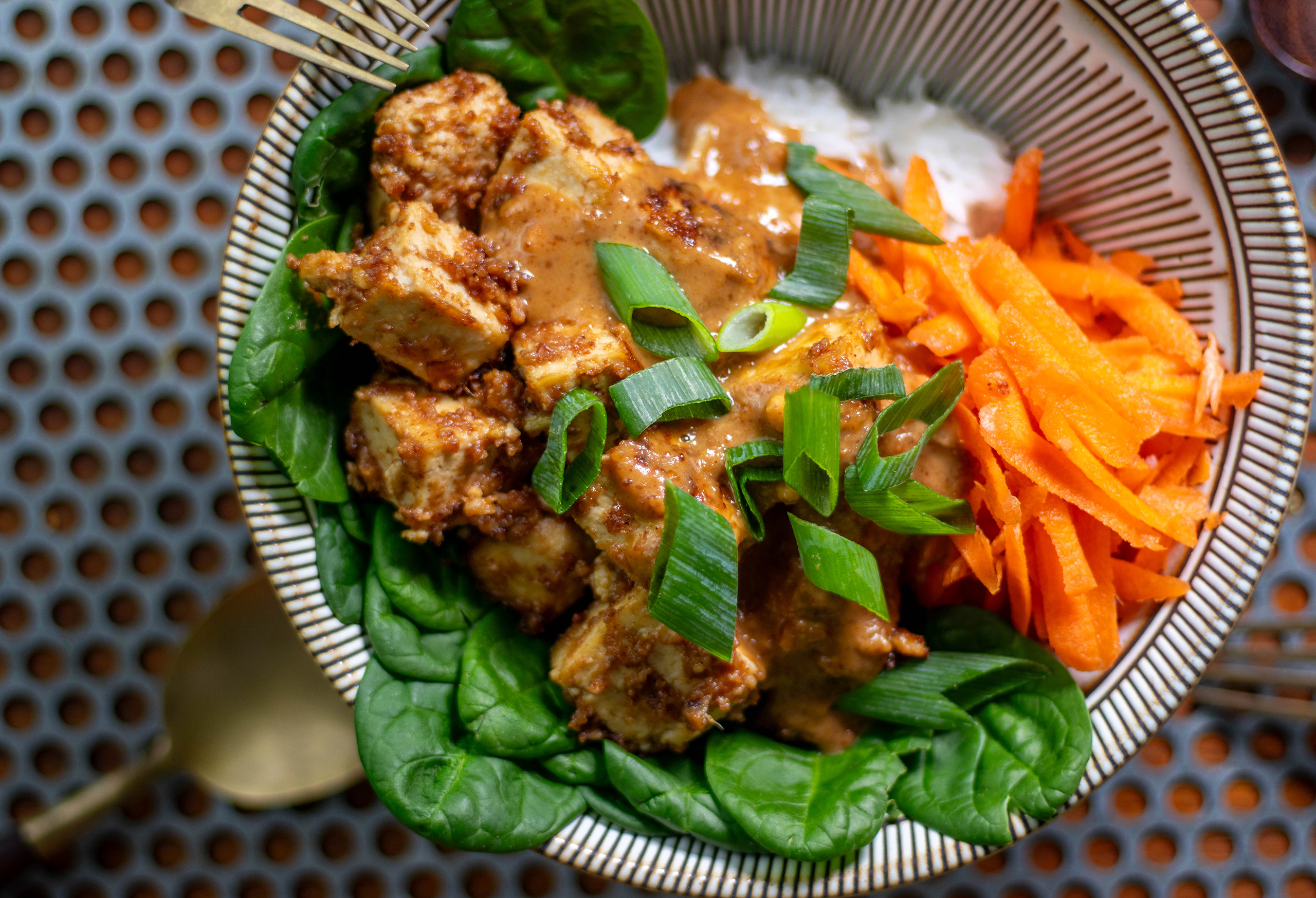
  • Tofu in peanut sauce with vegetables on rice

    Tofu in peanut sauce with vegetables on rice

    My recipe for crispy tofu, fried in a deliciously creamy peanut sauce.
    Served as a tasty bowl with fresh broccoli, baby spinach and spring onions on rice.
    Fresh and healthy! And the delicious peanut sauce is just dreamy!
    This meal is simple to prepare, but tastes particularly great!

    My recipe for crispy tofu in a creamy, rich peanut sauce.
    My recipe for crispy tofu in a creamy, rich peanut sauce.

    Crispy tofu fried with peanut sauce

    The peanut tofu is fried directly in its peanut sauce. This gives it an aromatic crunchy coating.

    I season the vegan peanut sauce for the Peanut Butter Tofu with spices, garlic, ginger and lime juice, for a deep umami and full bodied taste.

    This recipe offers a harmonious combination of crispy tofu and creamy, spicy peanut sauce. It is ideal as a main dish for vegans, vegetarians and flexitarians or as a delicious side dish.

    I season the vegan peanut sauce for the Peanut Butter Tofu with spices, garlic, ginger and lime juice.
    I season the vegan peanut sauce for the Peanut Butter Tofu with spices, garlic, ginger and lime juice.

    Peanut tofu with vegetables on rice is very easy to prepare

    Crispy tofu in peanut sauce is not only a delicious dish that impresses with the perfect combination of textures and flavours. It is also very easy to prepare. The peanut sauce is very easy to make and the rest of the tasks are also fun and very quick to prepare.

    Tofu in peanut sauce with vegetables on rice is very easy to prepare
    Peanut tofu with vegetables on rice is very easy to prepare

    Peanut tofu is also loved by people who do not appreciate tofu

    Do you get that, too? You mention you’re vegan, some comments come up and then someone randomly sais, that tofu does not taste good.

    I had this dish on the menu for a while at a restaurant I worked at. That was around 2016, back then almost everyone seemd to hate tofu. The menu there was changed quarterly and the guests were almost never vegan. Nevertheless, after the menu was over, people asked again and again about my delicious tofu in peanut sauce on a vegetable bowl!

    Just serve my peanut tofu from this recipe with peanut sauce for dipping or this whole bowl. You’ll never have to hear that tofu is boring again! Because the crispy, creamy, sweet, salty, spicy and slightly hot tofu dish will impress even the biggest tofu fan.

    This dish will even impress people who claim to not like tofu.
    This dish will even impress people who claim to not like tofu.

    A tofu peanut bowl with fresh vegetables is very healthy

    This peanut butter tofu bowl contains only good ingredients! It is very healthy thanks to the fresh vegetables and the protein-rich tofu. By the way: the peanut butter in the peanut sauce is also very high in protein. And if you use an unsweetened one, this bowl is even healthier.

    A tofu peanut bowl with fresh vegetables is very healthy
    A tofu peanut bowl with fresh vegetables is very healthy

    Tofu in peanut sauce with vegetables on rice: this dish is gluten-free

    If you have gluten intolerance, celiac disease, or want to cook for someone who doesn’t eat gluten, this recipe is perfect. A full-flavoured, versatile and filling meal where you won’t miss anything.

    More delicious tofu recipes to try

    Would you like to know more recipes with tofu? Then just try out these delicacies:

    I could indulge in the delicious peanut sauce
    I could indulge in the delicious peanut sauce

    Preparation of tofu in peanut sauce with vegetables on rice in pictures:

    Here you can see how I prepare this recipe in pictures. Step by step.

    1. the ingredients for the peanut sauce
    1. the ingredients for the peanut sauce
    2. The ingredients for the bowl.
    2. The ingredients for the bowl.
    3. The oven baked tofu with the peanut sauce next to it.
    3. The oven baked tofu with the peanut sauce next to it.
    4. Mix half of the peanut sauce with the tofu.
    4. Mix half of the peanut sauce with the tofu.
    4. the tofu in peanut marinade is now fried.
    4. The tofu in peanut marinade is now fried.
    5. Stir-fried in peanut sauce
    5. Stir-fried in peanut sauce
    Tofu in peanut sauce with vegetables on rice
    Tofu in peanut sauce with vegetables on rice

    Ingredients for 4 portions of tofu in peanut sauce as a bowl:

    Bowl ingredients:

    600 g tofu, cut into approx. 1.5cm cubes

    250 ml rice

    3 carrots, coarsely grated
    8 handfuls of baby spinach, fresh
    1 broccoli, cut into small bites
    1 spring onion, cut into rings
    4 tbsp oil
    1 tbsp sesame oil
    Salt
    Pepper

    Peanut sauce:

    8 tbsp peanut butter (not too sweet and not too salty.)
    180 ml hot water
    2 garlic cloves, finely chopped
    2 tbsp ginger, finely grated
    1/4 tsp chili flakes
    4 tbsp rice vinegar
    2 tbsp lime juice
    4 tsp agave syrup
    2 tbsp soy sauce (gluten free, if needed)

    Preparation:

    Prepare tofu:

    1. Preheat the oven to 200° top and bottom heat.
    2. Spread the tofu cubes on a baking tray lined with baking paper and bake for 20 minutes, turning once.
    3. Set aside in a bowl.

    Peanut sauce:

    1. To make the peanut sauce, mix the peanut butter with the hot water until a soft mixture is formed.
    2. Add all other sauce ingredients and continue stirring until everything is well mixed into a sauce.

    Prepare remaining bowl:

    1. Sprinkle the broccoli with the sesame oil, sprinkle with a pinch of salt and pepper, place on a baking tray lined with baking paper and roast in the oven at 200° for 15 minutes.
    2. Meanwhile, cook the 250 ml (not grams) of rice in a pot or rice cooker with 500 ml of lightly salted water.

    Prepare peanut tofu:

    1. Add about half of the peanut sauce to the tofu and toss to coat and marinate.
    2. Heat the oil in a deep pan and fry the tofu in it.
    3. Heat the remaining peanut sauce again in a small saucepan.

    Serve the bowl:

    1. Divide the rice between 4 bowls or plates.
    2. Arrange the carrots and spinach on top.
    3. Add the broccoli and tofu on top.
    4. Spread the remaining peanut sauce over it.
    5. Sprinkle with spring onion rings or serve them on the side.

    Bon appetit!

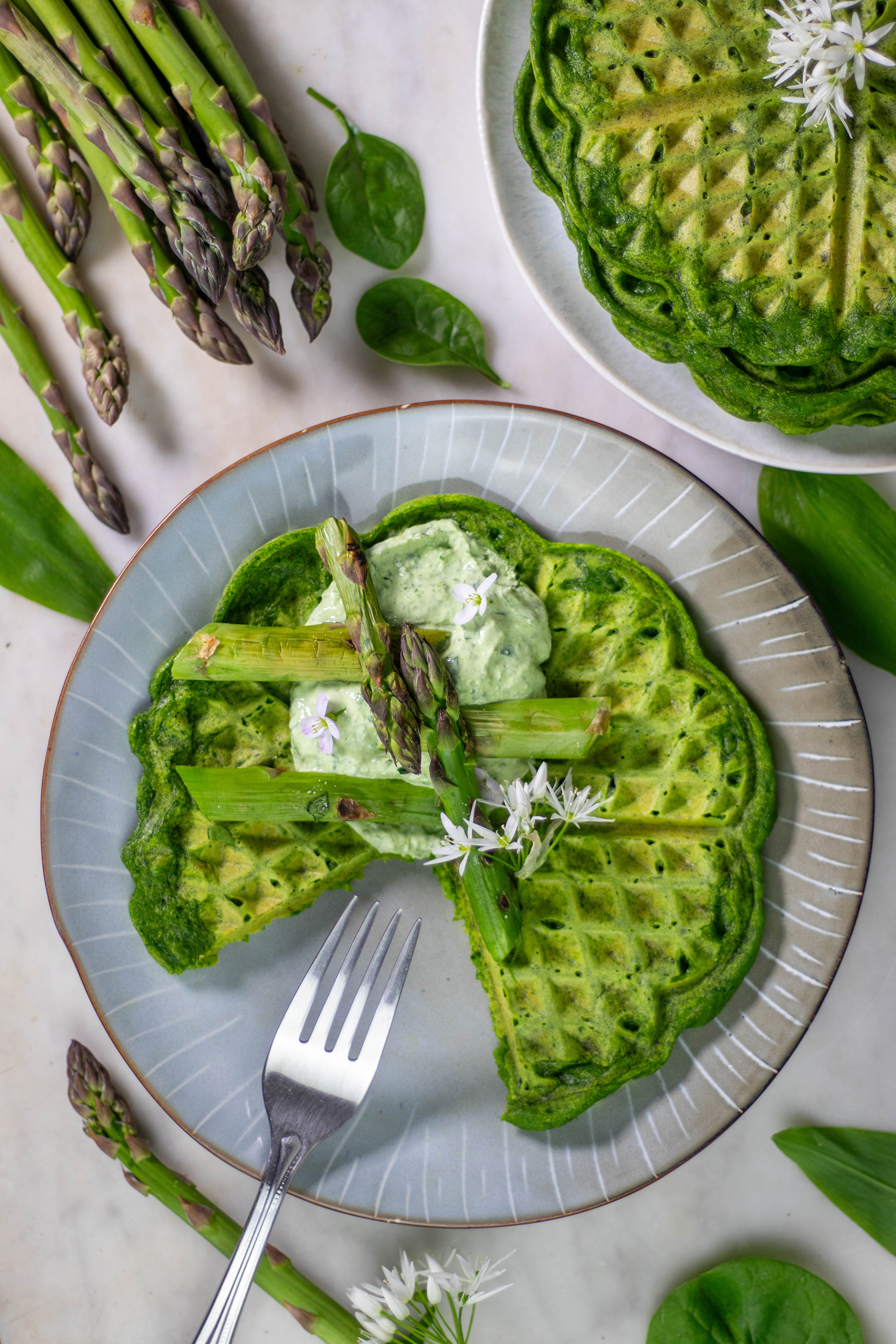
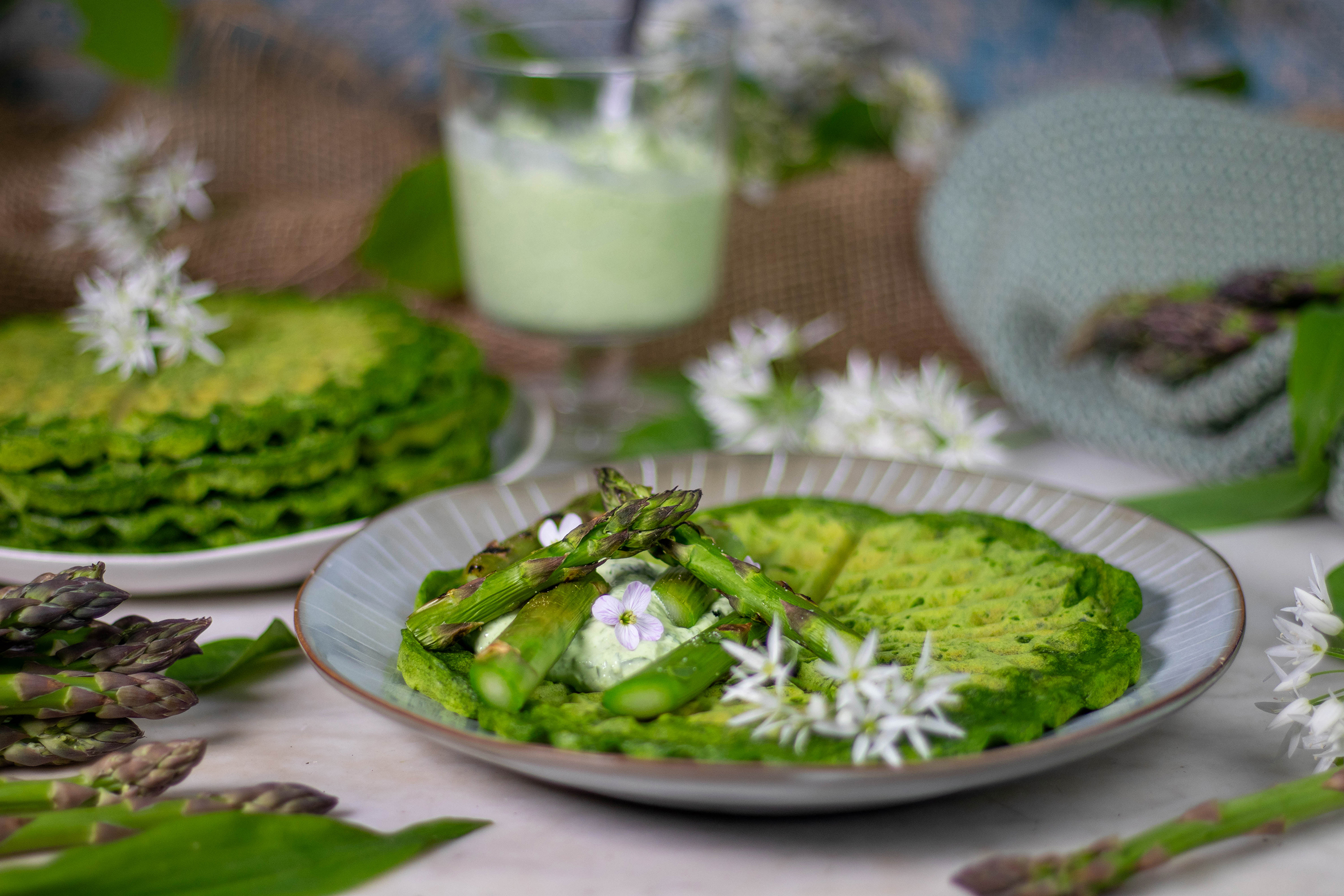
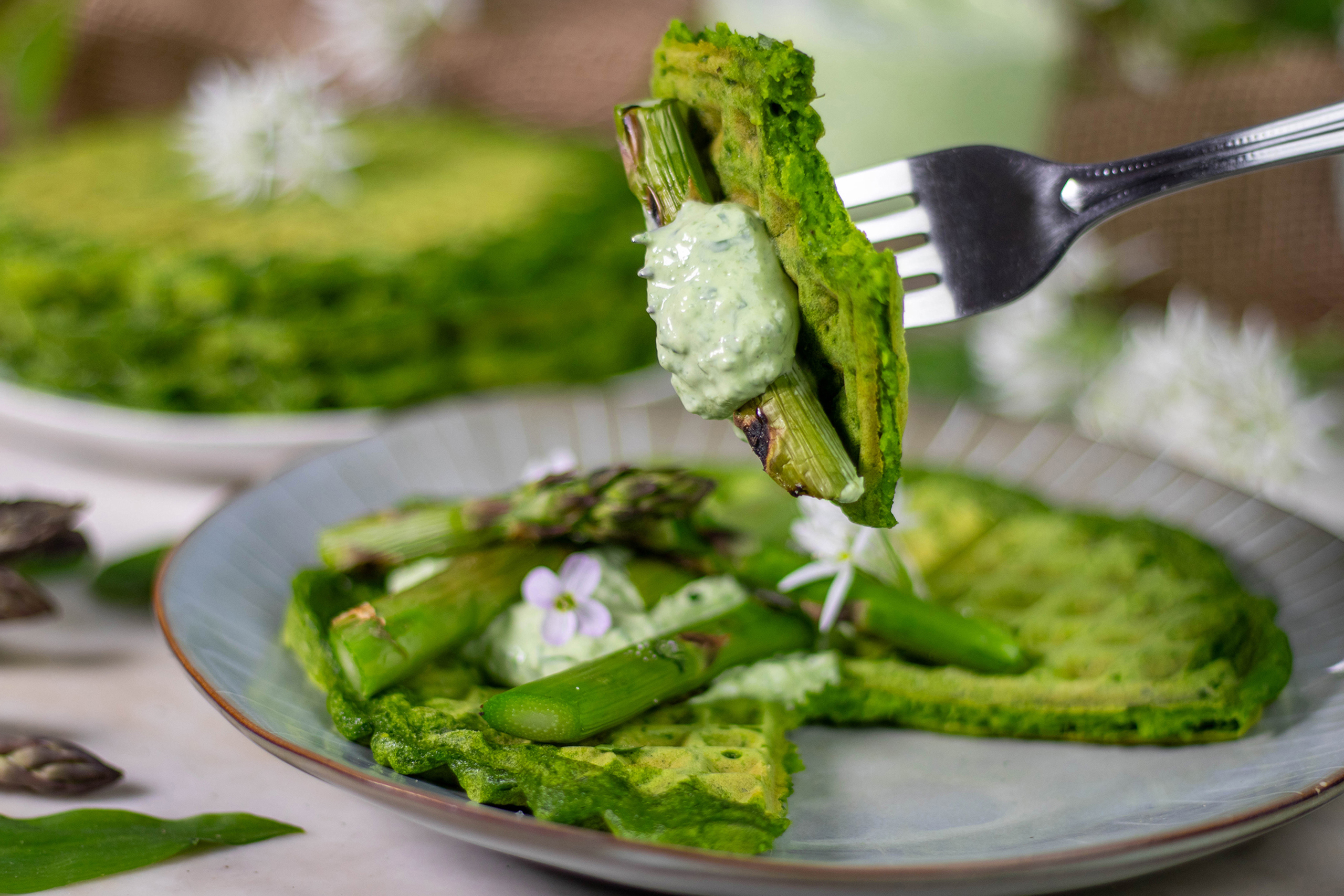
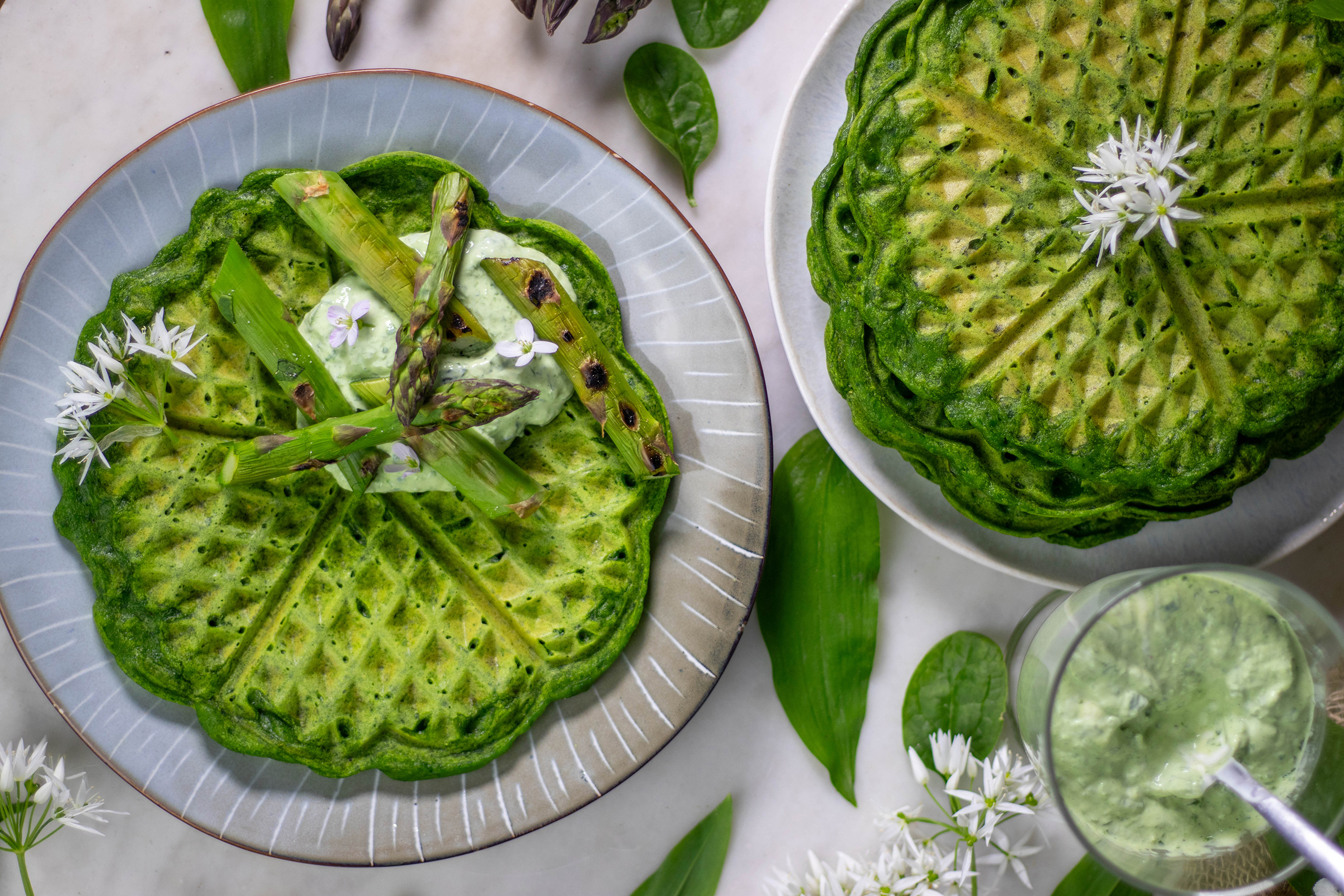
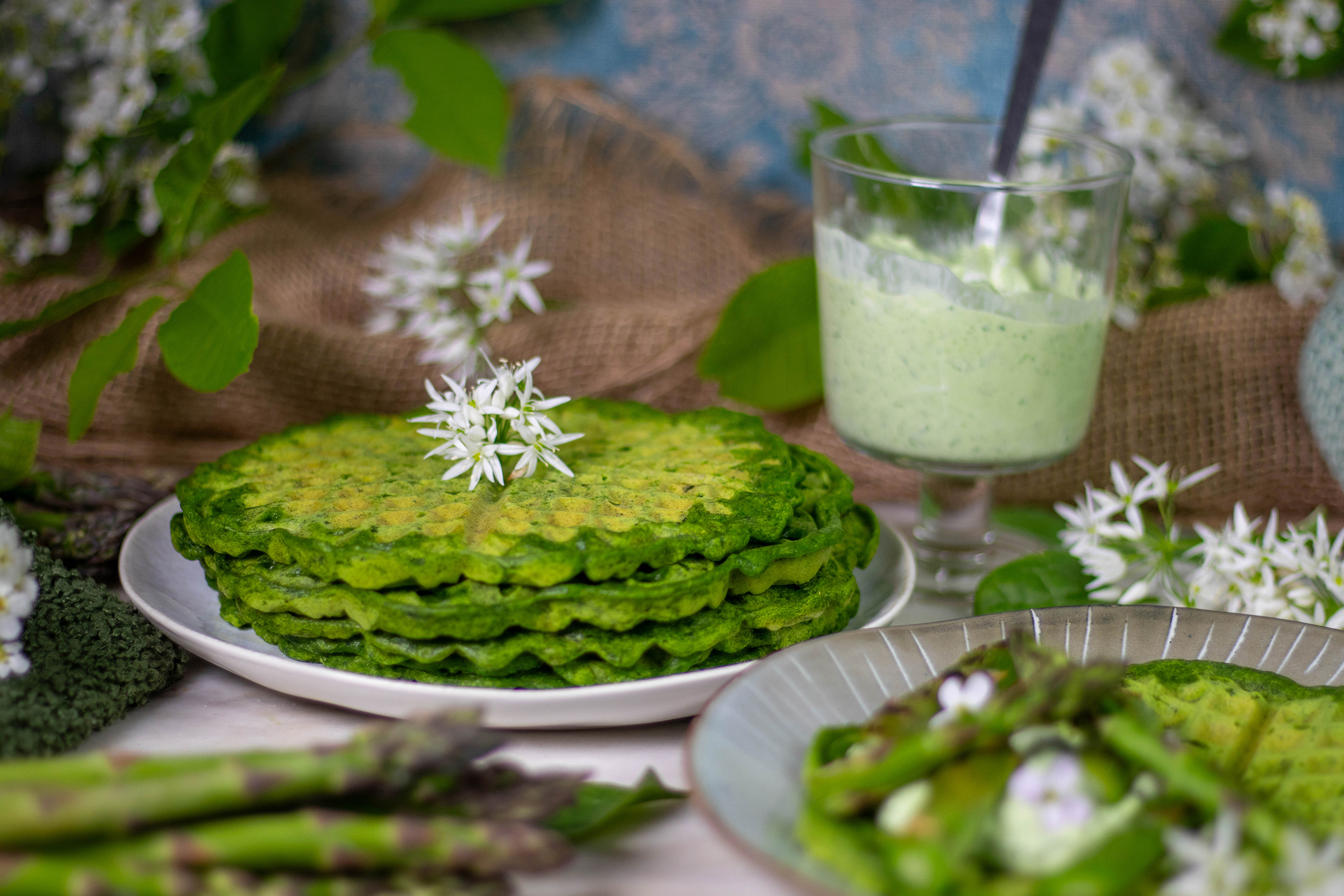
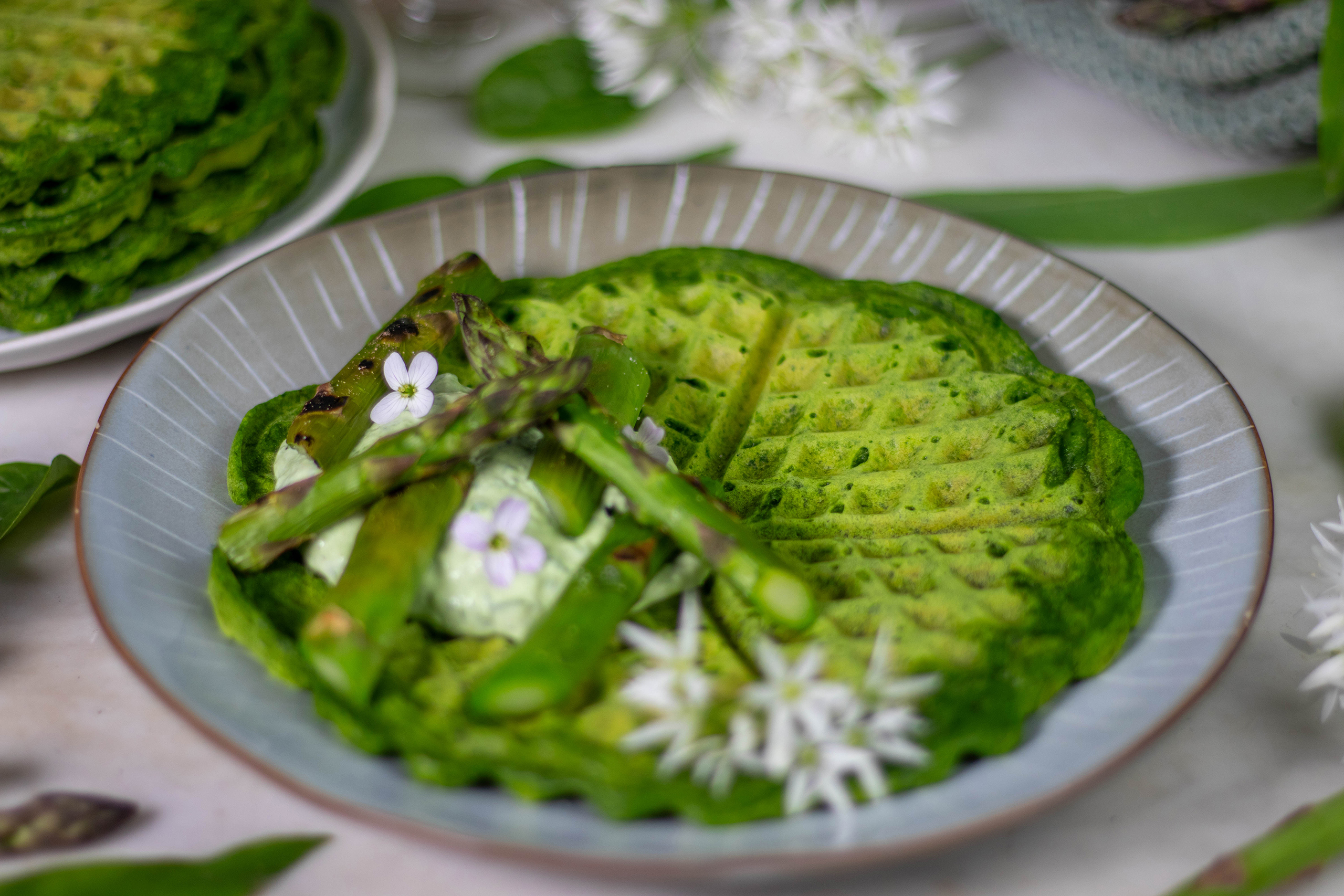
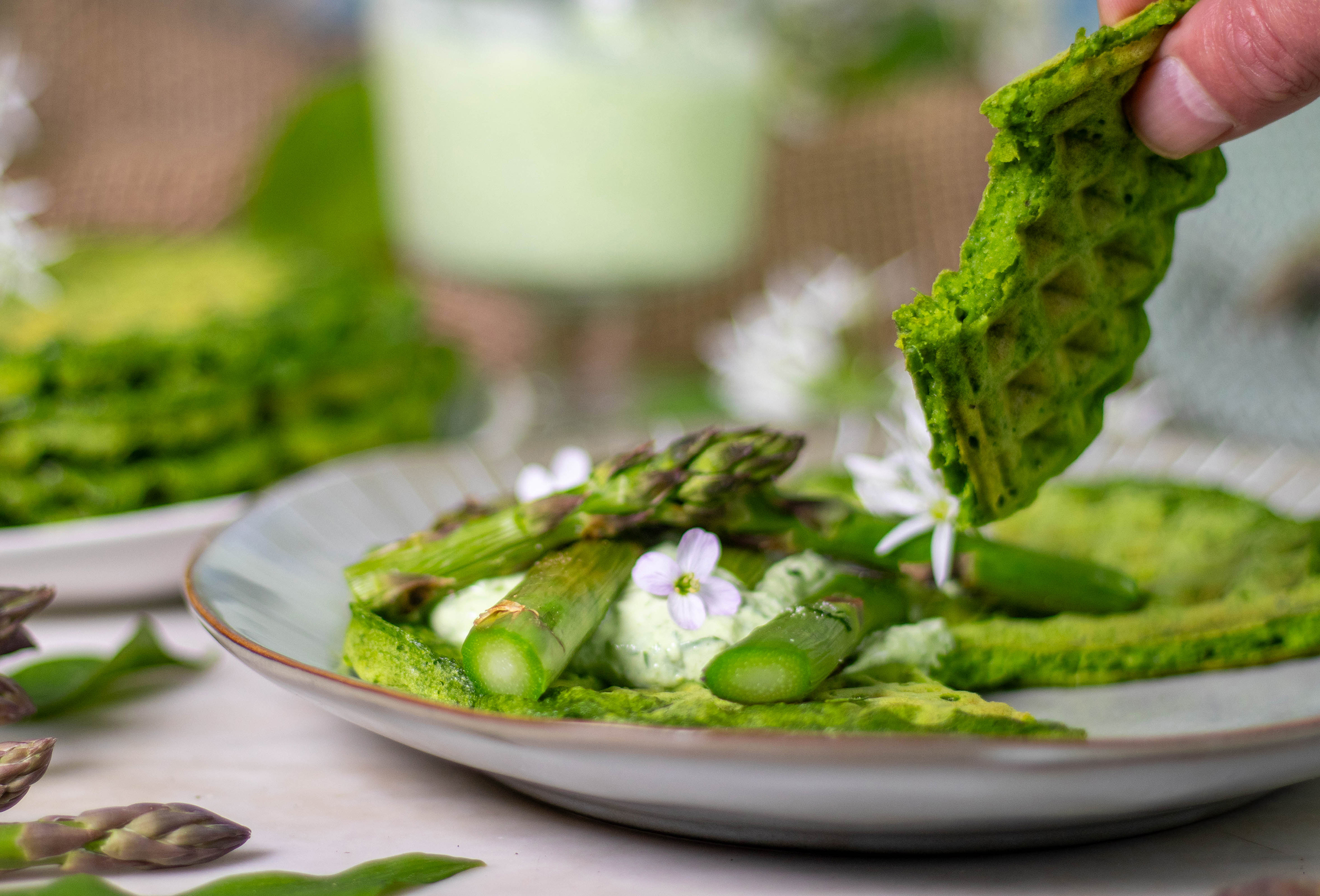
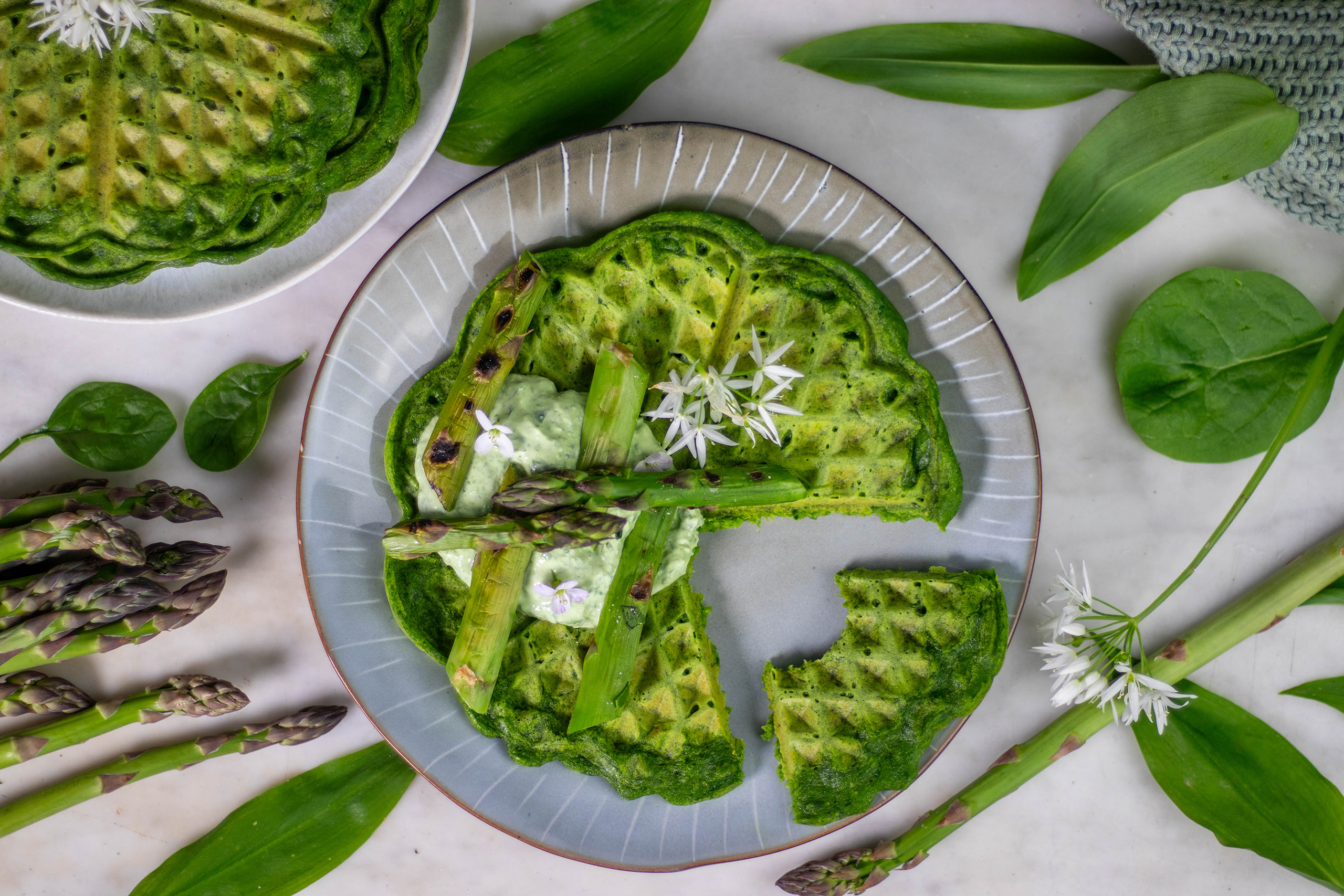
  • Green waffles – wild garlic & spinach waffles – plus dip & asparagus

    Green waffles – wild garlic & spinach waffles – plus dip & asparagus

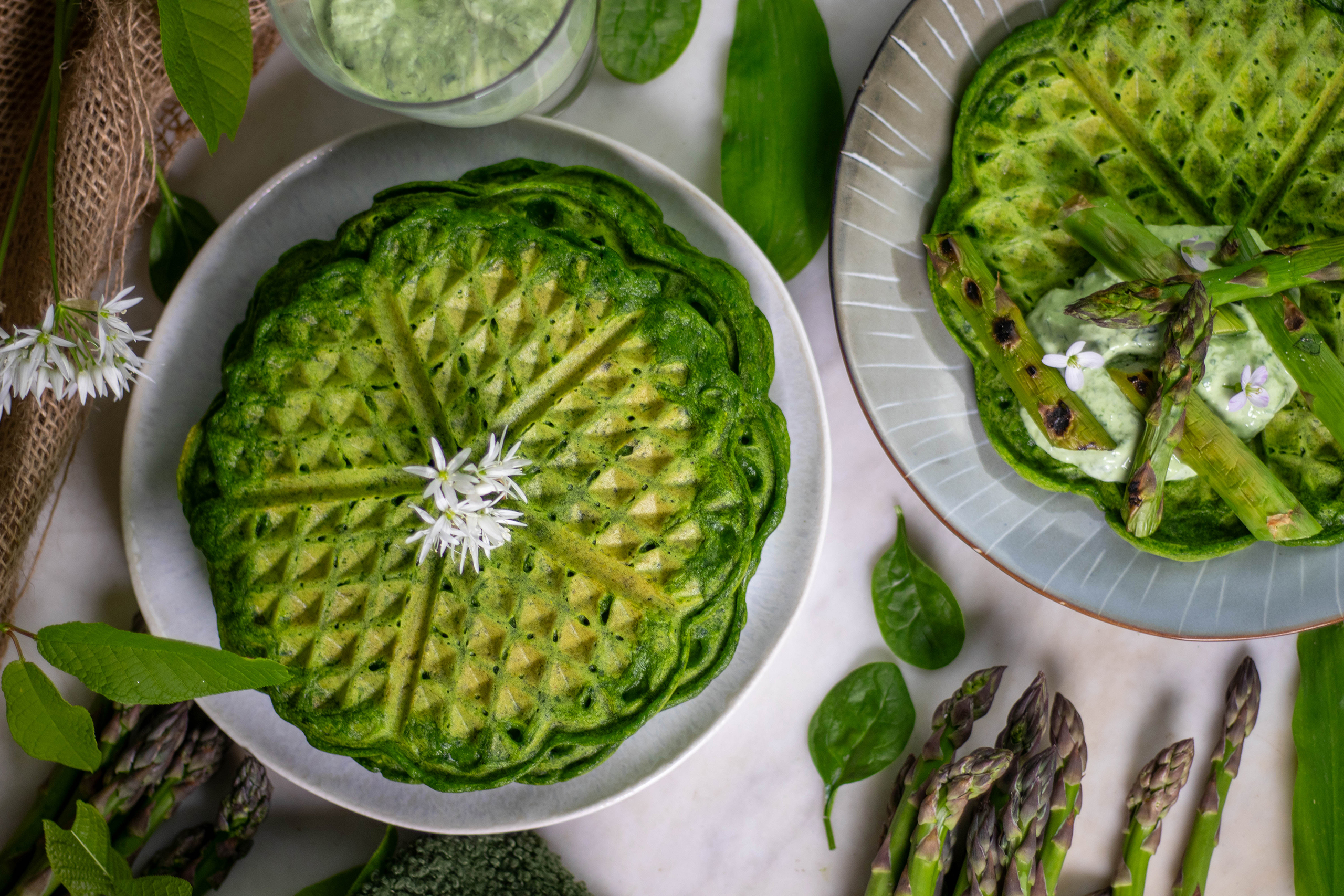
    Vegan, hearty, green waffles with wild garlic and spinach. An aromatic, bright green suprise on the table. Plus a spicy, creamy, green wild garlic dip and grilled asparagus. This is what green spring cuisine tastes like!

    Vegan, hearty, green waffles with wild garlic and spinach. An aromatic, bright green change on the plate.
    Vegan, hearty, green waffles with wild garlic and spinach. An aromatic, bright green change on the plate.

    Green waffles with wild garlic dip and grilled asparagus

    Everything is green and blooming during the asparagus season. And wild garlic can still be picked fresh. I developed this fresh recipe to match the spring green that is so beautiful all around us right now.

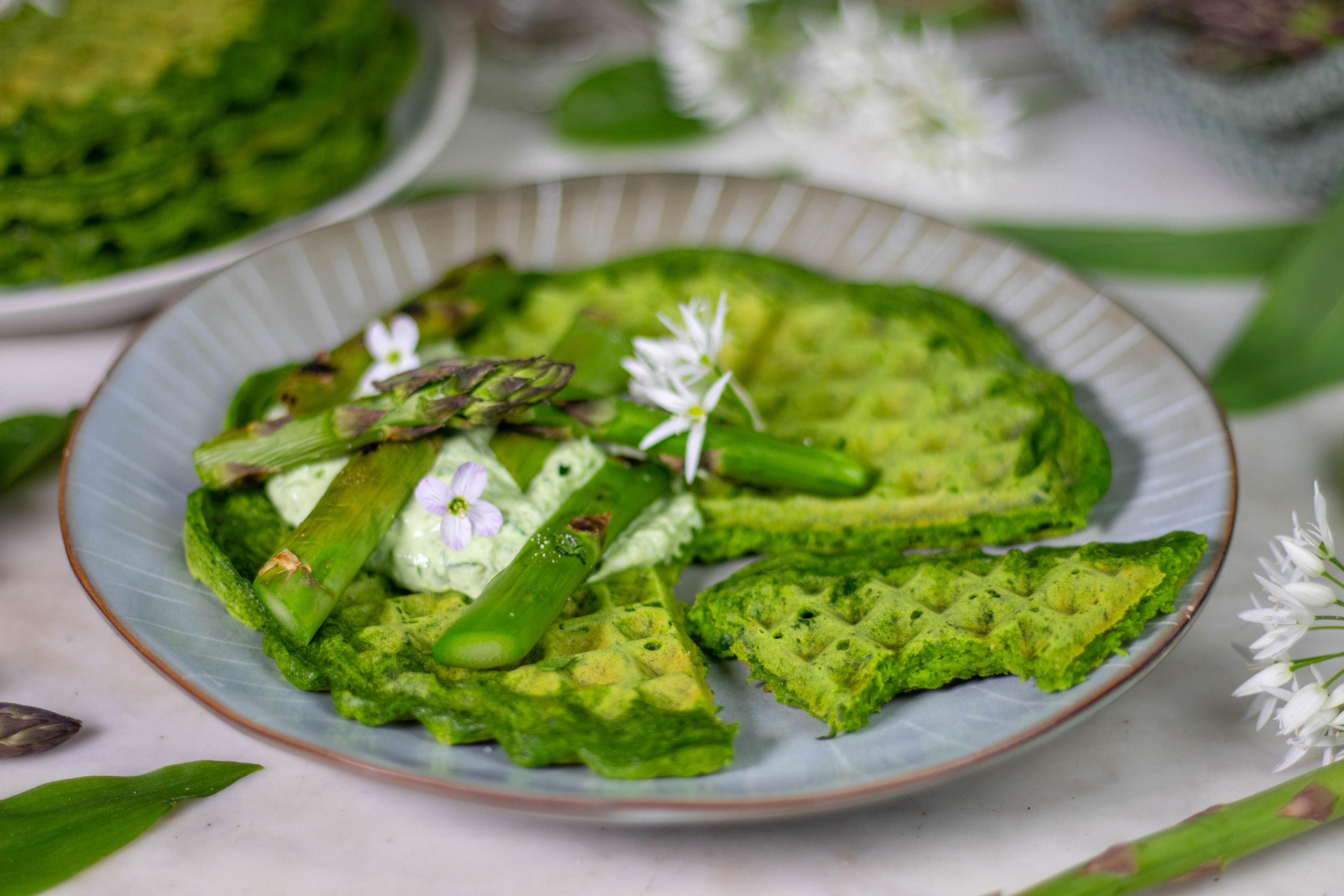
    Wonderful, aromatic, green waffles. Fluffy, airy and hearty. With a creamy, green, fresh wild garlic dip that underlines the wild garlic aroma of the waffles. And a few sticks of grilled green asparagus, whose roasted aromas round off the taste of this lovely spring dish.

    Spring cuisine: Green waffles with wild garlic dip and grilled asparagus
    Spring cuisine: vegan savory waffles with wild garlic dip and grilled asparagus

    Green waffles are suitable as a snack, breakfast or hearty meal

    Green waffles are very versatile. They are ideal as a healthy breakfast, as an energy-packed snack, but also as a hearty meal with it’s dip and asparagus. They’re a fun way to add more variety to the vegan table and to intoduce more vegetables to your diet. As a delicious waffle treat, this recipe is popular amongst children and adults.

    Green waffles are suitable as a snack, breakfast or hearty meal
    Green waffles are suitable as a snack, breakfast or hearty meal

    Vegan green waffles with spinach only

    If it’s not wild garlic season, you can simply replace the wild garlic with spinach or use frozen wild garlic. Alternatively, you can season the waffles with chives if spinach alone doesn’t taste enough of fresh herbs to you.

    If it's not wild garlic season, you can simply replace the wild garlic in the waffles with spinach.
    If it’s not wild garlic season, you can simply replace the wild garlic in the waffles with spinach.

    Green waffles: vegan, hearty herb waffles in bright green

    Green waffles are a creative and healthy twist on classic, savory waffles. The green colour is created by adding fresh spinach and wild garlic.

    These waffles are not only a real eye-catcher, but also a great way to add additional nutrients to your meals. Because spinach is rich in iron, vitamins and antioxidants.

    Green waffles: vegan, hearty herb waffles in bright green
    Green waffles: vegan, hearty herb waffles in bright green

    Green waffles are a great meal option for children

    My green waffles are also a fun way to introduce kids to more vegetables without them noticing it right away. The bright green color of the waffles tickles their curiosity and encourages them to try something new.

    Depending on how spicy your children like it, you can easily replace the wild garlic in the recipe with spinach.

    Add a savory dip, vegan sausages or grilled vegetables and you have a great, simple, child-friendly meal on the table.

    Green waffles are a great meal for children
    Green waffles are a great meal for children

    Seasonal spring cuisine with wild herbs and regional produce

    As you may have noticed on Daily Vegan, I love farm-to-table cuisine, or forest-to-table cuisine. Harvesting wild and farmed, regional ingredients and processing them directly.
    This is not only very climate-friendly, because it hardly requires any transport or long cooling times, it is also very healthy and, above all, incredibly aromatic.

    In this recipe I use fresh, self-collected wild garlic. As well as regional spinach and asparagus. And the waffles are made from local organic flour. This way I can make a small, modest contribution to climate protection and feast brilliantly at the same time!

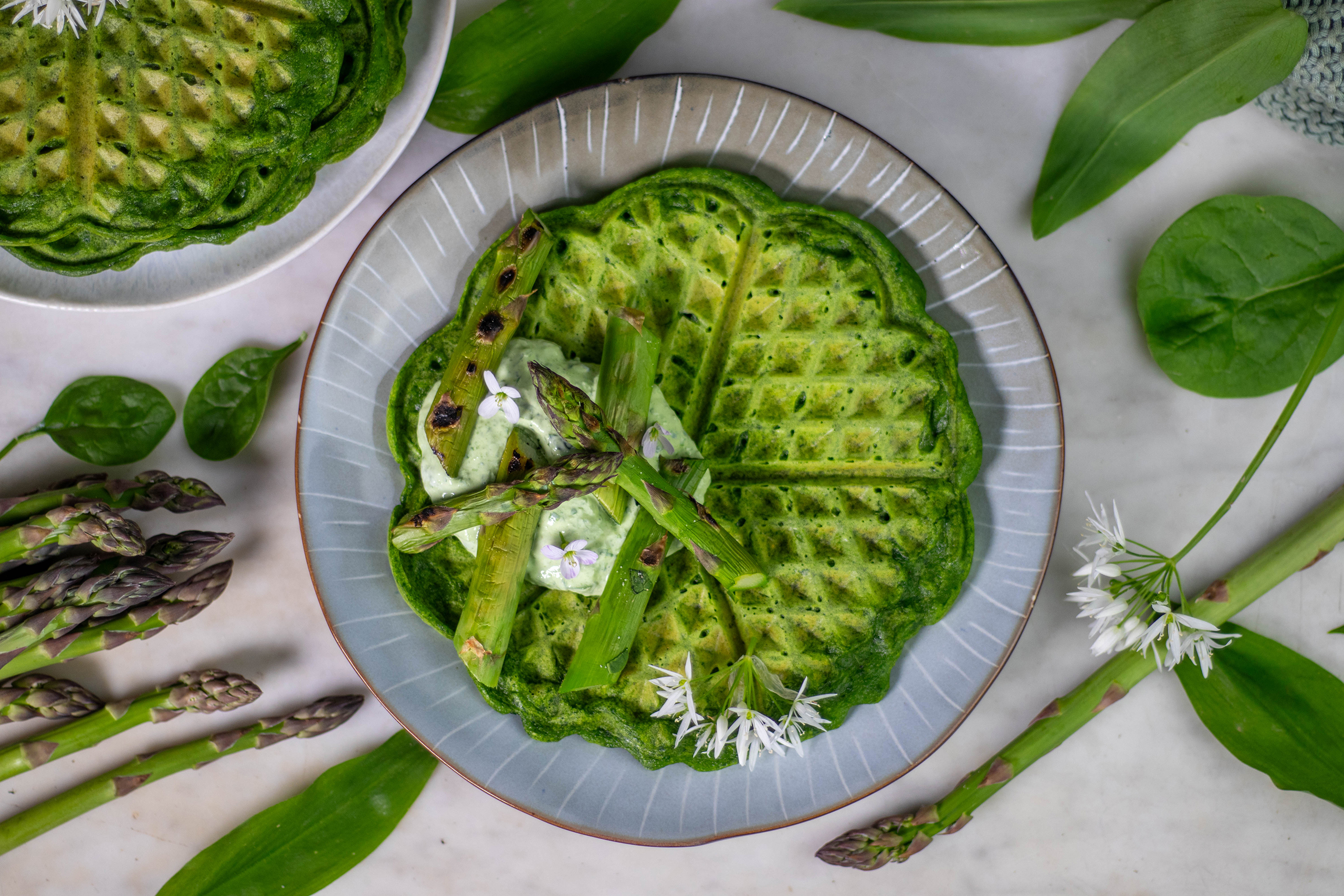
    Seasonal spring cuisine with wild herbs and regional ingredients. I garnished the waffles with edible flowers of wild garlic and meadowfoam.
    Seasonal spring cuisine with wild herbs and regional ingredients. I garnished the waffles with edible flowers of wild garlic and meadowfoam.

    More vegan recipes for spring cuisine

    Are you looking for seasonal spring recipes? With regional, fresh produce? Then you have to try these delicious, vegan recipes from Sean Moxie for your spring kitchen:

    Green waffles are a creative and healthy twist on classic, savory waffles.
    Green waffles are a creative and healthy twist on classic, savory waffles.

    Green waffles – the preparation in pictures

    Here you can see the preparation of my green waffles step by step in pictures. The recipe then begins straight away.

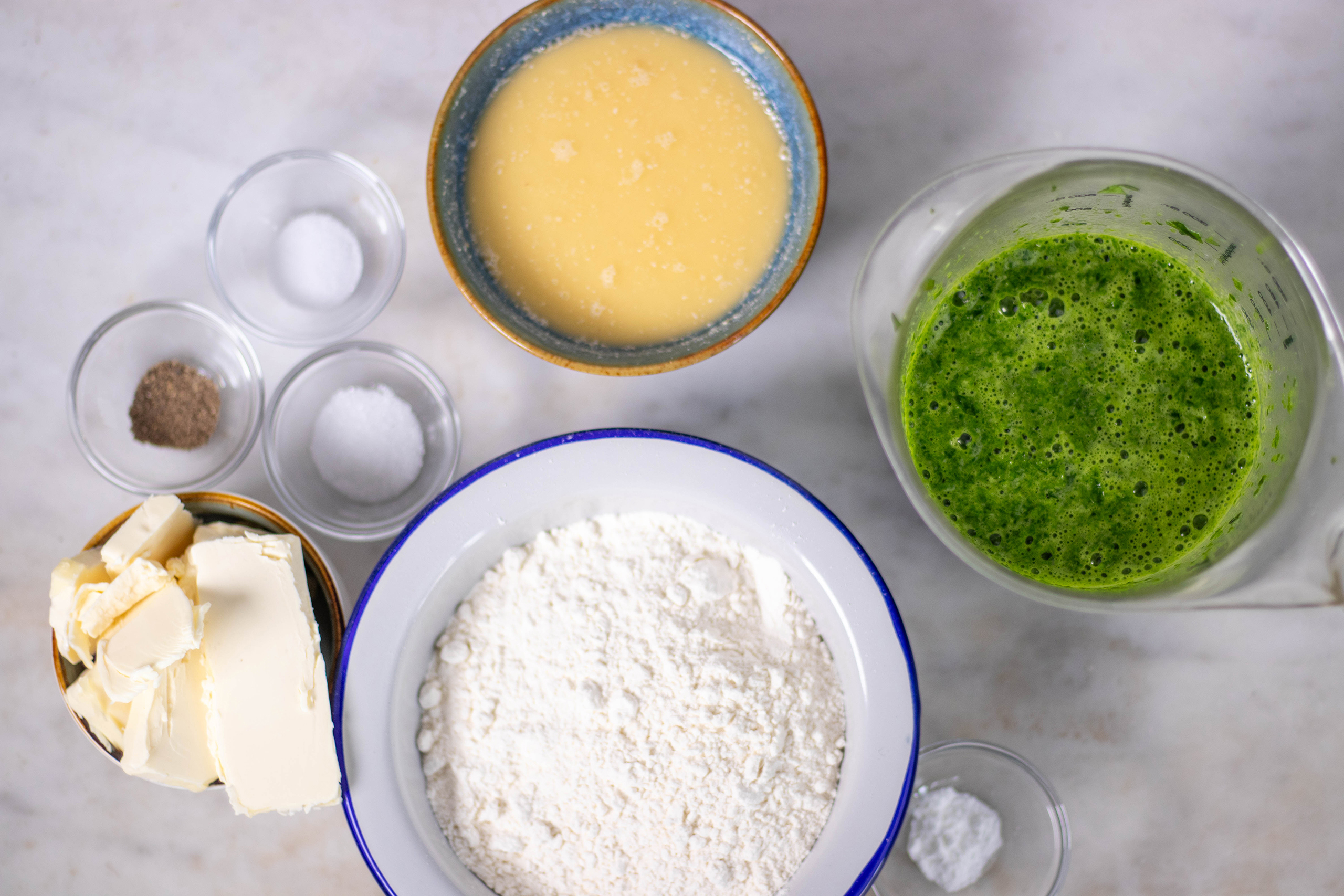
    1. All the ingredients for the waffle batter.
    1. All the ingredients for the waffle batter.
    2. Spinach and wild garlic are pureed with the soy milk.
    2. Spinach and wild garlic are pureed with the soy milk.
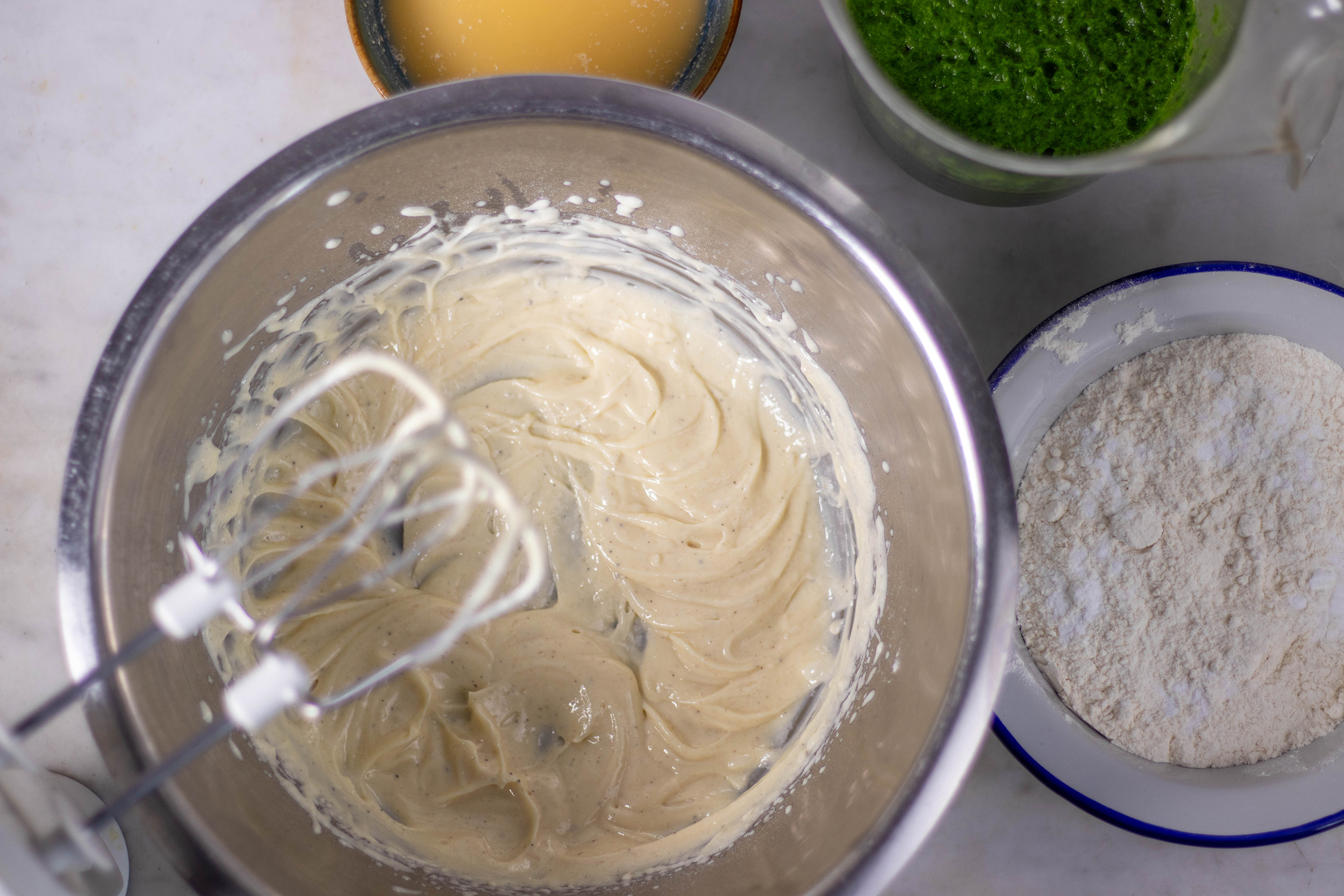
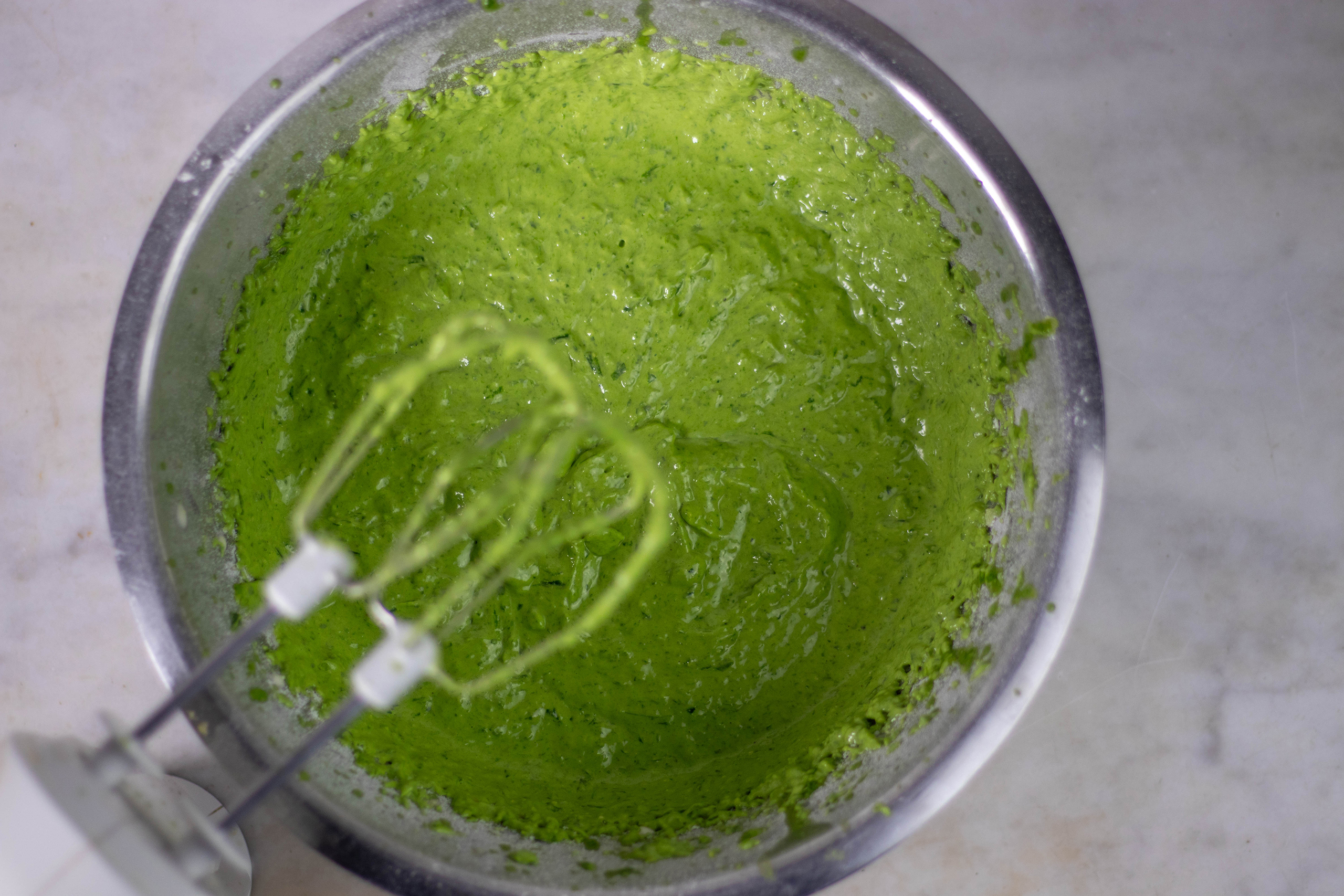
    3. To make the waffle batter, first beat vegan butter, sugar, salt and pepper in a mixer, then mix in a little flour.
    3. To make the waffle batter, first beat vegan butter, sugar, salt and pepper in a mixer, then mix in a little flour.
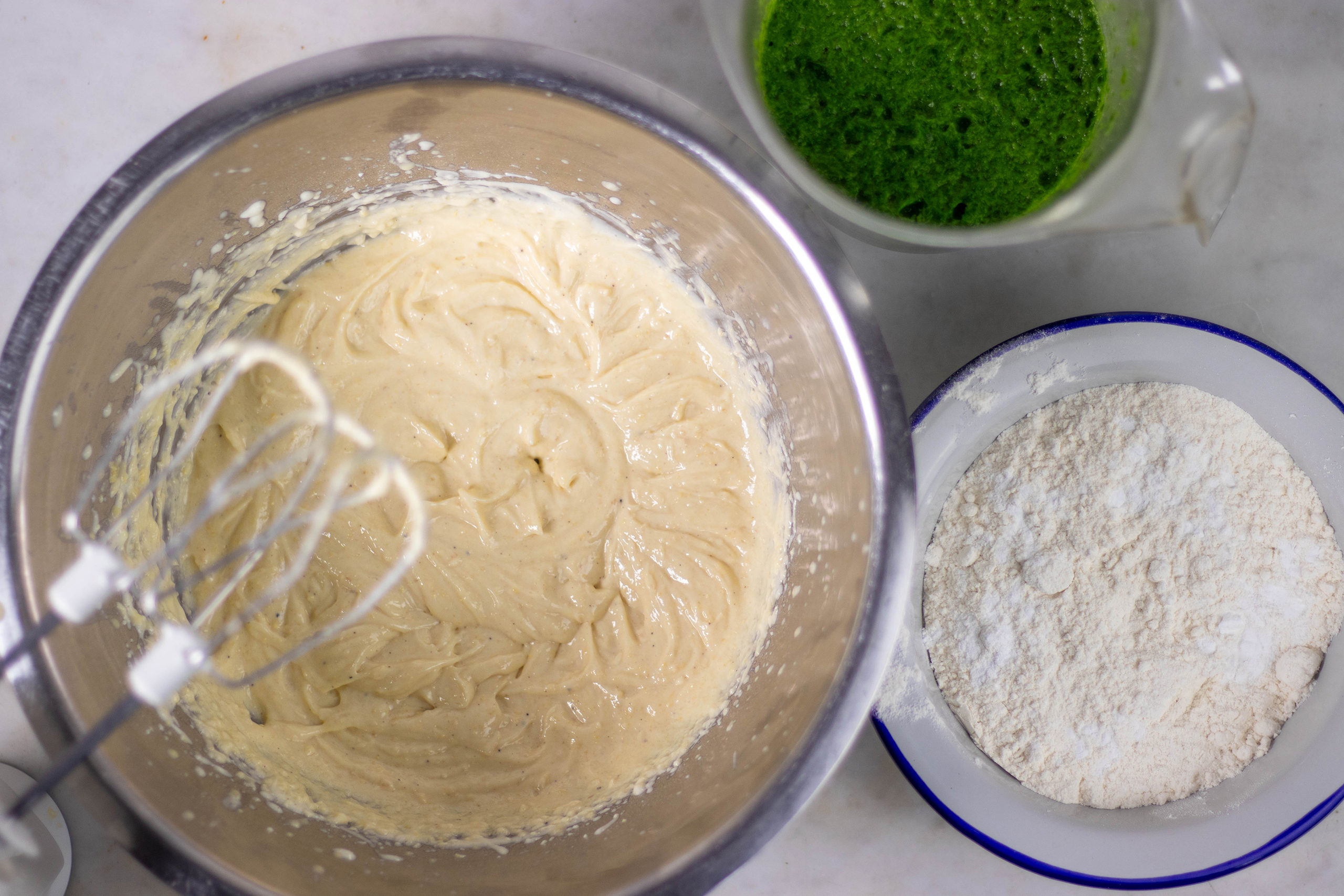
    4. Stir in the mixed chickpea flour, then gradually mix in the flour and herb milk alternately.
    4. Stir in the mixed chickpea flour, then gradually mix in the flour and herb milk alternately.
    5. Allow the finished, savory waffle batter to rest.
    5. Allow the finished, savory waffle batter to rest.
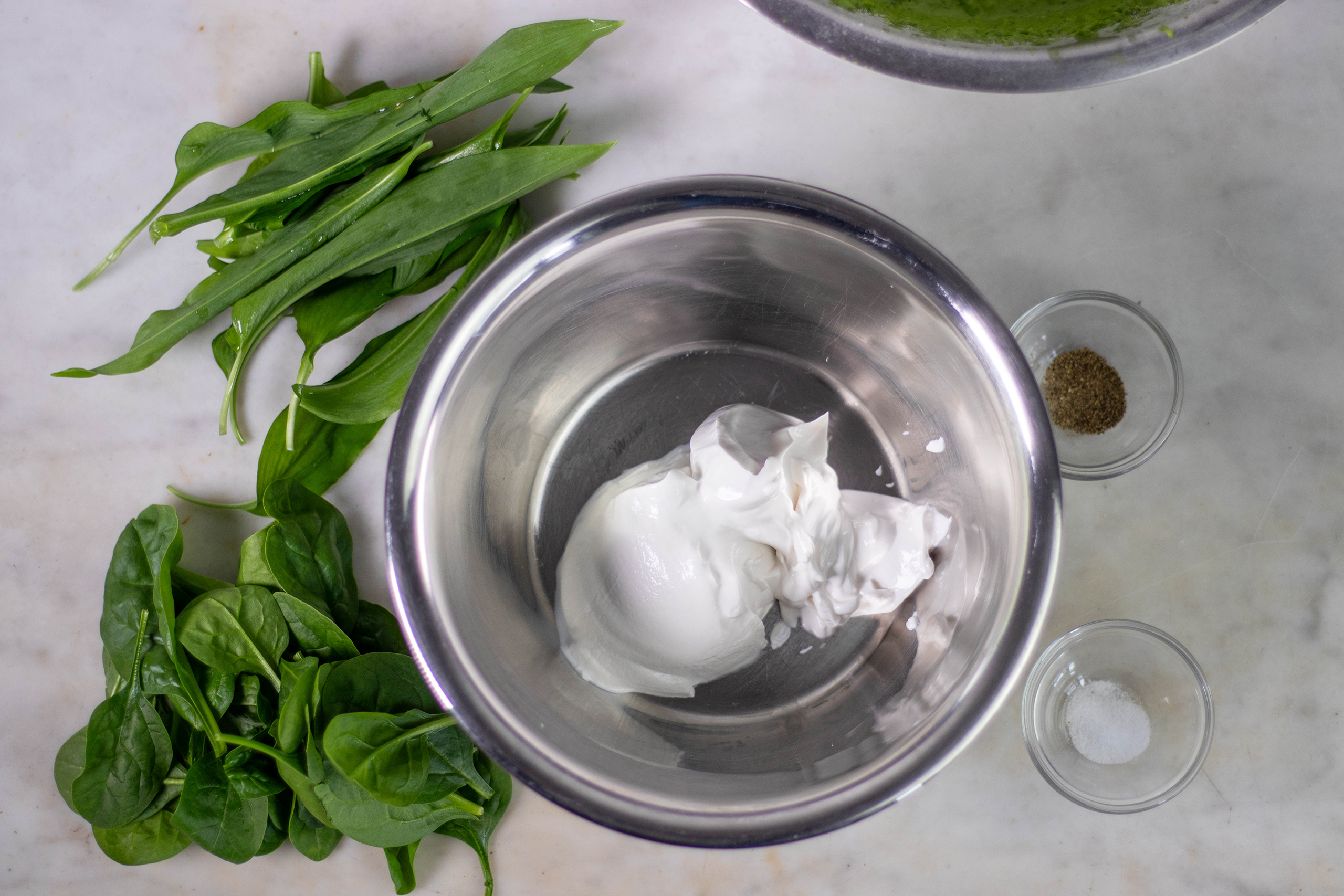
    6. All ingredients for the wild garlic dip.
    6. All ingredients for the wild garlic dip.
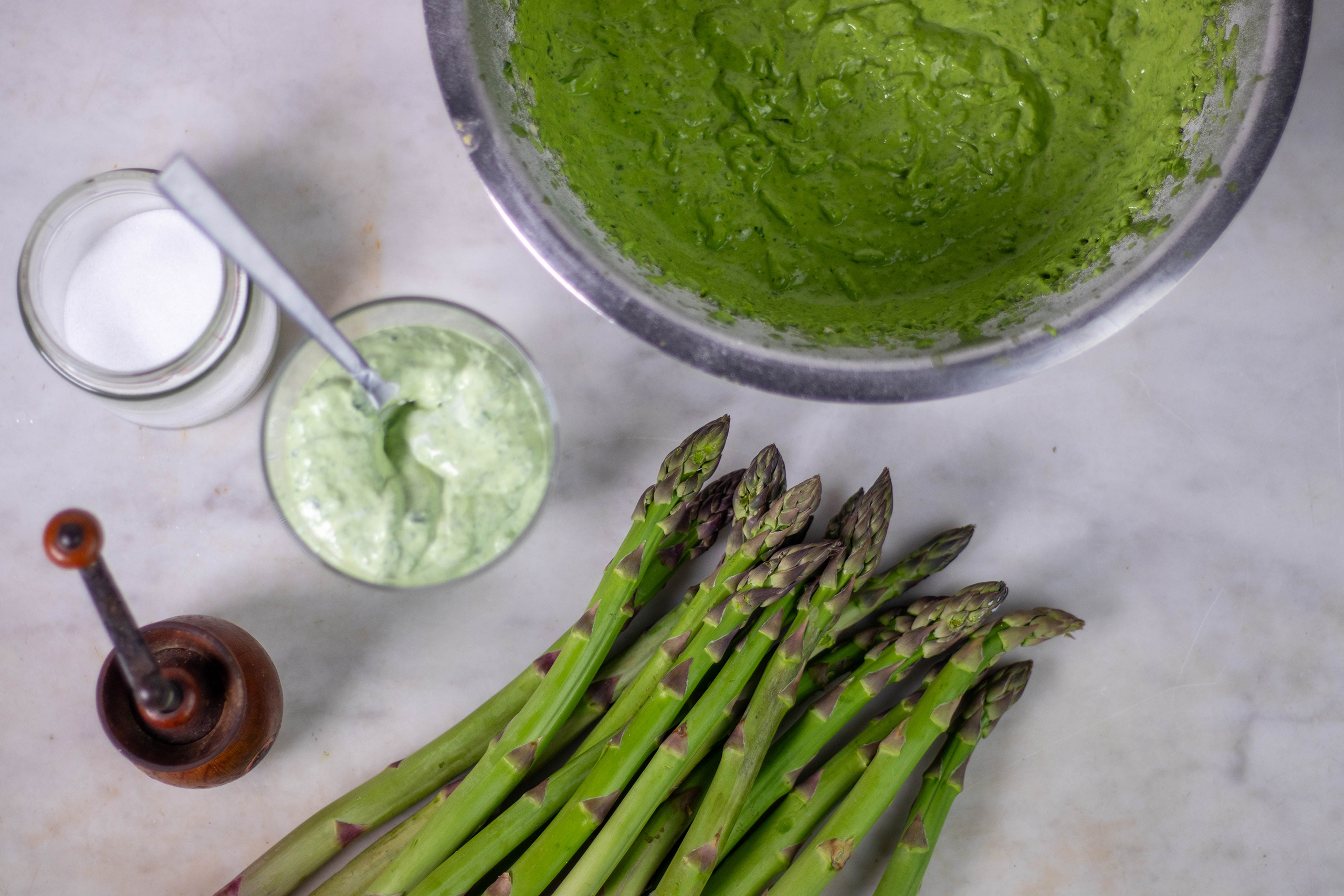
    7. The wild garlic dip, the vegan green waffle dough and the green asparagus.
    7. The wild garlic dip, the vegan green waffle dough and the green asparagus.
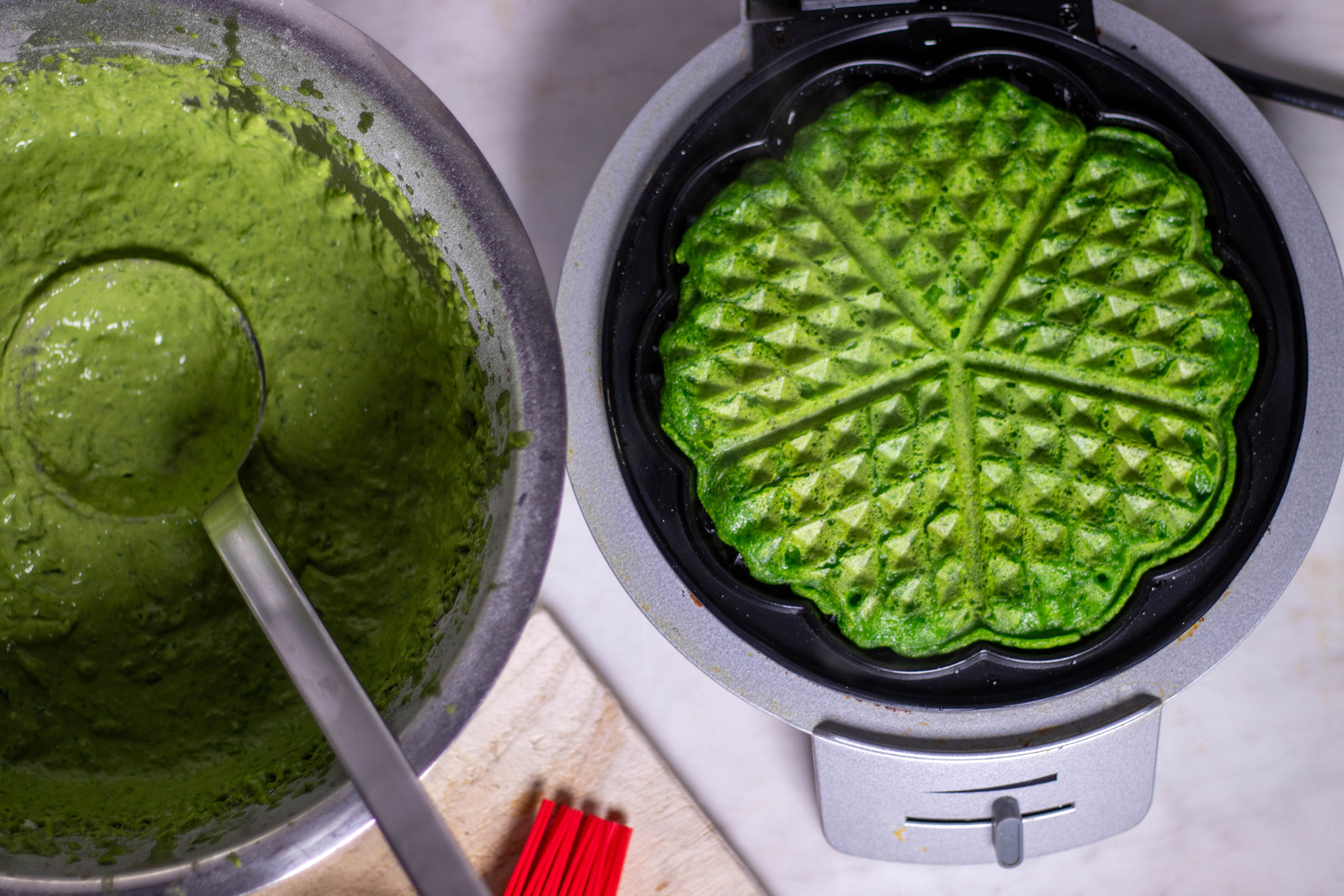
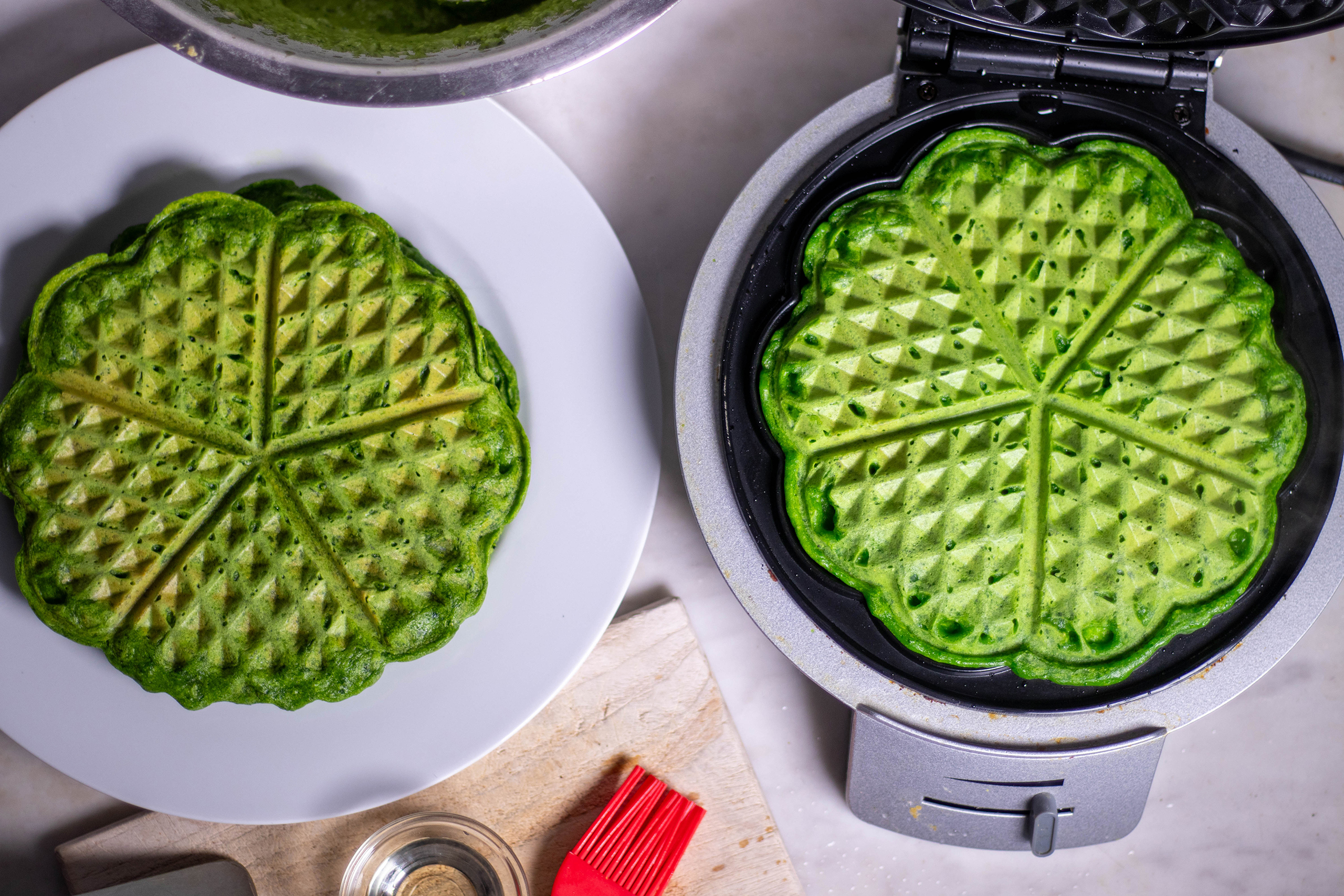
    8. Baking the vegan, savory waffles in the waffle iron.
    8. Baking the vegan, savory waffles in the waffle iron.
    9. Green waffles: vegan and they never stick to the waffle iron.
    9. Green waffles: vegan and they never stick to the waffle iron.
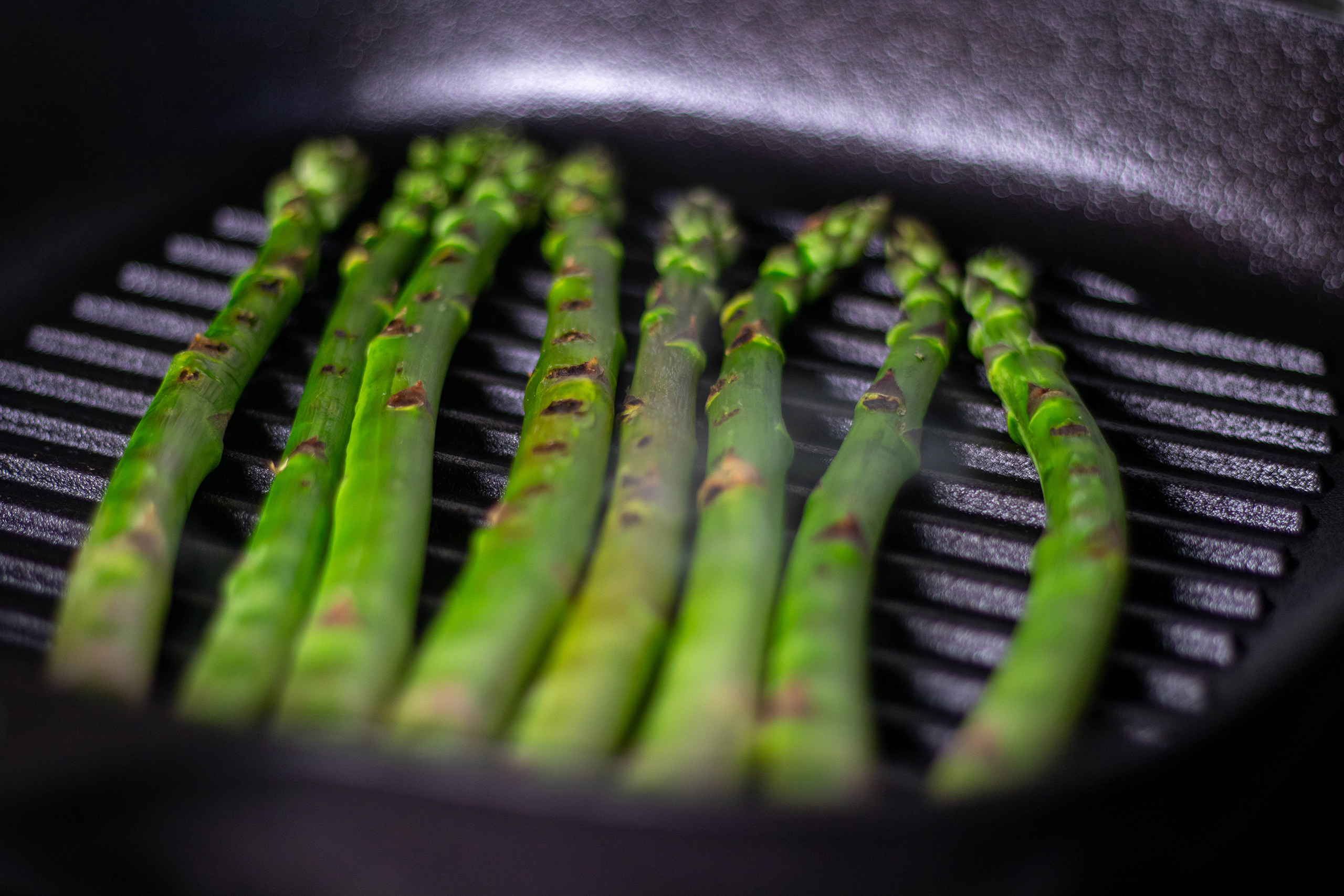
    10. Grilling the green asparagus.
    10. Grilling the green asparagus.
    Green waffles – wild garlic and spinach waffles – with dip and asparagus
    Wild garlic and spinach waffles – with dip and asparagus
    Hearty, vegan waffles: delicious, purely plant-based spring cuisine
    Hearty, vegan waffles: delicious, purely plant-based spring cuisine

    Ingredients for approx. 6 vegan green waffles with wild garlic and spinach:

    Hearty, vegan waffles:

    125g vegan butter, room temperature
    1 tsp sugar
    3/4 tsp salt
    1/2 tsp pepper
    3 tbs of chickpea flour (gram flour), mixed with 120 ml of water
    200 ml soy milk
    100 g spinach, fresh, finely chopped
    50 g wild garlic, fresh, finely chopped
    250 g all purpose flour
    1 level tsp of baking soda

    Oil or vegan margarine for the waffle iron

    Asparagus topping:

    8 stalks of green asparagus
    Salt
    Pepper

    Wild garlic dip:

    150 g vegan creme fraiche
    3 tbsp wild garlic, finely chopped
    1 handful of spinach, finely chopped
    1/2 tsp salt
    1/4 tsp pepper

    Preparation:

    Vegan waffles:

    1. First puree the soy milk thoroughly with the spinach and wild garlic.
    2. Mix vegan butter, sugar, salt and pepper in a large bowl with a mixer.
    3. Then stir in a little flour.
    4. Afterwards gradually mix in the mixed chickpea flour.
    5. Finally, mix in the flour and baking powder alternately with the soy-spinach-wild garlic milk.
    6. Allow the finished vegan waffle batter to rest for at least 10 minutes.
    7. As soon as the dough is ready, fry it in portions using a waffle iron. To do this, generously grease the waffle iron. This works best with vegan margarine or oil. Re-grease every now and then if necessary.

    Green asparagus:

    1. Heat a grill pan without fat.
    2. Grill the asparagus for a few minutes, turning once.
    3. Salt and pepper lightly.

    If you don’t have a grill pan, you can alternatively cook the green asparagus in the oven or fry it in a pan with a little oil.

    Wild garlic dip:

    1. Puree all ingredients with each other.

    Plating and serving green waffles:

    1. Place a green waffle with some wild garlic dip and two stalks of green asparagus on a plate and serve immediatly.

    Bon appetit!

  • Vegan Scotch Eggs – with homemade vegan eggs and meat

    Vegan Scotch Eggs – with homemade vegan eggs and meat

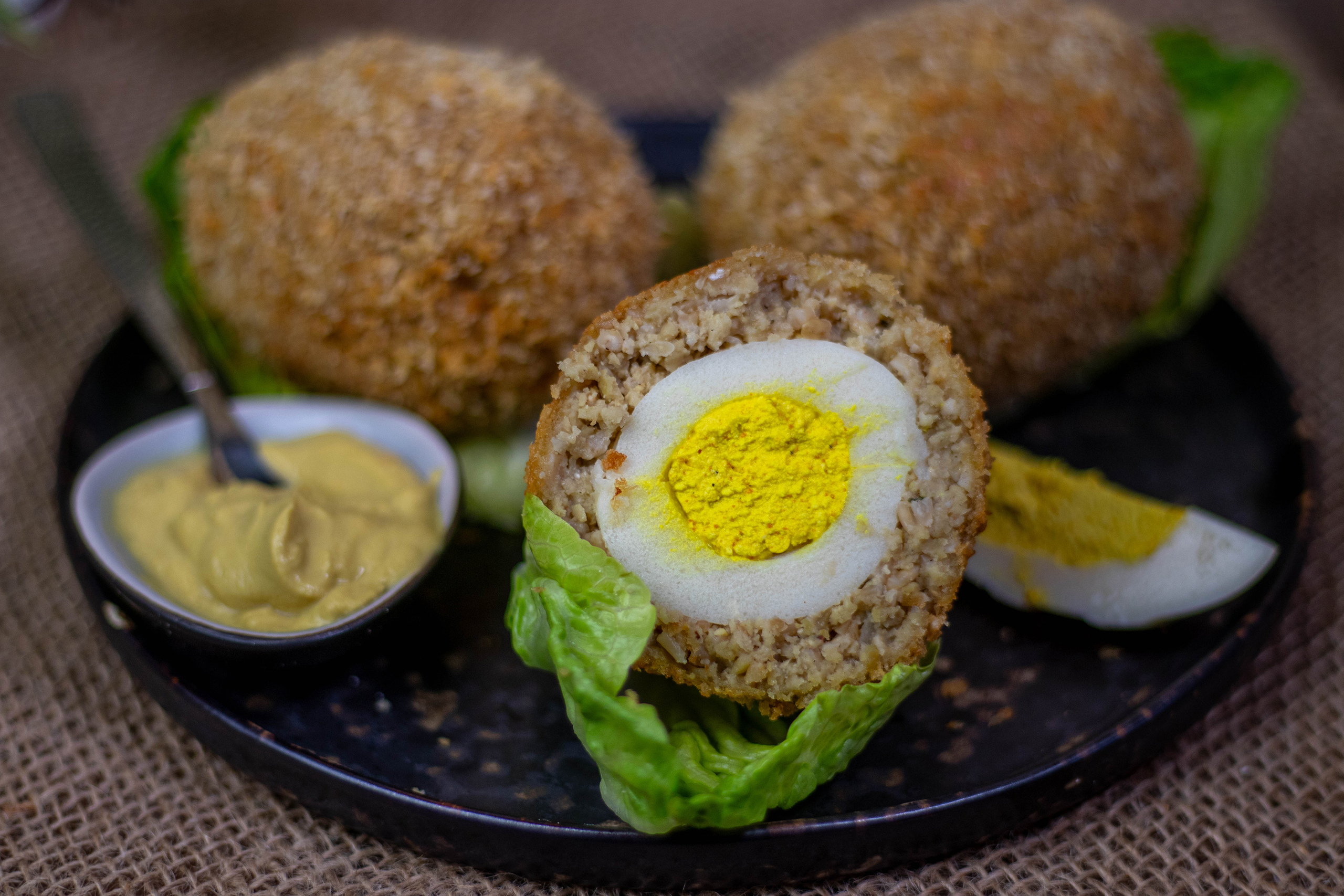
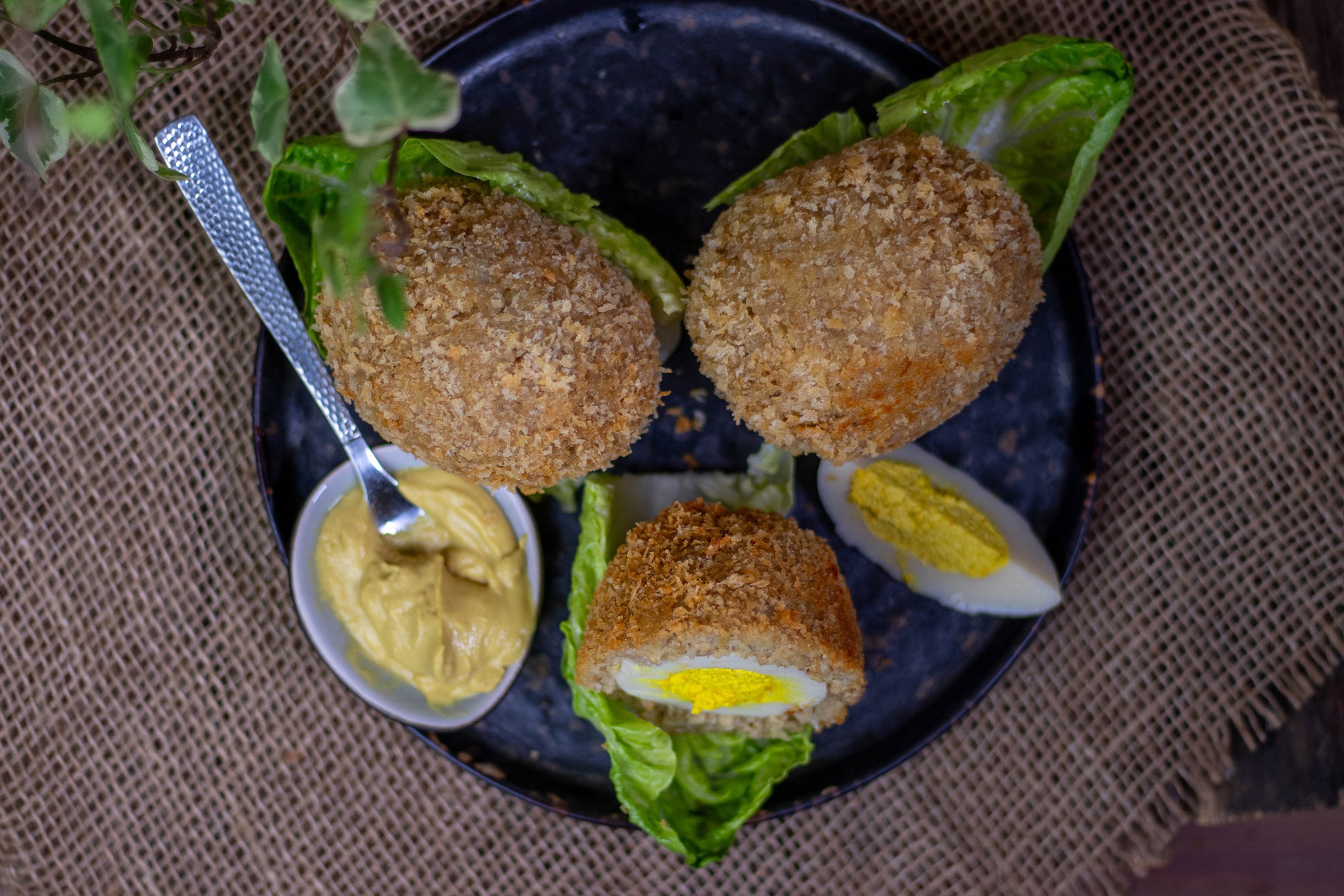
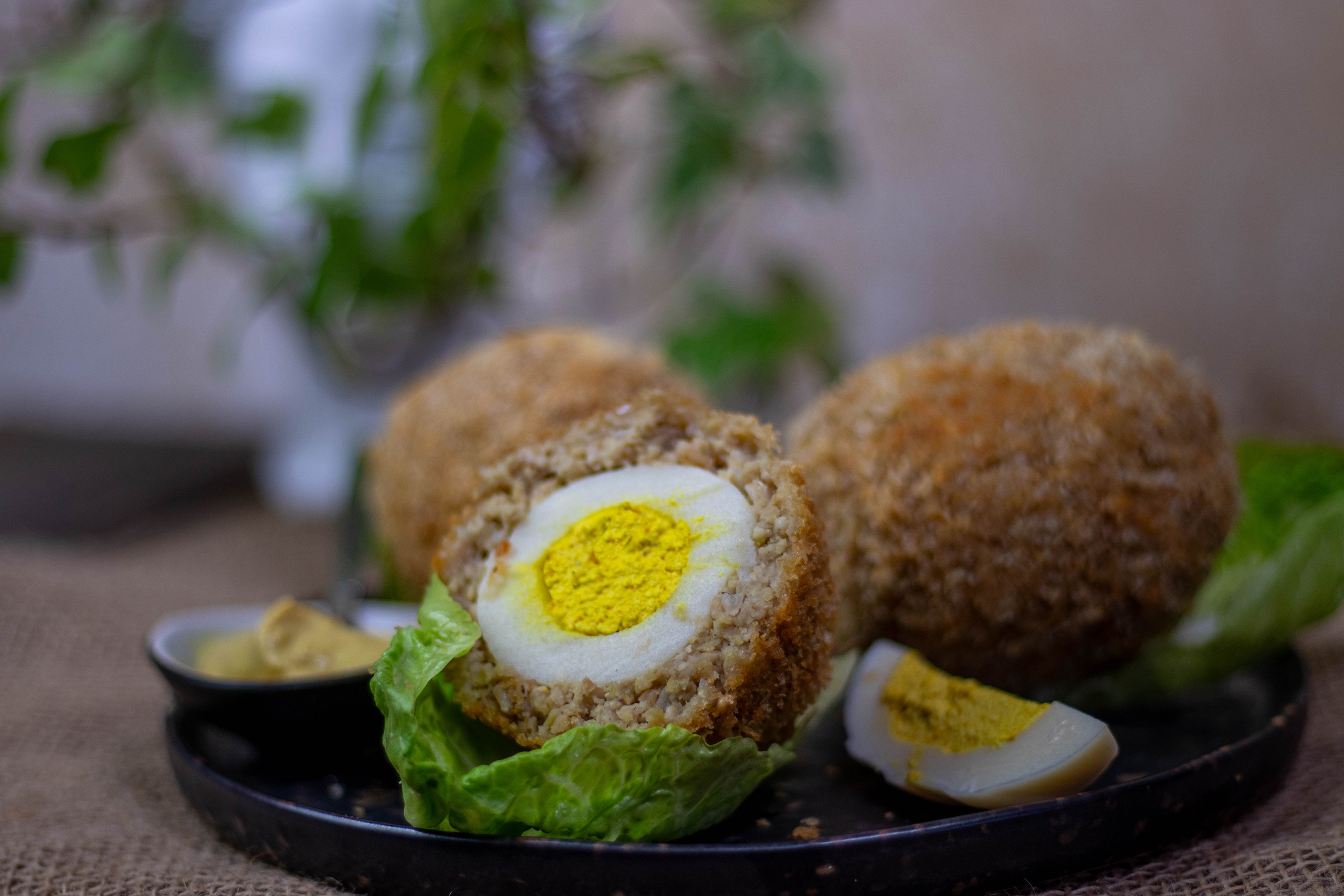
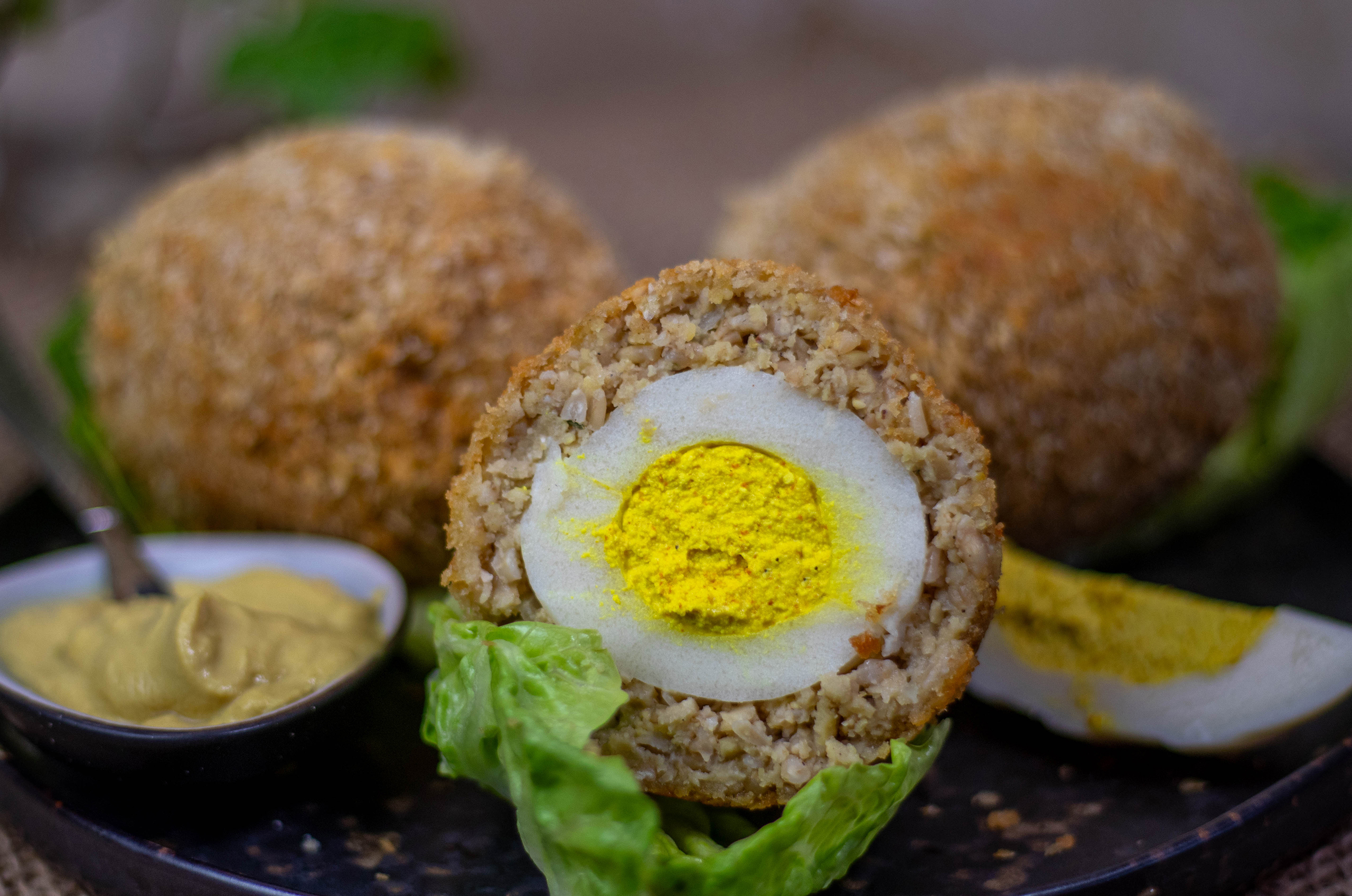
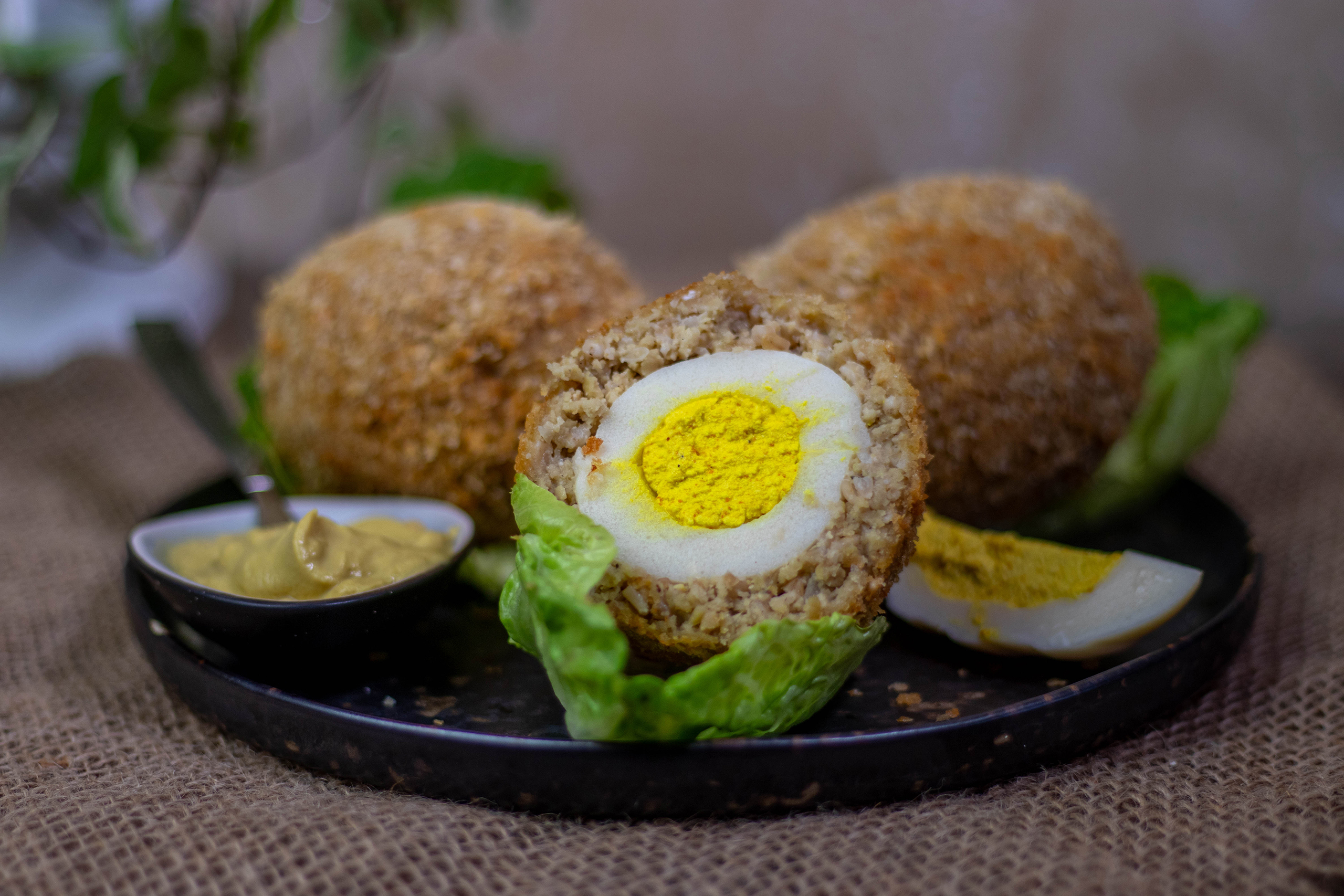
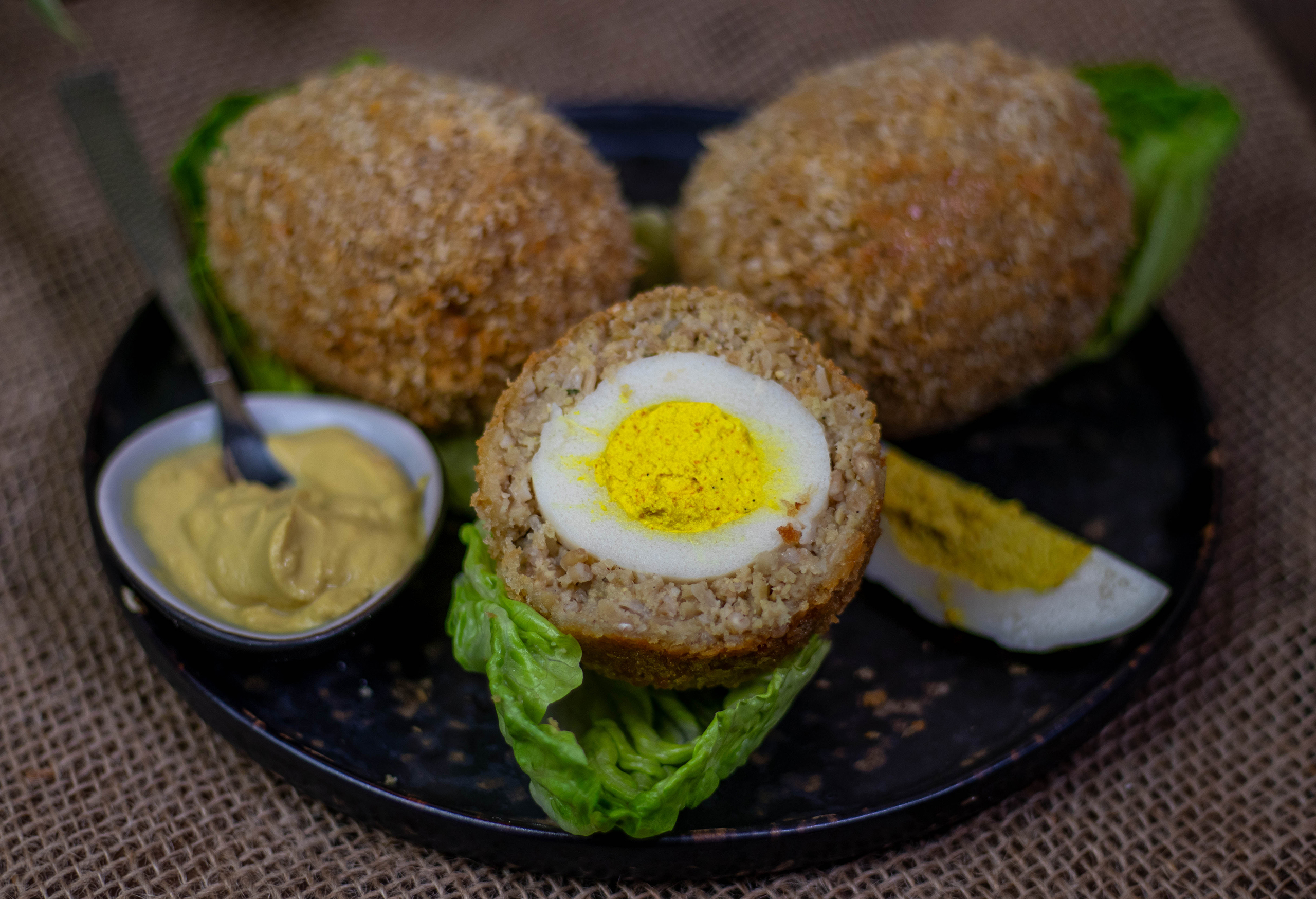
    I wrap eggs in a sausage meat coating, bread them and deep-fry them. What do I get? Yes, Scotch eggs. And mine are all vegan and completely homemade! Crispy, delicious, aromatic, spicy, simply mouthwatering!

    Vegan Scotch Eggs, with homemade vegan eggs
    Vegan Scotch Eggs, with homemade vegan eggs

    What are Scotch eggs exactly?

    Scotch eggs are one of the famous and popular specialties from the British cuisine. You can buy them ready-made in supermarkets and they are a popular snack, for example for picnics, in the evenings in pubs, or simply as a snack in between.

    Sadly this tasty egg dish not vegan! For making Scotch Eggs, boiled eggs are coated in sausage meat, then breaded and then deep-fried.
    Of course, in my recipe I do all of this purely plant-based. Enjoy my deleicious recipe for vegan Scotch eggs!

    Scotch eggs are one of the famous and popular specialties from the British cuisine. Purely plant-based in my recipe.
    These eggs are one of the famous and popular specialties from the British cuisine. Purely plant-based in my recipe.

    Vegan Scotch Eggs

    In this recipe, I use my recipe for vegan hard-boiled eggs, which some of you may already know. Then I make a vegan sausage meat based on seitan, which I use to coat the vegan eggs. These are then breaded with breadcrumbs and fried until crispy.

    My vegan Scotch eggs that are very difficult to distinguish from the original.

    For this recipe for vegan Scotch eggs, I use my recipe for vegan hard-boiled eggs, which some of you may already know.
    For this recipe for vegan Scotch eggs, I use my recipe for vegan hard-boiled eggs, which some of you may already know.

    Scotch Eggs – a hearty, delicious snack and something very special for vegans

    This delicious and hearty dish is perfect for a variety of occasions. Pre-fried Scotch Eggs are great to take with you, for example to a buffet, a picnic or as a side dish to a barbecue. Enjoy them as a snack, as a snack to a pub night or as a hearty meal at home.
    In Germany, where I live, Scotch eggs would always be something special because hardly anyone here knows about them. But with this vegan version of this English kitchen classic, you’ll present the absolute eye-catcher of the evening on the table!

    Scotch Eggs – a hearty, delicious snack and something very special for vegans
    Scotch Eggs – a hearty, delicious snack and something very special for vegans

    There are lots of good proteins in vegan Scotch eggs

    My vegan version of Scottish eggs is very high in protein and therefore also very interesting for athletes.
    Because I make the vegan eggs based on tofu and the meat coating of the eggs contains a lot of good seitan, i.e. pure wheat protein.

    There are lots of good proteins in vegan Scotch eggs
    There are lots of good proteins in this vegan egg dish

    More veganized egg dishes from Daily Vegan

    Are you missing eggs in your vegan diet? Or do you eat eggs but want to reduce your egg consumption? No problem with my recipes for vegan egg dishes. Feel free to browse through my “Eggs” category, right here on Daily Vegan. Or try these delicious, vegan egg recipes straight away:

    In the UK, Scotch eggs can be bought ready-made in supermarkets and they are a popular snack. But they are not vegan.
    In the UK, Scotch eggs can be bought ready-made in supermarkets and they are a popular snack. But they are not vegan.

    Vegan Scotch Eggs – the preparation in pictures

    Here I will show you step by step on photos how I prepare this vegan egg snack. Afterwards the recipe starts directly.

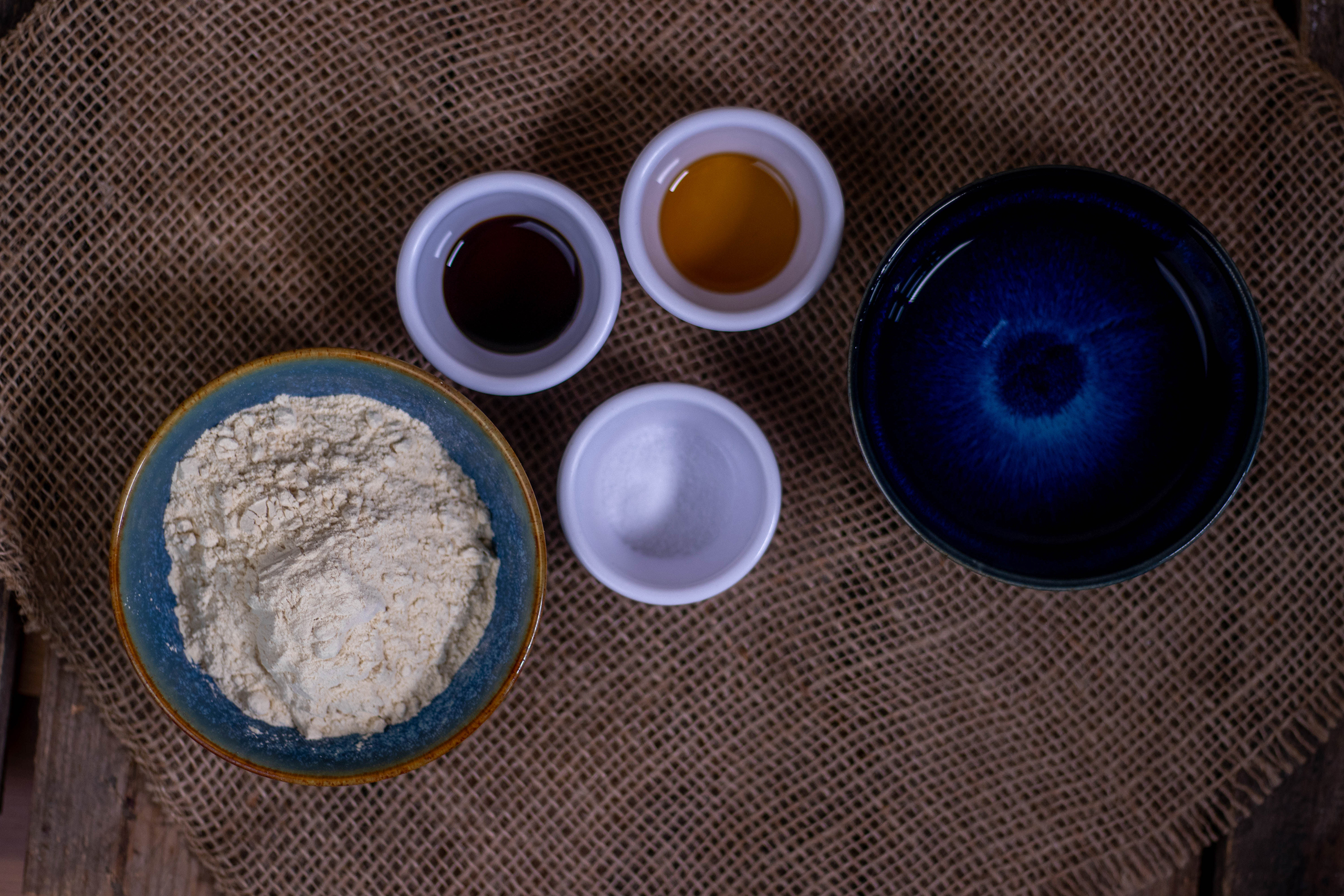
    1. All the ingredients for the seitan for the sausage meat casing.
    1. All the ingredients for the seitan for the sausage meat casing.
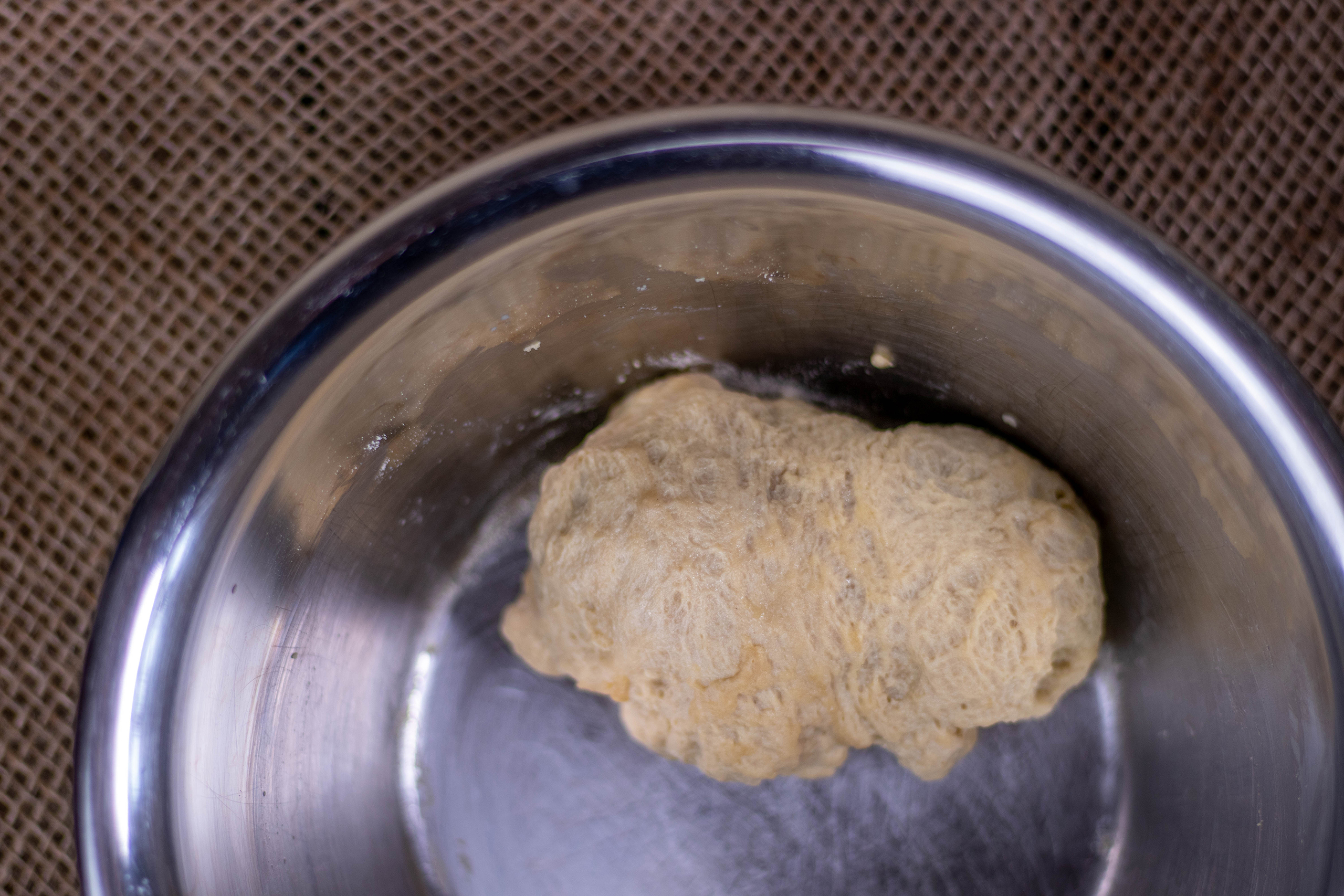
    2. The raw Seitan is finished kneading and can next be cooked and then chopped.
    2. The raw Seitan is finished kneading and can next be cooked and then chopped.
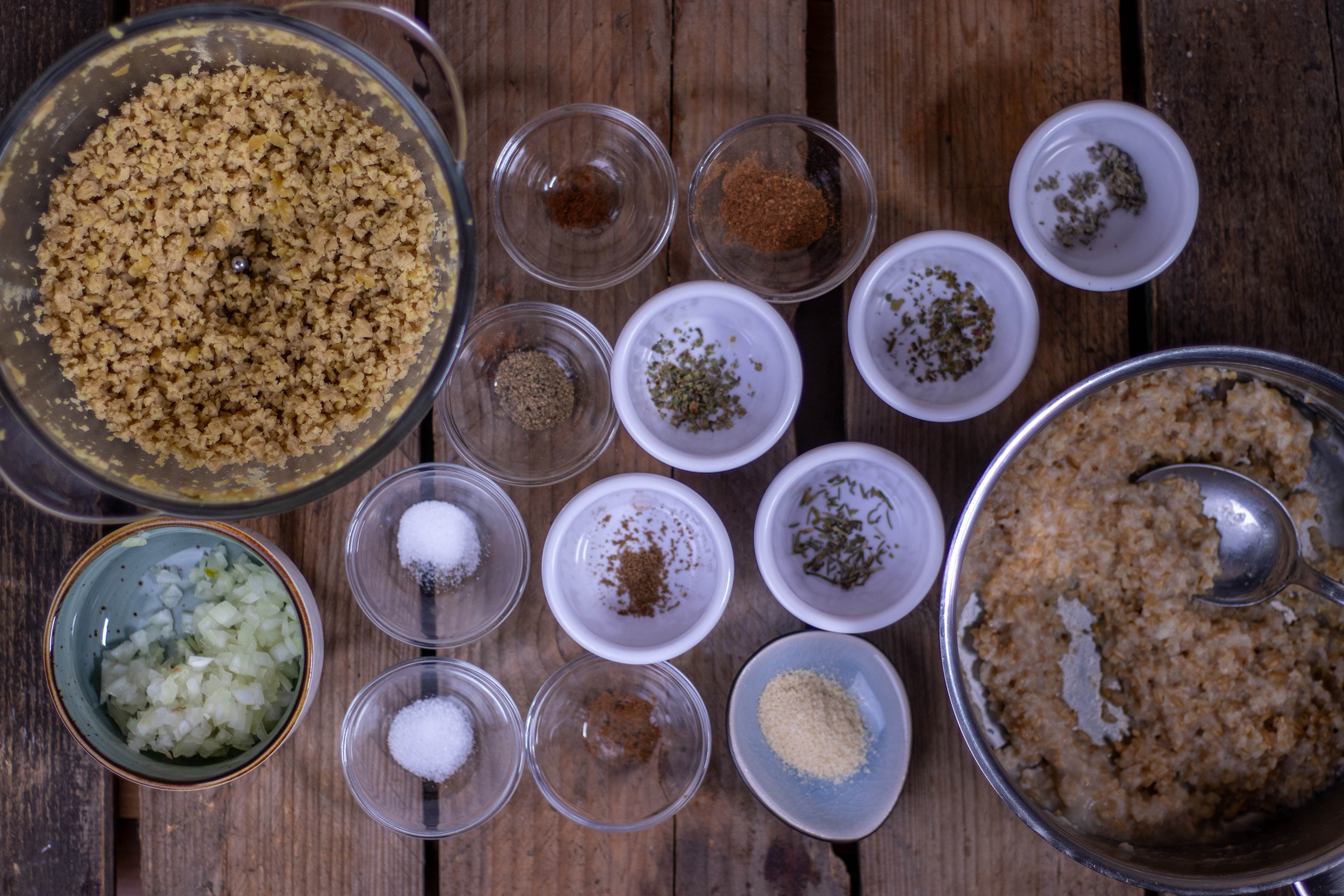
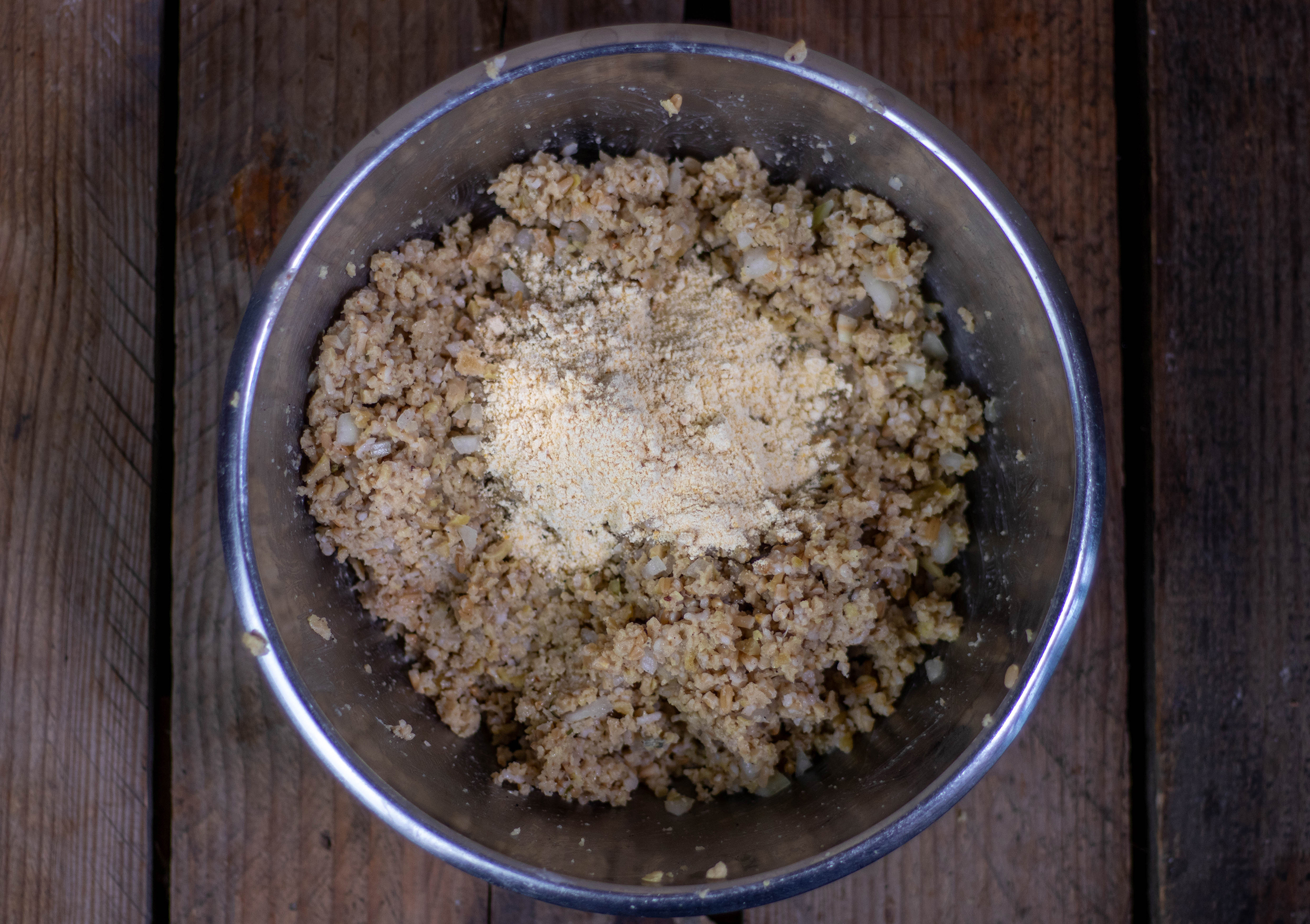
    3. All ingredients for the vegan sausage meat.
    3. All ingredients for the vegan sausage meat.
    4. The sausage meat for the meat casing of the vegan Scotch eggs is mixed. Now I thicken it with some chickpea flour.
    4. The sausage meat for the meat casing of the eggs is mixed. Now I thicken it with some chickpea flour.
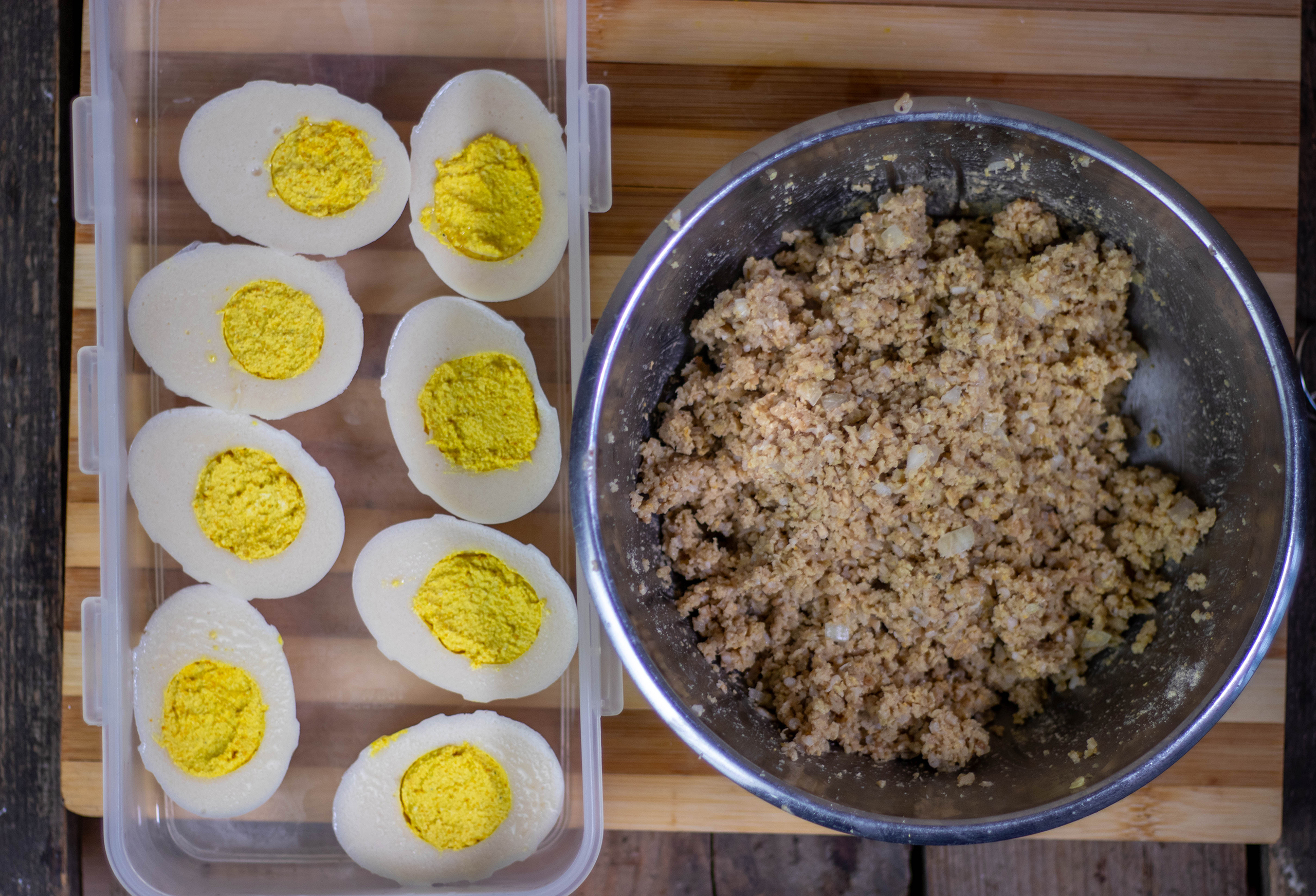
    5. The prepared vegan eggs.
    5. The prepared vegan eggs.
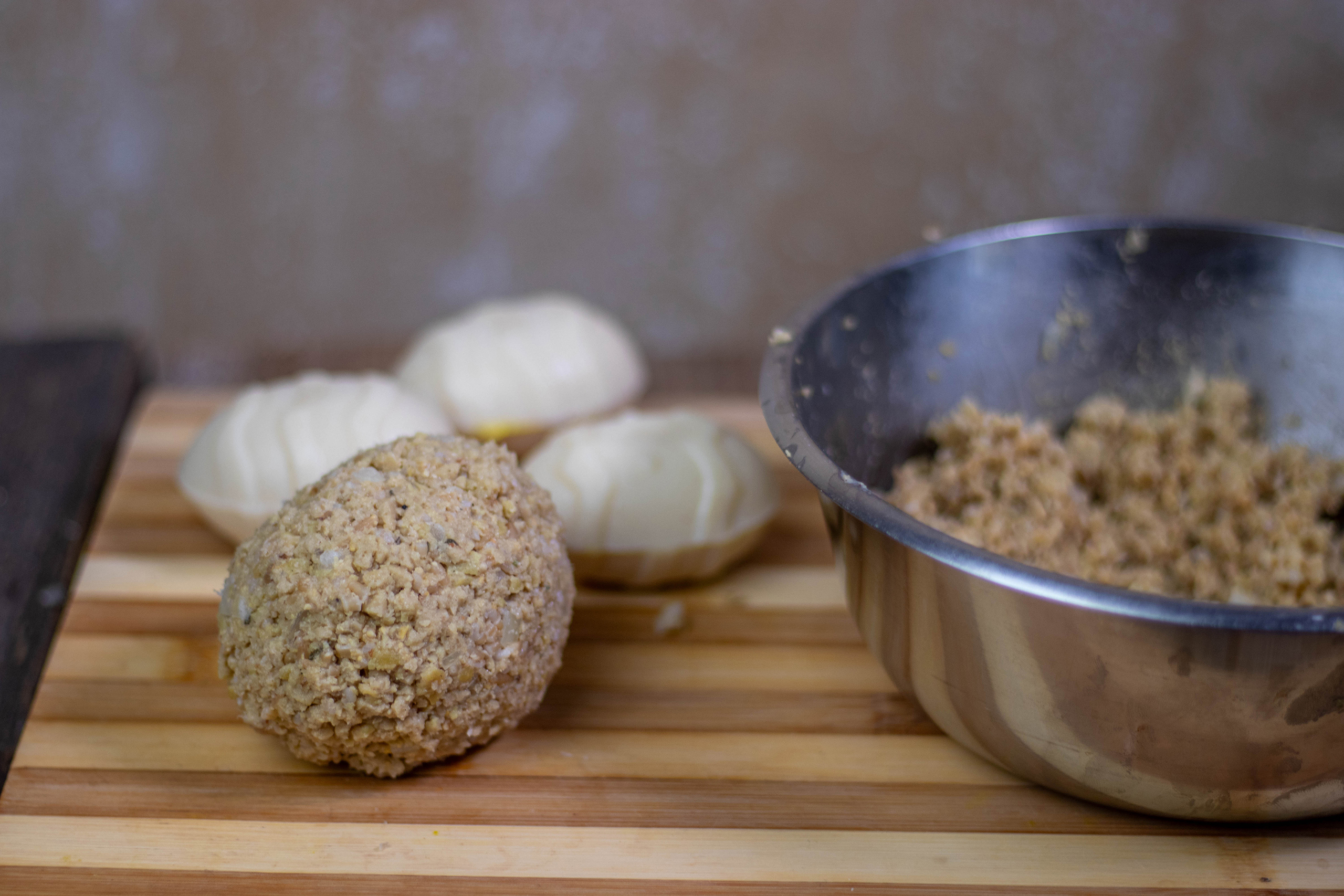
    6. The egg halves are pressed together and I form a casing out of sausage meat.
    6. The egg halves are pressed together and I form a casing out of sausage meat.
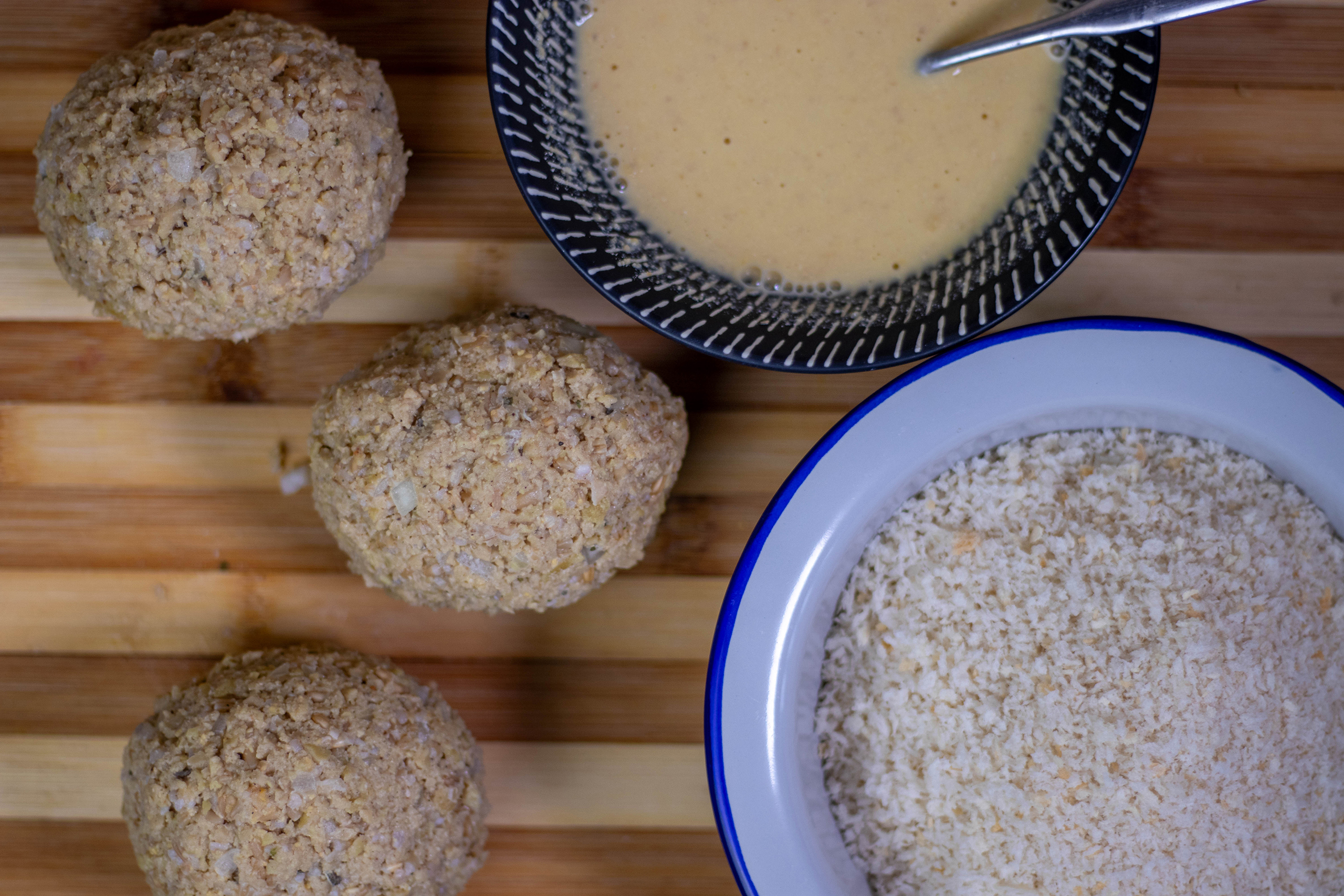
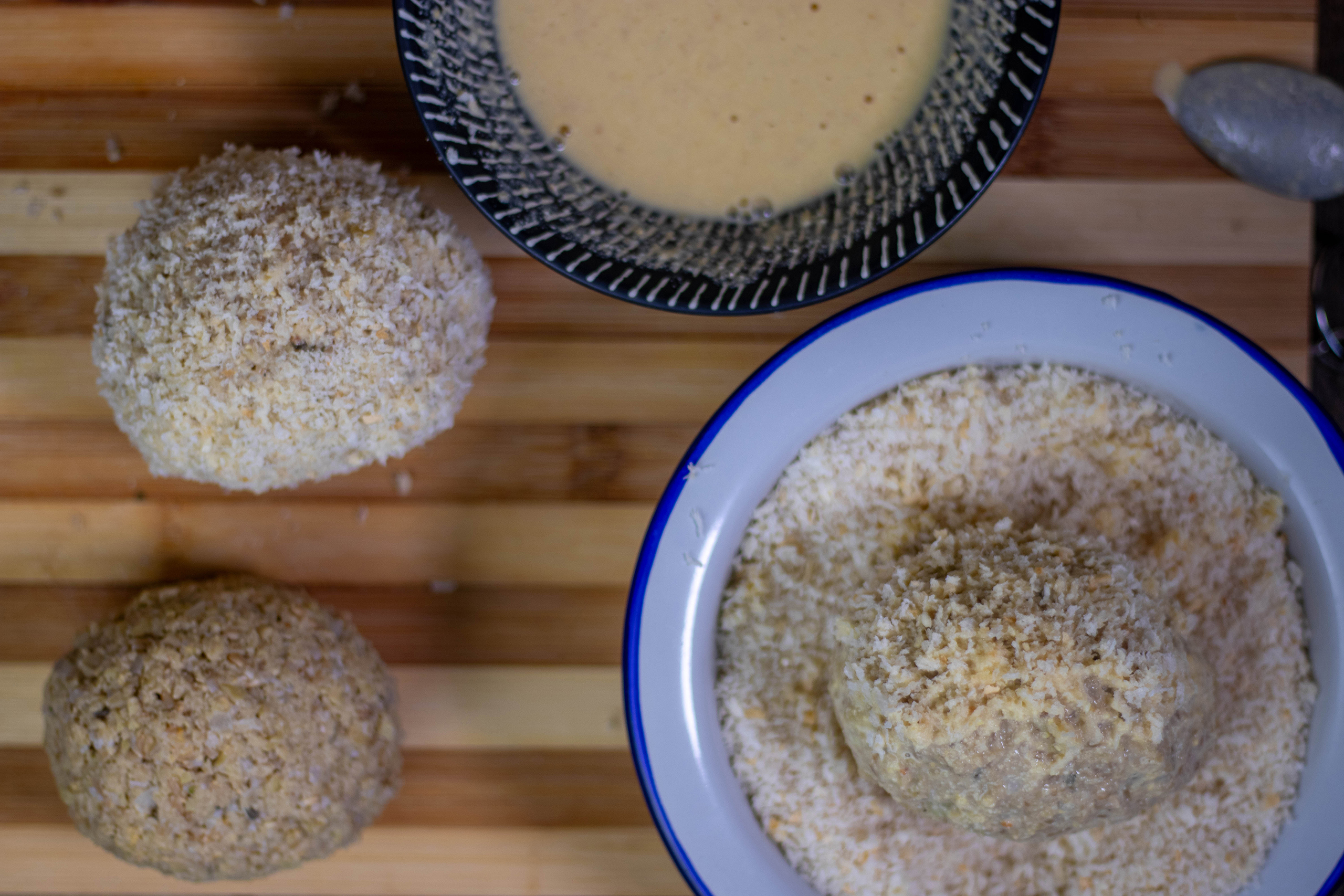
    7. Now the vegan Scotch eggs can be breaded.
    7. Now the vegan eggs can be breaded.
    8. The Scotch eggs are first breaded in mixed chickpea flour and then in panko. Then they just need to be fried in hot oil.
    8. The vegan eggs are first breaded in mixed chickpea flour and then in panko. Then they just need to be fried in hot oil.
    Vegan Scotch Eggs
    Vegan Scotch Eggs

    Ingredients for 4 vegan Scotch eggs:

    8 halfs of vegan, hard-boiled eggs

    Meaty coating:

    Seitan:

    120 g vital wheat gluten
    1 tsp of salt
    2 tsp soy sauce
    2 tsp sesame oil
    Approx. 100 ml water

    1.5 l broth

    Other ingredients for the meat:

    70 g oat groats
    1/2 onion, finely diced

    1 tsp pickling salt
    1 tsp salt
    1/2 tsp pepper
    1/4 tsp allspice
    1/4 tsp clove, ground
    1/2 tsp caraway seeds, ground
    1 tsp marjoram, dried
    1 tsp nutmeg
    1.5 tsp yeast flakes
    1.5 tsp sage, finely chopped
    1 tsp chopped thyme, dried
    1 tsp chopped parsley, dried

    3 tablespoons chickpea flour

    Breading:

    2 tablespoons of chickpea flour, mixed with 100 ml of water
    Approx. 100g panko

    Approx. 1 liter of oil for deep frying

    Preparation:

    Seitan preparation:

    1. Bring the broth to a boil in a large pot.
    2. Mix the Seitan Fix with the salt.
    3. Mix the water with the soy sauce and sesame oil.
    4. Add about 2/3 of the water to the seitan powder and knead. Gradually add more water so that there are no dry spots on the seitan. But it shouldn’t get too wet either. The result should be a firm, tough dough.
    5. Cut the raw lump of seitan into slices, about 1 centimeter thick.
    6. Cook the seitan slices in the broth for about 20 minutes, strain and let cool.

    Preparation of the sausage mixture for the vegan Scotch eggs:

    Scotch eggs are actually coated with seasoned sausage meat (the inside of a sausage). So I make a vegan sausage meat for them in this recipe.

    1. Simmer the oat groats with 250 ml of water at a low temperature for 15 minutes. Then let it cool down.
    2. Cut the seitan meat into coarse pieces. Put these in a food processor and chop finely.
    3. Then mix the seitan with the onions.
    4. Add the oat groats and all the spices to the meat. Mix and knead until a nice bond is formed.
    5. Then knead in the chickpea flour.

    Forming the vegan Scotch eggs:

    1. Take two vegan egg halves and press them together.
    2. Quarter the vegan sausage mixture.
    3. Form one part as a coating around the first egg. Press the meat mixture firmly aroung the egg.
    4. Repeat this step for the 3 additional Scotch eggs.

    Breading the vegan Scottish eggs:

    1. Roll the coated eggs in the mixed chickpea flour.
    2. Then turn in panko.

    Frying the vegan Scotch eggs:

    1. Heat the oil in a deep fryer or small saucepan to 170-175°C. If you use a saucepan, you should use a kitchen thermometer. The fat should not get hotter than 180°. If necessary, remove the pot from the flame for a short time.
    2. Fry the Scottish eggs one at a time in the hot oil for 4-5 minutes. Turn occasionally while frying so that the Scotch eggs are evenly cooked.

    Bon appetit!

  • Vegan rack of lamb – made from seitan – even with bones

    Vegan rack of lamb – made from seitan – even with bones

    A true show stopper: My vegan rack of lamb made from seitan!
    That’s what I call hidden vegetables for those who prefer to just pick the veggie meat off the plate! With beetroot for the rosy parts of the seitan, marbled with a light layer of fat. I am using parsnips as bones to get visually very close to the real thing.
    My festive, vegan rack of lamb is a hearty, delicious roast from the oven.

    Whether you serve it as a festive main course at Christmas, a divine Sunday meal or as a vegan roasted lamb for Easter. My 100% plant based rack of lamb goes well with many festive occasions.

    The flavor of the spicy herb marinade is quickly absorbed by the seitan roast and it spreads throughout it’s meat. Roasting it in the oven creates delicious, hearty flavours in the vegan lamb. The meat is firm but tender at the same time. Like a real Rack of Lamb, just vegan.

    My vegan roast lamb can also be cut into slices after being cooked in the oven. The slices can then be fried in a pan or a grill pan as vegan lamb chops or lamb cotelettes. In summer time, when you’d like to go for a vegan BBQ, try my rack of lamb as well! The vegan lamb slices are just deleicous, when roasted on the grill.

    I have just signed a sponsorship for the cute ram ‘Ramona’ for a Christmas present. He lives on a sanctuary farm here in Germany. And I could never imagine eating him or any cute little lambs. So, a vegan lamb is the perfect alternative! And my recipe proves once again that as a vegan you don’t have to miss out on anything.

    Daily Vegan – vegan everyday cuisine.

    Whole vegan rack of lamb:

    [modula id=”45425″]

    Vegan Rack of Lamb, served:

    In the 3 pictures on the black plate, the meat is seared as a vegan lamb chop.

    The dish is festively arranged with purple potatoes, steamed romanesco, my delicious gravy, a creamy pumpkin sauce, mint sauce, braised red onions and cranberry slices.

    [modula id=”45427″]

    Preparation of the vegan rack of lamb with bones:

    [modula id=”45423″]

    Ingredients for 4-6 servings of vegan rack of lamb made from seitan:

    Lamb red part:

    Dry ingredients:

    240 g vital wheat gluten
    2 tbsp gram flour (chickpea flour)
    2 tbsp yeast flakes
    3 tsp onion powder
    1 tsp garlic powder
    1/2 tsp coriander seeds, ground
    1/2 tsp sweet paprika, ground
    1 tsp salt
    1/2 tsp pepper, black, ground

    Wet Ingredients:

    2 shitake mushrooms, dried
    1 red beetroot, raw, peeled, cut into small pieces
    60 ml of water
    50 ml malt beer or dark beer
    3 tbsp tomato puree
    2 tbsp soy sauce
    1 tsp tahini
    1 tsp sweet mustard
    2 tsp vegan Worchestershire sauce
    A few drops of red vegan food coloring

    Vegan lamb fat structure:

    100 g vital wheat gluten
    1 tbsp yeast flakes
    2 tbsp chickpeas (pre-cooked from the jar or can)
    90 ml Aquafaba (the cooking water from the chickpea jar)
    1 tsp of light miso paste
    1 tsp tahini
    3 tbsp coconut oil, tasteless, melted

    1.5 liters of stock

    Vegan rack of lamb made from seitan, cooking and adding the bone structure:

    3 small, thin parsnips

    3 cloves of garlic, chopped
    1 tbsp fresh thyme leaves (without stems)
    3 tbsp fresh rosemary leaves (without the stems)
    2 tsp of salt
    1/2 tsp pepper, black, ground
    80 ml of olive oil

    salt
    pepper

    Preparation:

    Bring the stock to a boil.

    Seitan lamb, red part:

    For this seitan recipe, first mix all the dry ingredients together. In a second bowl, puree all the wet ingredients together until there are no more pieces. Just a smooth liquid should be left.

    Now knead about 3/4 of the liquid into the vital wheat gluten mix with your hands. Gradually knead in more liquid until a firm dough is formed. It is best to use rubber gloves for this part, because of the color.

    Divide the dough into 2-3 parts with your hands. Knead these together properly, pulling and pressing them into as long a shape as possible. The individual parts should be approximately 10 inches (25cm) long.

    Lamb, fat structure:

    So that the seitan lamb tastes and looks as realistic as possible, I create a distinct fat marbling in the red seitan meat. To do this, mix the vital wheat gluten with the yeast flakes.

    Puree the water, miso paste, tahini and coconut oil with the chickpeas until there are no more visible bits left and you have a smooth liquid. Knead about 3/4 of the liquid into the vital wheat gluten with your hands. Gradually knead in more liquid until a firm, but soft dough is formed.
    Divide the dough into 2 parts with your hands. Knead this briefly, pulling and pushing it into as long a shape as possible. These parts should also be about 10 inches (25 cm) long.

    Place the red and light parts on top of each other and press them together firmly. Twist and knead the vegan Rack of Lamb slightly.

    Steaming the vegan lamb meat:

    Now wrap the purely plant-based lamb roast loosely in aluminum foil. Place it in a steamer and steam over the vegetable stock for 60 minutes. If there is any liquid left over from the meat, simply add it to the stock.
    For the real lamb rib shape, I always press the roast onto a round tube or mini rolling pin before steaming. I then just keep taht in for steaming and wrap it with the seitan in the tin foil.

    Then unpack the seitan and put it into the to hot stock. Turn off the stove and let the seitan cool completely in the stock.

    Vegan roasted lamb, cooking the roast and adding the bone structure:

    Chop the garlic, rosemary and thyme in a food processor. Stir in 2 teaspoons of salt, 1/2 teaspoon of pepper and the olive oil.

    Peel the parsnips, cut them in half lengthways. Then cut them into shape a little.

    Make 6 slots in the roast with a small, sharp knife and stick in the parsnips as vegan rib bones. Let the ends stick out.

    Season the seitan rack of lamb with plenty of salt and pepper. Then brush generously with the herb marinade. Let it steep for an hour.

    Preheat the oven to 220°C (430°F) top and bottom heat.

    Place the vegan roast lamb on a pan with baking paper and roast in the oven for 20 minutes.

    Cut the vegan rack of lamb into slices and serve it with gravy and side dishes.

    Bon Appetit!

  • Roasted vegan goose leg recipe – a festive plant based dish

    Roasted vegan goose leg recipe – a festive plant based dish

    Give it a try first! Ask later! The proof in the pudding is in the eating. Delicate vegan goose legs with fat meat, crispy skin and even with a bone.
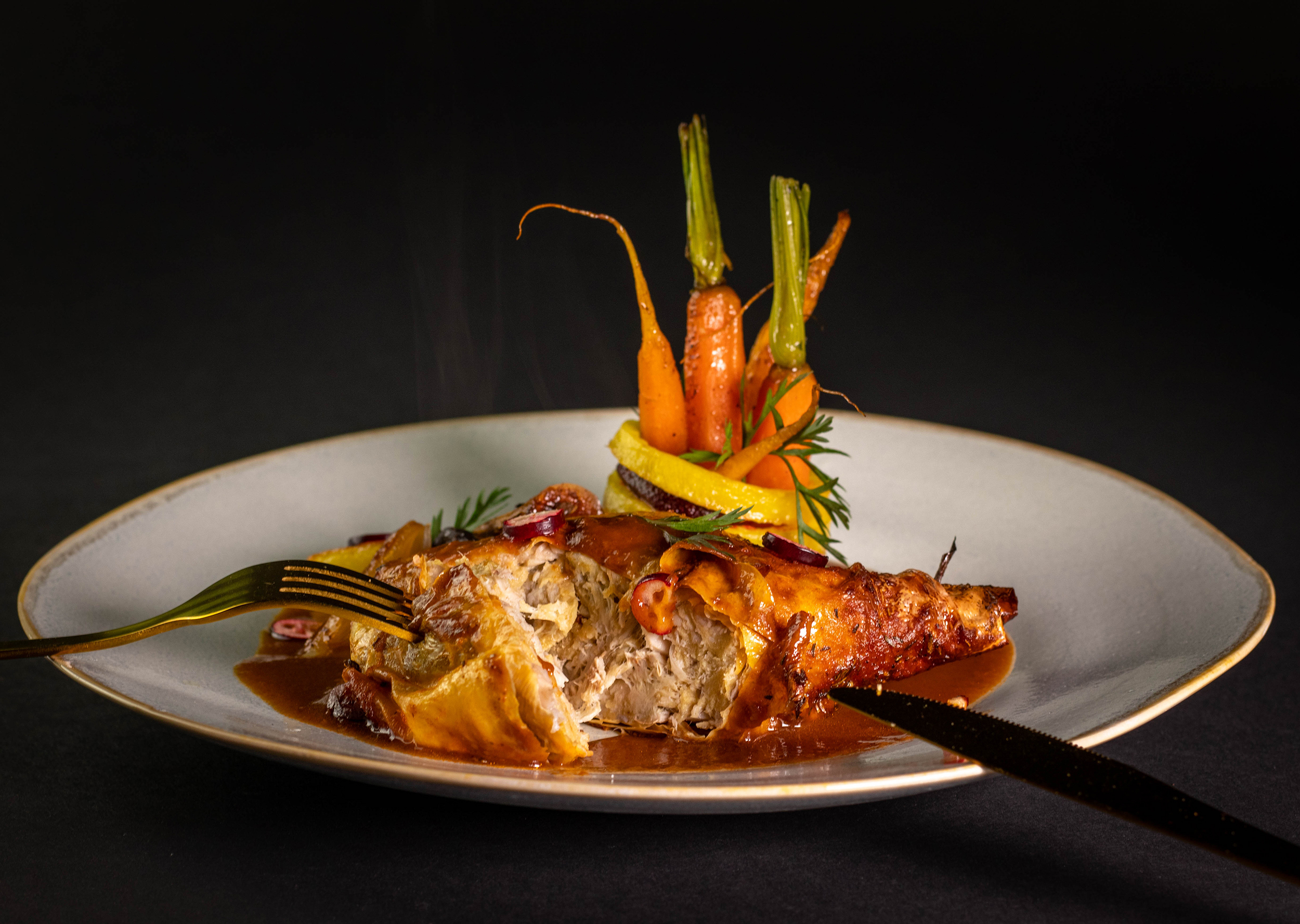
    What?! Vegan roasted goose legs? The vegan Christmas feast can begin! My German roasted goose legs (Gänsekeule) are fully plant based and extremely aromatic. In the dish on the photos I am serving them with my delicious German gravy. As a side dish, you can see the roasted fruits and root vegetables on which I roast the vegan goose legs. Besides of that, there is also a ring of roasted potatoes and red beets with crispy zatar carrots in it.

    Anyone who has no desire to prepare my whole stuffed, vegan Christmas goose roast, but nevertheless would like to eat vegan goose for a festive Christmas menu, this recipe is what I highly recommend to you. It actually suits many festive meals, especially in winter. For example at a vegan Sunday dinner. My delicious, purely plant based goose legs are always popular at our house!

    Like in many of my other recipes for vegan poultry I (Sean Moxie, dailyvegan.recipes) am using jackfruit and seitan together in this recipe. It is great for vegan goose meat. I am using Yuba (soy bean curd, soy skin) for the skin of my roasted goose drum sticks.

    The best vegan Christmas meal!

    [modula id=”45202″]

    Ingredients for 4 servings, each with 1 vegan goose leg:

    Meat for the vegan goose legs:

    2 cans of young green jackfruit (in brine / brine. Available in Asian stores. Approx. 500 g per can)
    360 ml light stock
    2 tbsp gram flour (chickpea flour), mixed with 50 ml of water
    90 g vital wheat gluten
    2 tsp of nutritional yeast
    1 tsp onion powder
    1 tsp smoked salt
    1/2 tsp salt

    8 sheets of Yuba (soy bean curd, soy skin), you can get them in Asian supermarkets. Alternatively you can make skin from rice paper, as I do with my vegan chicken drumsticks
    4 cinnamon sticks

    Glaze for the skin of vegan goose legs:

    4 tbsp oil
    4 tbsp ketchup
    1 tbsp maple syrup
    1 tbsp rose hip jam, medlar jam or other jam
    1/2 teaspoon paprika powder
    1/2 teaspoon garlic powder
    1/4 teaspoon chili powder
    1/2 teaspoon madras curry powder
    1 teaspoon thyme, chopped
    1 teaspoon salt
    1/2 teaspoon black pepper, coarsely ground

    Stock:

    50 ml red wine
    50 ml malt beer
    1/2 tbsp dark balsamic vinegar
    1 tbsp sweet mustard, also known as Bavarian sweet mustard
    1/4 teaspoon nutmeg
    1/2 teaspoon pepper
    1/2 teaspoon salt

    Vegetable bed for the vegan goose legs:

    8 shallots
    1 apple, peeled, cut into wedges
    10 prunes
    3 carrots
    3 parsnips
    6 sage leaves
    3 sprigs of rosemary

    Preparation:

    Goose legs, vegan meat:

    Drain the jackfruit cans and cut off the hard tips from the jackfruit pieces. Then squeeze the jackfruits so the brine comes out.
    Now heat the stock in a pan and add the jackfruits. Simmer in the stock for about 15 minutes. Until the jackfruits have disintegrated into their fibers and the broth has been absorbed or evaporated. Stir frequently and mash the pieces with a wooden spoon. Take it from the stove and let it cool off.

    Mix the vital wheat gluten with the yeast flakes, onion powder, smoked salt and salt for the filling.
    Knead the jackfruit fibers with the mixed chickpea flour. Then gradually sprinkle in the vital wheat gluten and knead in. This is how the meat for the vegan legs of goose gets perfectly real, tender, structured and delicious.

    [modula id=”45201″]

    Shaping the vegan goose legs:

    Moisten a kitchen towel and place it on a work surface. Fill a large bowl with water. Cut a circle (approx. 30-40 cm in diameter) out of two pieces of yuba skin.
    Soak both pieces of Yuba in the water for about 5-10 minutes, until the soy skin is soft. Yuba sheets come in different dehydration states. Some are completely dry and break easily, others are flexible and not completely dry. I prefer the flexible kind. Depending on which kind you have, the soaking takes a little longer or shorter. Cut out a quarter of the circle, like a piece of cake. See on the photos.

    Take a cinnamon stick and form 1/4 of the jackfruit and seitan meat around it. Like a leg of goose, so that a piece of cinnamon stick sticks out.
    Wrap the yuba sheets completely around it. As you can see it on the photos. Cut off excess yuba.

    Then shape the other 3 vegan goose legs in the same way.

    The cinnamon adds a light aroma to the seasoning. So if you don’t like cinnamon at all, you can use peeled parsnips, bamboo sticks or your own carved birch sticks as bones for the purely plant-based goose legs.

    Mix all ingredients for the glaze together thoroughly. Brush the vegan goose legs generously with it. That also helps sticking the yuba around the meat.

    Cooking the vegan goose legs in the roaster:

    Preheat the oven to 200°C (390°F) top and bottom heat.

    Mix all ingredients for the frying stock.

    Distribute all the ingredients for the bed of vegetables on the bottom of a roaster and pour in the frying stock.

    Now place the goose legs on top of the vegetables.

    Cook with the lid on in the preheated oven for 30 minutes.

    Then remove the lid and turn the goose legs over.
    Fry in the oven for another 20 minutes, until the goose skin is nice and crispy. Turn them over again after 10 minutes.

    Serve the vegan goose legs with side dishes such as red cabbage, pretzel dumplings, gravy and the vegetables from the roaster.

    Bon Appetit!

  • Vegan autumn burger – meaty patty with cole slaw in a pumpkin bun

    Vegan autumn burger – meaty patty with cole slaw in a pumpkin bun

    A burger that is tender, firm, meaty, aromatic and juicy. Simply delicious. And 100% plant based!
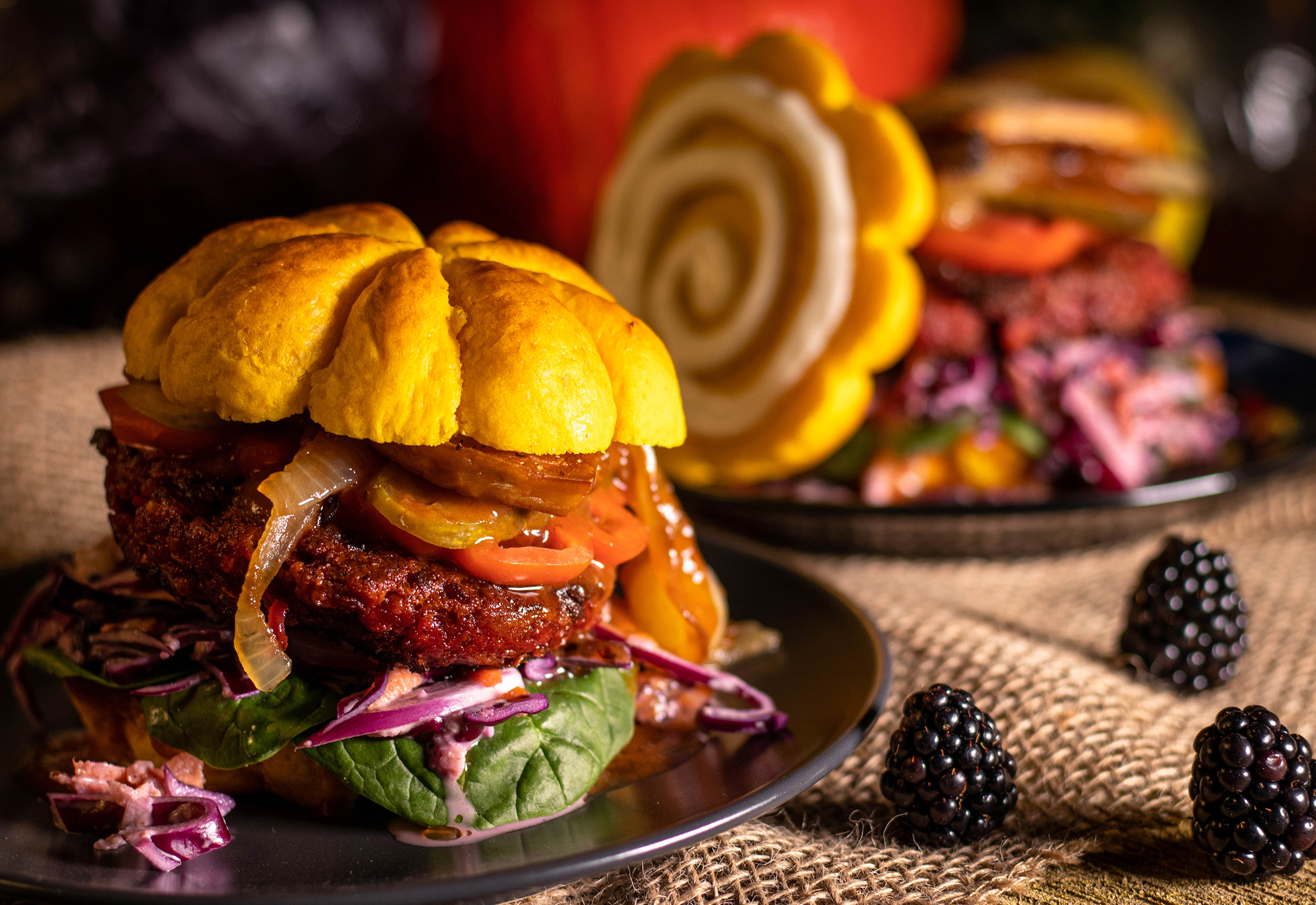
    My vegan autumn burger comes in a soft pumpkin bun. The bun also has a neat pumkin shape. My hearty, tasty, meaty patty is made from seitan and soy, with autumnal mushrooms and beetroot in it. Whether this is a soy burger, mushroom burger or seitan burger is debatable. If you ask me, I believe mixing all of those just makes a grand patty! Topped with a dollop of mustard, aromatic gravy, crunchy baby spinach, juicy red cole slaw with blackberries in it, a fresh slize of tomato, caramelized onions, pickled cucumber, more gravy, fried king oyster mushrooms and some vegan mayonnaise.

    Do I have to say more? Or do you want a bite?

    Here is the recipe for my delicious vegan burger with lots of good regional and seasonal ingredients and plenty of protein in the patty. A great plant based meal!

    [modula id=”44864″]

    Ingredients for 6 vegan autumn burgers:

    Vegan burger patty:

    180 g vital wheat gluten
    50 g small tvp granules (dry)
    2 tbsp mushroom powder, bought or ground from dried mushrooms
    1 tsp smoked salt
    1/2 tsp ground cilantro seeds, ground
    1 tsp salt
    1/2 tsp pepper, ground
    1/2 tsp paprika powder

    1 slice of vegan toast, crumbled
    1 small red onion, very finely chopped
    70 g king oyster mushrooms, finely diced

    3 tbsp tomato puree
    2 tbsp soy sauce
    1 tbsp chickpea flour
    1 tbsp sesame oil
    2 tbsp vegan BBQ sauce
    100 ml vegan gravy, homemade
    1 beetroot, peeled, cut into cubes
    a few drops of vegan red food colouring

    1-2 handfuls of breadcrumbs

    Caramelized onions:

    3 onions, cut into rings
    1 tsp salt
    1 tbsp maple syrup
    oil

    Red Cabbage Cole Slaw:

    300 g red cabbage, cut into thin strips
    1 carrot, grated
    1/2 red chilli, cut into small pieces
    1 small red onion, cut into thin strips
    1 small white onion, cut into thin strips
    approx. 15 blackberries, lightly mashed (these can also be thawed frozen blackberries)
    1 apple, grated
    120 ml vegan mayonnaise, homemade
    1 tbsp mustard
    3 tbsp apple cider vinegar
    1 tbsp lemon juice
    1/2 tsp celery salt
    1 pinch of sugar
    salt
    pepper

    Aside from that:

    6 homemade pumpkin buns

    1 king oyster mushroom, in thin slices, fried

    150 ml vegan gravy, homemade
    mustard
    6 tbsp vegan mayonnaise, homemade
    1 handful of baby spinach
    6 slices of fresh tomato
    12 slices of pickled cucumber

    Preparation:

    Red Cole Slaw:

    First I prepare the cole slaw so that it can soak and gain some flavour. It’s best to do this the day before or a few hours before epreparing the burgers. Just keep the red cole slaw in an air tight container in the fridge.

    Mix the cabbage with the carrot, apple, blackberries, onions and chilli pepper. Mix the mayonnaise with the remaining ingredients in another bowl. Then pour the dressing over the salad, mix both well and season with salt and pepper. Then let it steep in the refrigerator for two hours or more. The red cole slaw stays well in the fridge for several days.

    Vegan Patty:

    Mix the vital wheat gluten, tvp granules, mushroom powder and all dry spices together. Then stir in the crumbled toast, diced onion and king oyster mushrooms.

    Puree the soy sauce, chickpea flour, sesame oil, BBQ sauce, gravy, beetroot, tomato pruree and the red food coloring together. Knead with the other patty ingredients, then let the patty mixture sit for 10 minutes. Afterwards gradually knead in the breadcrumbs until it is easy to form the mixture into firm patties. Let it sit again for a few more minutes.

    Shape six vegan burger patties out of the autumn burger patty mass.

    Heat some oil in a pan over low to medium heat and slowly fry the patties on both sides.

    Caramelized onions:

    Heat some oil in a pan. Fry the onions in it until soft, then stir in the salt. Continue frying until the onions are slightly brown. Finally, stir in the maple syrup and caramelize the onions.

    Atrranging the vegan autumn burgers:

    Cut open the burger buns and add a dollop of vegan mayonnaise to the upper halves.
    For the lower halves, I start with a small dollop of mustard, which I spread over the bun. Add 1-2 tablespoons of gravy, followed by a few leaves of baby spinach. Then I add 3-4 tbsp red cole slaw on top, afterwards the hot patty. Put a slice of tomato, about 1 tablespoon of caramelized onions, two slices of pickles and a little more gravy on top of the patty. Finish with a slice of fried king oyster mushroom. Add the upper half of the bun. Now the hearty, tasty, vegan autumn burger is ready to eat!

    Bon Appetit!

  • Upside down onion tarte with apple and puff pastry

    Upside down onion tarte with apple and puff pastry

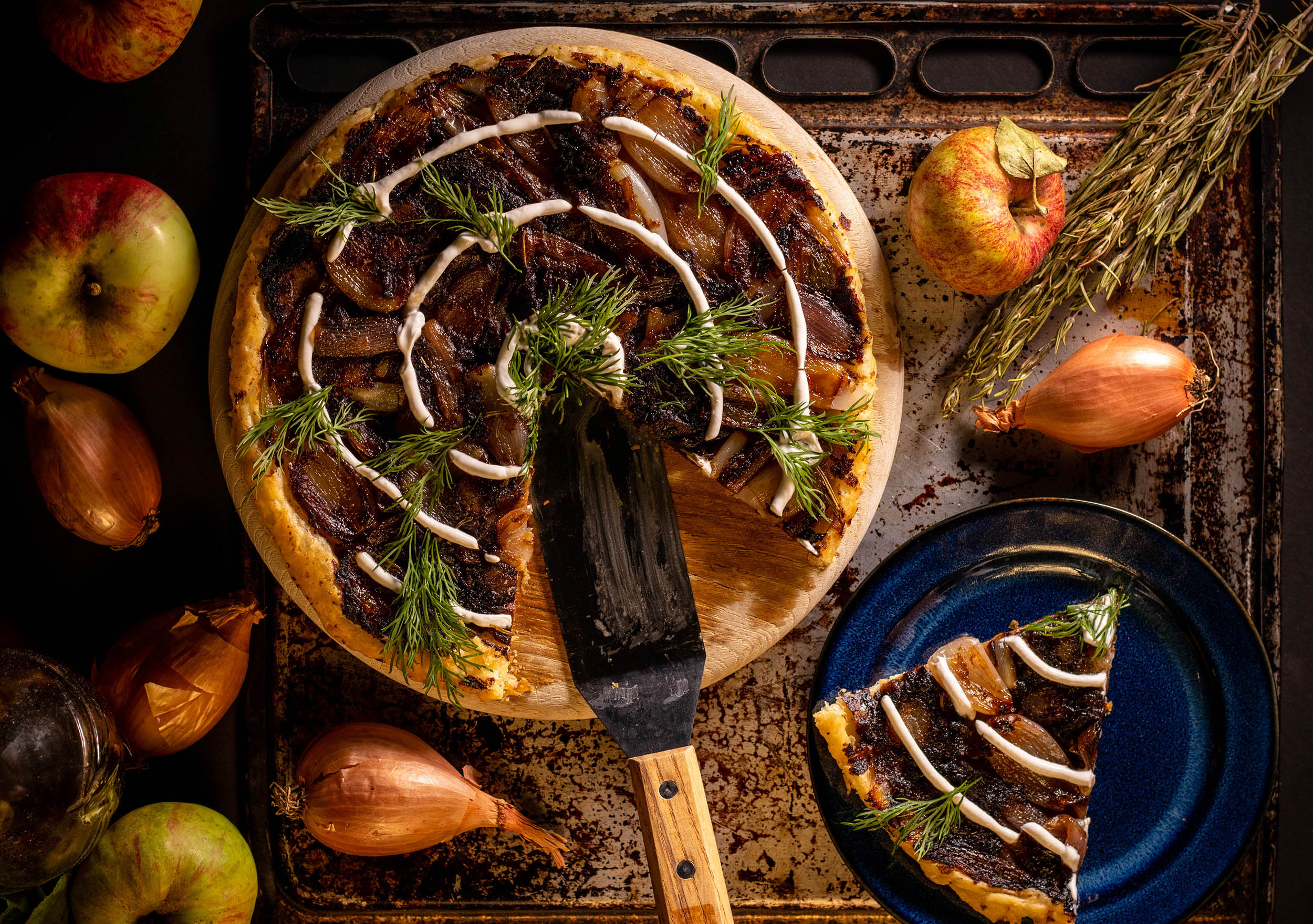
    My autumnal upside down onion tarte with apple is a true culinary treat! I use shallots as onions for I love their special aroma. I roast the shallots and apples until they are soft and full of deep grilled flavours. Then I pour a splash of balsamic vinegar into the pan, which adds a wonderful spicy, slightly sour umami. That in particular highlights the onion’s aroma.

    I love this season of the year. Autumn, the golden harvest time. Even though there are onions available throughout the entire year, shallots that come fresh from the ground are always particularly aromatic. Friends of mine have an old meadow with plenty of ancient apple trees on it. I just went there to pick some. And the combination of delicious, natural, freshly picked apples with shallots on a tarte is simply delicious.

    My tasty apple onion tarte is also very easy to prepare. Because I am using ready made puff pastry for the dough. Therefor it is a great after work dish during week nights! And because it is upside down, baked with the dough up, the puff pastry turns out very airy, delicious and crisp.

    Also, my upside down onion tarte is very inexpensive. Puff pastry is rather cheap and apples and onions are too. A delicious, vegan low-budget meal, which saves you some money.

    Here is the recipe:

    [modula id=”44329″]

    Ingredients for 1 medium sized Upside Down Oinion Tarte:

    12 shallots, peeled and halved
    1 apple, peeled and diced
    3 branches of thyme
    2 branches of rosemary
    1 tbsp. cane sugar
    2 tbsp. balsamic vinegar
    Alba oil (or other vegan oil with a buttery taste)
    vegan butter or margarine
    salt
    pepper

    1 roll of vegan puff pastry (from the fridge)

    Preparation:

    Preheat the oven to 390°F (200°C) top and bottom heat.

    Place a medium sized, fireproof pan with the rim on the puff pastry and cut around the edge. As a result, you have a round puff pastry that has the same size as the pan.

    Heat some Alba oil with about 1-2 tbsp. of vegan butter in the pan. If you don’t have any Alba oil or any other vegan oil with a butter taste, use some more vegan butter. Place the halved shallots in the pan and fry them at medium heat. The onions should be glassy and slightly soft. Then add the herbal branches and stir in briefly. After a few minutes, also add the apple cubes to the hot pan and fry again for a few minutes. Remove the branches of the herbs.

    Then stir in the cane sugar and briefly caramelize the apples and shallots. Then deglaze everything with the balsamic vinegar. Finally, add salt and pepper to taste.

    Remove the pan from the stove and allow it to cool down for 10-15 minutes. Put the puff pastry on top of the fried onions and apple cubes. Press the edge of the puff pastry into the pan. So that the onions and the apple cubes are nicely covered. Use a fork to pick into the dough several times, so that the air can escape from the tarte.

    Bake for 15 minutes in the oven.

    Carefully flip over the pan to place the tarte onto a big plate.

    I garnished my upside down onion tarte with a bit of homemade vegan sour cream and fresh dill.

    Bon Appetit!

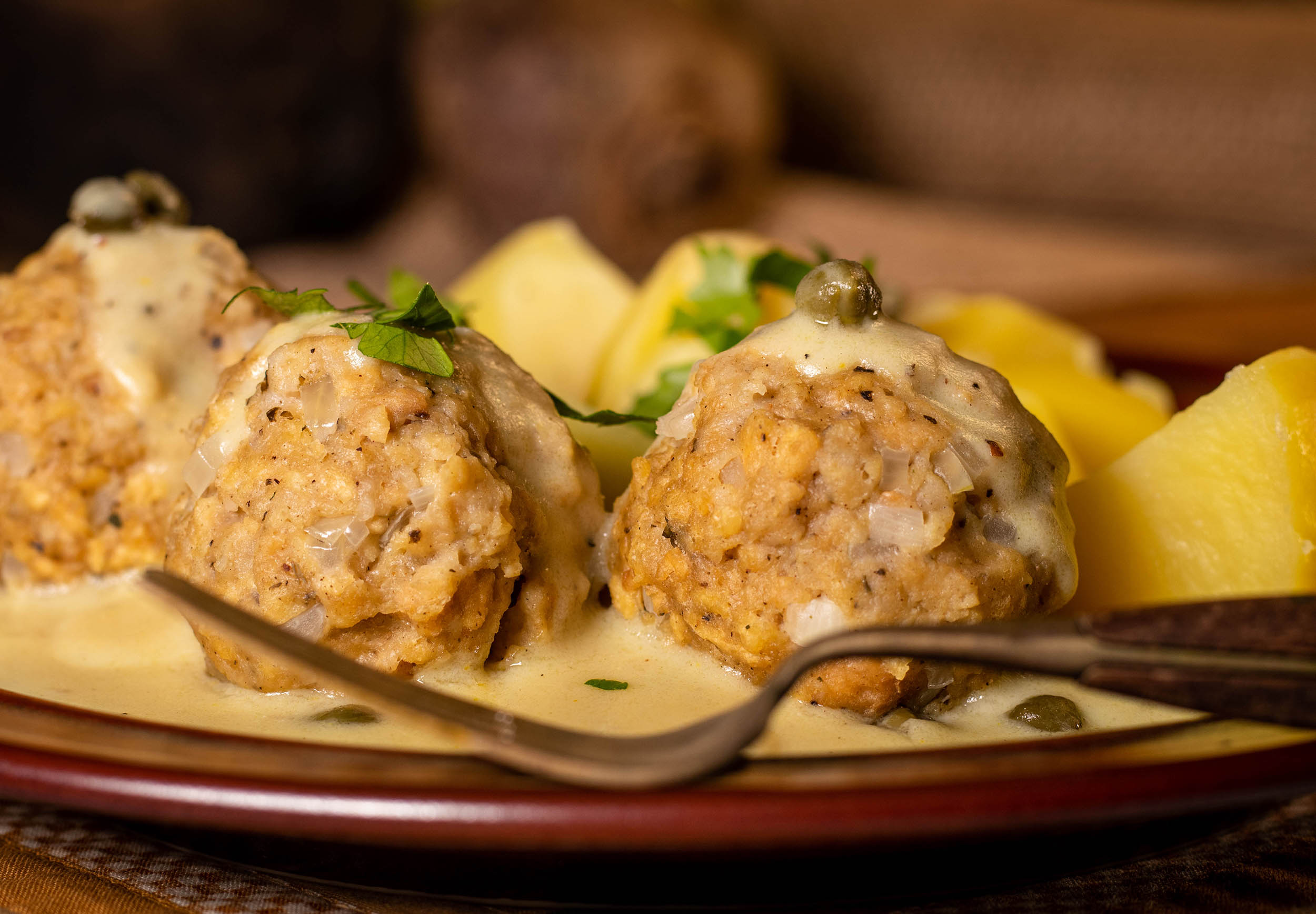
  • Königsberger Klopse – a traditional German dish

    Königsberger Klopse – a traditional German dish

    If you’d translate Königsberger Klospse it would be something like ‘Dumplings from Köningsberg’. But, Königsberger Klopse are rather a very traditional meatball dish, with a slightly fishy note in it. That also means: the original recipe is far away from being plant based.

    These yummy, hearty meatballs come with a special aromatic, tasty, creamy caper sauce. And they are usually eaten with potatoes. But rice also goes very nicely with them.

    As usual, I’ve veganized this traditional dish. In my recipe the popular minced meat balls are completely vegan, made from seitan and soy. Just as tasty as the original, without harming any animals and therefor way better for the climate.

    This dish is especially popular in winter and early spring, since you can prepare the spicy meatballs very well. And just use seasonal and regional stored potatoes with it. A delicious alternative to winter vegetables such as cabbage and beets.

    Also very popular abroad, Königsberger Klopse are the most famous, if not only famous, East Prussian specialty!

    In my recipe, the meatballs are completely homemade. Without any mince meat substitute products. Not only does that taste better, it is also healthier and saves a lot of packaging waste. And you can also control the seasoning of the meatballs much better.

    [modula id=”39481″]

    Ingredients for 4 servings of Königsberger Klopse:

    Königsberger meat dumplings:

    150 g fine soy granules, dry (the very small TVP granules)
    80 g vital wheat gluten
    1/2 tsp salt
    1/2 tsp kalak namak (black salt powder)
    1 tsp onion powder
    1/2 tsp pepper, white, ground
    1/2 tsp garlic powder
    1.5 tsp of nori flakes
    1/2 tsp nutmeg, ground
    1/2 tsp caraway seeds, ground
    60 ml olive oil
    1 stale white bread roll or 1-2 pieces of toast
    4 tbsp gram flour (chickpea flour), mixed with 100 ml of water
    1 onion, finely chopped
    1 tbsp capers, finely chopped

    soy milk
    breadcrumbs

    Broth:

    1 litre of vegetable broth
    1 onion, quartered
    2 bay leaves
    5 peppercorns
    3 pimento seeds

    Caper sauce:

    3 tbsp vegan butter or margarine
    1 tbsp alba oil
    2 tbsp flour
    400 ml of broth from the meatball pot
    100 ml vegan cream
    ½ lemon, the juice
    2 tbsp capers
    1 pinch of turmeric
    1/2 teaspoon kalak namak
    sugar
    salt
    pepper

    1 kg of potatoes

    2 tbsp fresh parsley, chopped

    Preparation:

    Meatballs:

    Soak the bread roll in a bit of soy milk for a few minutes. Maybe turn it around a few times. Then take it out and squeeze the liquid out gently, but not too much.

    Mix the dry soy granules with the vital wheat gluten, the nori flakes, all the spices and the salt. Then add the chopped onion and the capers to the mixture. Pluck the soaked bread roll into smal pieces and also add it to the vegan meatball mixture. Now add the mixed gram flour and the olive oil. Knead everything together.

    The result should be a firm, easily shapeable dough. Possibly add a little soy milk or breadcrumbs, until you could shape firm meatballs with it.

    Let the dough soak for 15 minutes, then shape about 15 purely vegetable Königsberger dumplings out of the dough. These should be about the size of table tennis balls.

    Peel the potatoes and cook them in salted water, until they are soft and ready to eat.

    Bring all the ingredients for the broth to a boil and simmer for five minutes. Put the stove on low temperature, then add the vegan Königsberger Klopse. Let them simmer in the broth for 5 minutes. The water should stay very hot, but it should not boil with bubbles. Slightly cooking is just fine. Now remove the pot from the heat and let the dumplings rest in the hot broth for another 12 minutes.

    Get the plant based German meatballs out of the broth and keep them warm. This can be done, for example, in a covered baking dish in the oven. Just preheat the oven to 100°C (210°F).

    Sieve off 400 ml of the meatball broth.

    Sauce:

    For the sauce, heat up the margarine and the alba oil in a saucepan. Add the flour and mix it into a roux with a whisk. Gradually stir in the strained broth from the meatballs.

    Stir in vegan cream and lemon juice. Stir in turmeric and kalak namak, then add the capers.

    Simmer for 2-3 minutes, stirring often. Season to taste with sugar, salt and pepper.

    Arrange the Königsberger Klopse with potatoes and the caper sauce on plates. Garnish the dish with a little freshly chopped parsley.

    Enjoy your meal!

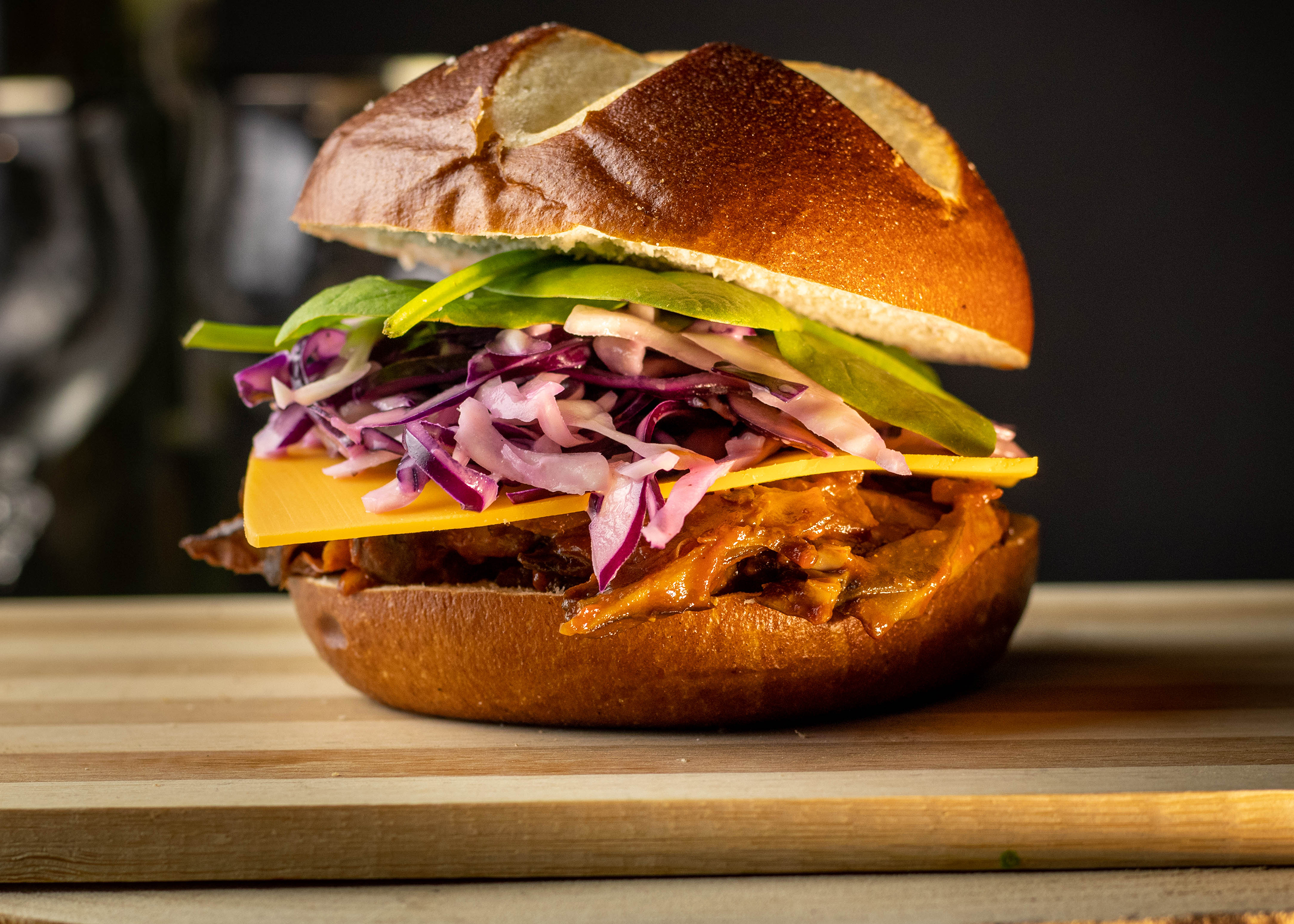
  • Pulled Oyster Mushroom Sandwich

    Pulled Oyster Mushroom Sandwich

    After Christmas was over, I had a huge craving for simple, delicious burgers!
    And, winter is the season for wild oyster mushrooms. So I went for a short forest hike. That is where these mushrooms are easy to find on old tree trunks and on dead wood.
    In this recipe I use oyster mushrooms to create a delicious pulled pork burger. With tender oyster mushroom meat. Spicy, in a hearty, smoky, slightly sweet, homemade BBQ sauce. Plus a slice of vegan cheese. And, with seasonal and regional vegetables: an aromatic, colorful coleslaw. Made from white and red cabbage, which are local winter vegetables. I added some crunchy baby spinach on top and served the sandwich on a hearty pretzel bun.
    My pulled oyster mushroom sandwich is very easy to prepare and incredibly delicious.

    Simply scrumptious!

    And: Tadaaaa! My first recipe video!
    In this cooking video I explain my pulled oyster mushroom sandwich recipe. If you like it, please subscribe to my new Youtube channel. And of course I’m also happy to receive feedback!

    As usual, despite the video, there are some nice photos of the recipe here on my blog:

    [modula id=”38799″]

    Ingredients for 4 x Pulled Oyster Mushroom Sandwich:

    400 g oyster mushrooms

    Marinade:

    4 tbsp olive oil
    1/2 tsp salt
    1 tsp smoked paprika powder
    1/4 tsp cayenne pepper

    Smoky BBQ Sauce:

    1 tsp instant coffee powder
    150 ml coke
    3 tbsp tomato paste
    3 tbsp ketchup
    2 tbsp soy sauce
    1 tsp sriracha sauce or other chilli sauce
    1 tbsp white balsamic vinegar
    1/2 tsp liquid smoke
    1 tsp yellow mustard seeds, ground
    2 cloves of garlic, finely chopped

    salt
    pepper

    Cole slaw:

    300 g white cabbage, finely grated
    300 g red cabbage, finely grated
    5 tbsp vegan mayonnaise
    3 tbsp sugar
    3 tbsp brandy vinegar
    2 tsp mustard
    1 tsp sriracha sauce or other chilli sauce
    1/4 tsp black pepper, coarsely ground
    1/2 tsp salt

    4 pretzel buns

    4 slices of vegan cheese
    Some leaves of baby spinach

    Preparation:

    Homemade cole slaw:

    I’ll start with the coleslaw. Since it has to stand in the fridge for a while.

    Mix all the ingredients for the coleslaw together.

    Let it steep in the refrigerator for at least an hour, stirring occasionally. The Coleslaw will keep well in the fridge for a few days. So it can be easily prepared in advance.

    Before serving, season to taste with salt and pepper.

    Pulled pork, made from mushrooms:

    Preheat the oven to 220°C (430°F) top and bottom heat.

    Pull the oyster mushrooms apart, into thin strips.

    Mix all ingredients for the marinade together in a large bowl. Then add the mushroom strips and turn them in the marinade. Spread in an open casserole dish. The mushrooms strips should be net to each other, not on top of each other.

    Bake in the oven for 15 minutes.

    While the mushrooms are in the oven, mix all ingredients for the pulled pork sauce. Heat up a pan, add the oyster mushrooms and the BBQ sauce and fry over medium heat until the mushrooms are coated in a thick sauce. Season to taste with salt and pepper.

    Now build the pulled mushroom burger. To do this, cut the pretzel rolls open. Cover the bottom slices with the hot pulled oyster mushrooms. Place a slice of vegan cheese on top of the pulled oyster mushrooms. Cover the cheese with plenty of coleslaw and put some baby spinach leaves on top. Add the upper part of the pretzel bun.

    Enjoy your meal!